- Why the Tour de France Is More Than Just a Race
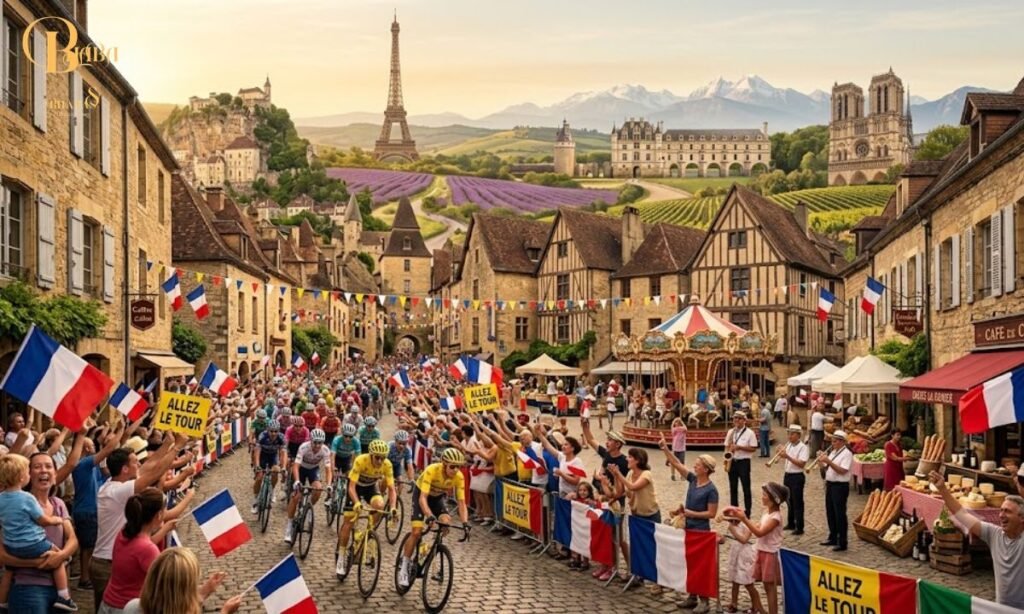
Every July, France transforms. Small villages that dot the Alps and Pyrenees suddenly overflow with color, noise, and electric anticipation. Millions of fans line roadsides, wave flags, and hold handmade banners for riders they adore. Children perch on stone walls. Grandparents set up folding chairs hours before the peloton passes. The Tour de France is not simply a cycling competition — it is a national festival, a moving celebration of endurance, strategy, suffering, and triumph that France gifts to the entire world each summer.
For 21 stages spread across approximately 3,400 kilometers of tarmac, the world’s best cyclists push their bodies to extraordinary limits. They climb mountains that would exhaust most hikers. They descend at speeds that defy logic. They sprint through city centers in explosive bursts of power. The Tour de France tests every dimension of human athletic ability simultaneously, which is exactly why it has captivated audiences for well over a century and continues to grow in popularity with each passing edition.
Whether you are a devoted cycling enthusiast, a casual sports fan, or someone planning to experience the race in person along the roadside, this comprehensive guide covers everything you need to understand and appreciate the magic of the Tour de France.
A Brief History: From a Publicity Stunt to a Global Phenomenon
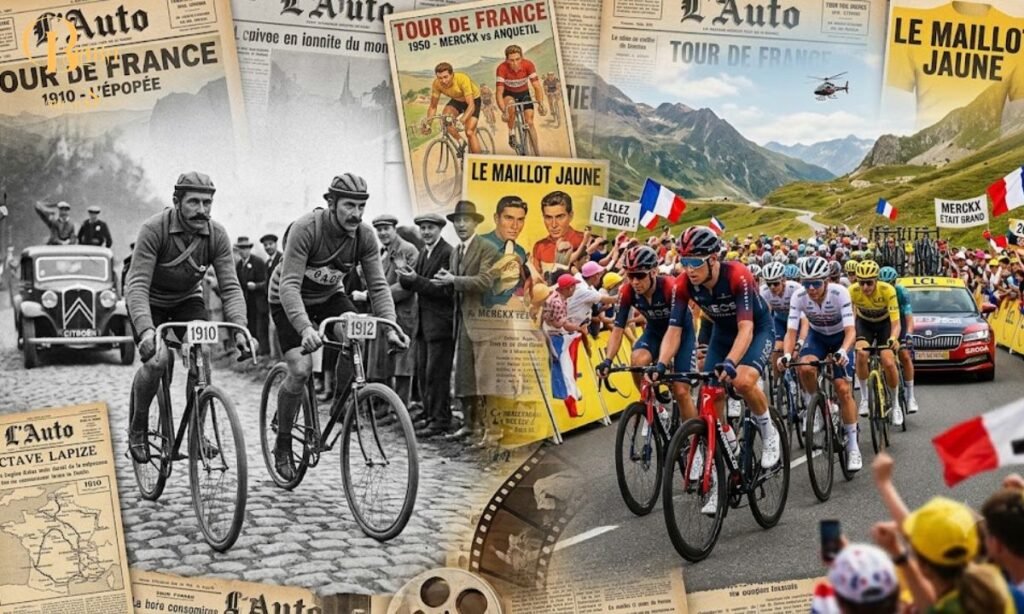
The Tour de France was born in 1903, not from a grand vision of athletic glory, but from a newspaper circulation war. Henri Desgrange, the editor of the French sports newspaper L’Auto, needed a bold idea to outsell his rival publication Le Vélo. His solution was audacious: organize a bicycle race covering the entire perimeter of France.
That first edition featured just 60 starters who raced across six stages totaling 2,428 kilometers. The roads were rough, unsupported, and dangerous. Riders navigated through darkness with only oil lamps. They carried their own spare parts and faced penalties for accepting outside assistance. Maurice Garin, a chimney sweep turned cyclist, won the inaugural edition in just under 95 hours of total racing time.
The race quickly grew beyond anyone’s initial expectations. By the 1910s, Desgrange had introduced high mountain passes into the route, permanently changing the character of the race. The Pyrenean climbs came first, followed by the terrifying Alpine ascents. These additions transformed the Tour from a test of endurance into a battle of mountain climbing ability combined with flat-stage speed — the combination that defines the event to this day.
Two World Wars forced the race into long suspensions, but the Tour always returned. Through the decades, legendary champions emerged — Fausto Coppi, Jacques Anquetil, Eddy Merckx, Bernard Hinault, Laurent Fignon, Miguel Indurain, Lance Armstrong (later disqualified from his seven titles), and more recently Chris Froome, Geraint Thomas, Egan Bernal, Tadej Pogačar, and Jonas Vingegaard. Each era produced new heroes and new controversies, keeping the public passionately engaged.
Today, the Tour de France is broadcast in over 190 countries. It attracts the highest-level professional cycling teams from across the globe and generates enormous economic activity for every region it passes through. From a newspaper gimmick to the world’s most prestigious cycling event — the journey has been extraordinary.
Understanding the Race Format: How the Tour Works
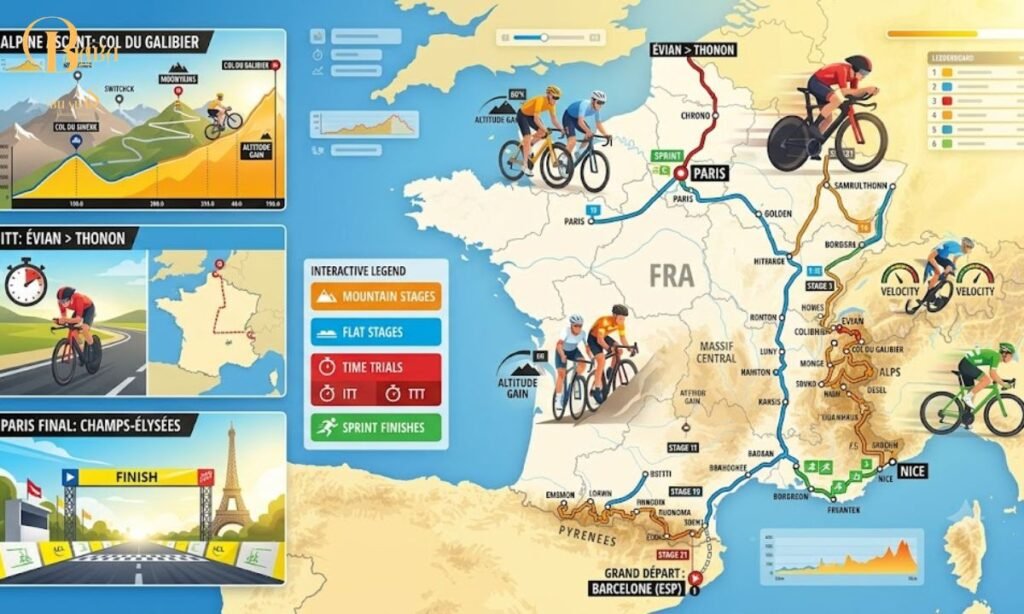
For newcomers to cycling, the Tour de France structure can seem complex. Here is a clear breakdown of how the race operates.
The General Classification (GC)
The heart of the Tour is the General Classification — the overall race for the yellow jersey (maillot jaune). Every rider’s time for each stage is recorded, and the rider with the lowest cumulative time wears yellow. The GC battle is the primary story of every Tour, as the world’s best all-round cyclists compete for the overall title.
Stage Types
The Tour typically includes several types of stages. Flat stages favor sprinters — powerful explosive riders who contest dramatic bunch finishes in city centers. Medium mountain stages offer challenging terrain but often end before the highest summits, creating opportunities for breakaway riders. High mountain stages feature summit finishes on legendary cols like Alpe d’Huez, Col du Tourmalet, or Col de la Loze — these stages often decide the Tour’s outcome. Individual time trials require each rider to race alone against the clock, rewarding pure power and aerodynamic efficiency. Team time trials, though now rare, once saw entire squads racing together.
The Colored Jerseys
Four jerseys represent different competitions within the race. The yellow jersey (maillot jaune) marks the overall leader. The green jersey (maillot vert) goes to the points leader — usually a sprinter accumulating points at stage finishes and intermediate sprints. The polka dot jersey (maillot à pois rouges) belongs to the best climber, also called the King of the Mountains, earned by collecting points at designated mountain summits. The white jersey (maillot blanc) identifies the best young rider under 26 years of age.
Iconic Climbs: Where Legends Are Born
No aspect of the Tour de France captures imagination quite like its mountain stages. These climbs have witnessed moments of pure human heroism and heartbreaking collapse that live forever in sports history.
Alpe d’Huez
Perhaps the most iconic climb in cycling, Alpe d’Huez in the French Alps features 21 hairpin bends numbered in descending order as riders ascend. Each corner carries the name of a former stage winner. The 13.8-kilometer climb rises over 1,000 meters at an average gradient of 8.1 percent. Dutch cycling fans have adopted certain sections as their own, creating raucous tunnel-like crowds on race day. When the Tour visits Alpe d’Huez, the mountain becomes arguably the most atmospheric sporting venue on earth.
Col du Tourmalet
Standing at 2,115 meters in the Pyrenees, the Tourmalet holds the record for the most Tour de France appearances of any climb. Since its introduction in 1910, it has been crossed over 80 times. The name translates roughly as “bad detour,” which captures the reality of ascending its steep, winding flanks on exhausted legs late in a brutal mountain stage. Countless Tour victories have been shaped by battles on this legendary col.
Mont Ventoux
Called the Giant of Provence, Mont Ventoux rises in stark isolation above the surrounding landscape of southern France. Its upper slopes are bare white limestone, swept by powerful winds that can exceed 200 kilometers per hour. The 21-kilometer ascent from Bédoin is relentlessly demanding, with an average gradient above 7 percent and sections exceeding 12 percent. The summit is a crucible where Tour dreams are won and broken. The memory of British rider Tom Simpson collapsing and dying near the summit in 1967 gives Ventoux a somber gravity that hangs over every visit.
Col de la Loze
One of the newest additions to Tour climbing mythology, the Col de la Loze near Courchevel tops out at 2,304 meters, making it among the highest finishes in Tour history. Introduced in 2020, its final kilometers feature gradients surpassing 24 percent — grades that force even elite riders to pedal at walking pace. It has already produced dramatic battles among the Tour’s top contenders.
The Route: Discovering France Through the Race
One of the Tour’s greatest gifts is its role as a rolling showcase of French geography, culture, and architecture. Rarely does the race visit exactly the same places two years running, meaning each edition reveals different corners of a remarkably diverse country.
The Grand Départ
Each Tour begins with the Grand Départ — the ceremonial opening stages hosted by a city or region that bids competitively to earn the honor. This is an enormous occasion for host cities, bringing international media attention and hundreds of thousands of spectators. Grand Départs have been hosted by cities across France and, in recent decades, by cities in neighboring countries including the Netherlands, Belgium, Denmark, and the United Kingdom.
Regional Highlights
The Basque Country’s rolling hills and passionate cycling culture make Basque stages uniquely electric. Brittany’s coastal roads offer stunning scenery as the peloton races above Atlantic cliffs. Provence’s lavender fields and ancient villages provide a backdrop of extraordinary beauty for summer racing. The Loire Valley, with its fairy-tale châteaux, has hosted numerous stages. Normandy’s gentle farmland contrasts with the drama that unfolds when the race reaches its mountain regions.
The Champs-Élysées Finale
For decades, the Tour has concluded with a largely ceremonial final stage along the Champs-Élysées in Paris. By tradition, the overall leader’s position is respected during this stage — no attacks are made on yellow. The peloton circles the iconic avenue multiple times before the sprinters contest a chaotic final dash, and the overall champion celebrates their victory in one of sport’s most recognizable settings, with the Arc de Triomphe framing the finish line.
The Riders: Understanding the Different Roles in a Team
Professional cycling is a deeply tactical team sport, and understanding the roles each rider plays enriches the viewing experience enormously.
The General Classification Contenders
These are the stars — riders capable of competing for the overall victory across three weeks. They must climb exceptionally well, time trial competently, and survive the chaotic sprints of flat stages without losing time. Modern GC contenders like Tadej Pogačar of Slovenia and Jonas Vingegaard of Denmark represent a new generation of extraordinary talent that has elevated the quality of racing in recent years.
The Domestiques
The unsung heroes of professional cycling, domestiques sacrifice their own ambitions entirely to support their team leader. They fetch water bottles from the team car, pace their leader up climbs, shield them from wind on flat stages, and chase down rival attacks. Without effective domestiques, even the most gifted GC rider cannot win the Tour.
The Sprinters
Built for explosive power over short distances, sprinters target the flat stages where 150-odd riders funnel into a terrifying, high-speed mass finish called a bunch sprint. These finishes reach speeds above 70 kilometers per hour and require extraordinary nerve alongside physical power. Teams dedicated to stage wins build entire strategies around delivering their sprinter safely to the final kilometer.
The Climbers
Pure climbers — lightweight riders with exceptional power-to-weight ratios — excel in the mountains. Some specialize in the King of the Mountains competition, targeting the polka dot jersey by attacking on as many climbs as possible rather than targeting overall victory.
Watching the Tour de France: Tips for Fans
Following From Home
Television and streaming coverage has become comprehensive, with many broadcasters offering live coverage from the race start to finish. Cycling fans worldwide have access to high-quality broadcasts featuring expert commentary, tactical analysis, and stunning aerial drone footage.
Attending Roadside
The Tour de France is unique among major sporting events because it is almost entirely free to attend. Simply find a spot along the route, arrive early enough to secure a good viewing position, and wait. The experience is extraordinary — the caravane publicitaire (publicity caravan) passes first, throwing merchandise to the crowd for nearly an hour. Then, with minimal warning, the peloton arrives in a blur of color and speed, passes in seconds, and is gone. Those seconds are absolutely unforgettable.
Best Viewing Spots
Mountain summit finishes offer the richest experience — you can watch riders battle for position on the final climb for extended periods, and the atmosphere is unlike anything else in sport. Iconic locations like Alpe d’Huez, the Col du Galibier, and the Champs-Élysées finale fill with passionate fans who treat the occasion as a full festival day.
The Tour de France and French Culture
The Tour de France is woven into French national identity in ways that go beyond sport. It marks the arrival of summer as reliably as any seasonal signal. French media coverage is intense and affectionate. Villages that host stages invest significantly in decorations, turning entire communities into living tributes to the race.
The event has inspired literature, film, and countless works of art. It has given France internationally recognized symbols — yellow jerseys, polka dots, mountain finishes — that require no explanation to cycling fans anywhere on earth. The Tour has also sparked ongoing conversations about France’s values, its relationship with physical endurance, and the beauty of its landscape.
For visitors to France during July, stumbling upon a Tour stage transforms a holiday entirely. The combination of sporting drama, natural beauty, and the warmth of French crowds creates memories that visitors carry home as some of the most vivid of their lives.
Tour de France Wishes and Messages for Cycling Fans
Whether you are cheering on a favorite rider or celebrating the spirit of the race, here are some heartfelt Tour de France messages to share with fellow fans:
- “May your wheels spin strong and your legs never tire — the mountains ahead are yours to conquer!”
- “Wishing every rider courage, strength, and the wind at their back through every stage of this incredible journey.”
- “To all cycling fans gathering roadside this July — may your Tour experience be everything you dreamed and more. Allez, allez!”
- “Here’s to the dreamers who train through winter rain, believing that one July they too might wear yellow. Keep pedaling.”
- “Wishing every team a safe, thrilling, and unforgettable Tour de France. May the best legs and the boldest heart win.”
- “To the climbers attacking on the Tourmalet, the sprinters launching on the Champs-Élysées, and the fans cheering every moment — the Tour belongs to all of you.”
- “May this year’s Tour de France bring you joy, excitement, and moments of sporting magic that you talk about for decades to come.”
Conclusion: The Tour de France Endures
More than 120 years after Maurice Garin rode through the French night to claim the first yellow jersey, the Tour de France continues to set the standard for what a sporting event can be. It is simultaneously a celebration of extreme human performance and an accessible, open festival that anyone can attend for free. It showcases France’s most breathtaking landscapes while demonstrating cycling’s unique ability to transform geography into drama.
For three weeks every July, the world pays attention to winding mountain roads, sun-baked southern plains, and the extraordinary athletes who race across them. The Tour de France reminds us that sport at its finest is not merely about competition — it is about stories, landscapes, communities, and the enduring human desire to push beyond what seems possible.
Whether you watch from a sofa, a roadside in the Alps, or a café in Paris with the television on, the Tour de France invites you in. It asks only that you pay attention — because what unfolds across those 21 stages, year after year, is genuinely worth watching.
David is a passionate writer with four years of experience in blessings and prayers blogging. He currently works at Bhabas.com, crafting heartfelt messages that inspire hope, offer comfort, and help people express emotions in a meaningful and lasting way.