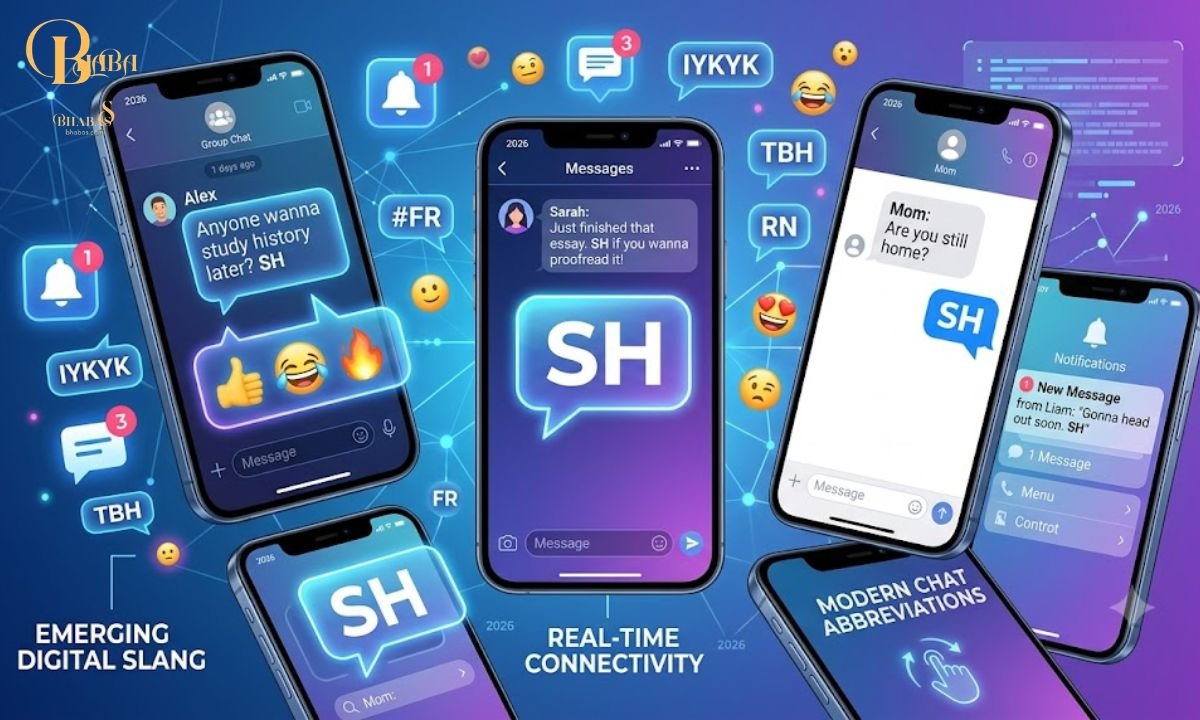
If you have ever seen “SH” pop up in a message and had no idea what it meant, you are not the only one. This tiny two-letter abbreviation shows up in WhatsApp chats, TikTok comments, Discord servers, Instagram posts, and group texts every single day. Because it can mean several different things depending on where and how it is used, people frequently search for the SH meaning in text to avoid responding incorrectly or misreading the tone of a conversation.
Understanding online slang is a real communication skill in 2026. The same abbreviation can signal playful humor in one chat and carry a heavy emotional meaning in another. This guide breaks down every major interpretation of SH, covers its history, shows how it functions across different platforms and communities, and explains how to respond to it confidently no matter the context. Whether you are a parent, student, or regular social media user, this article gives you everything you need to know.
What Does SH Mean in Text?
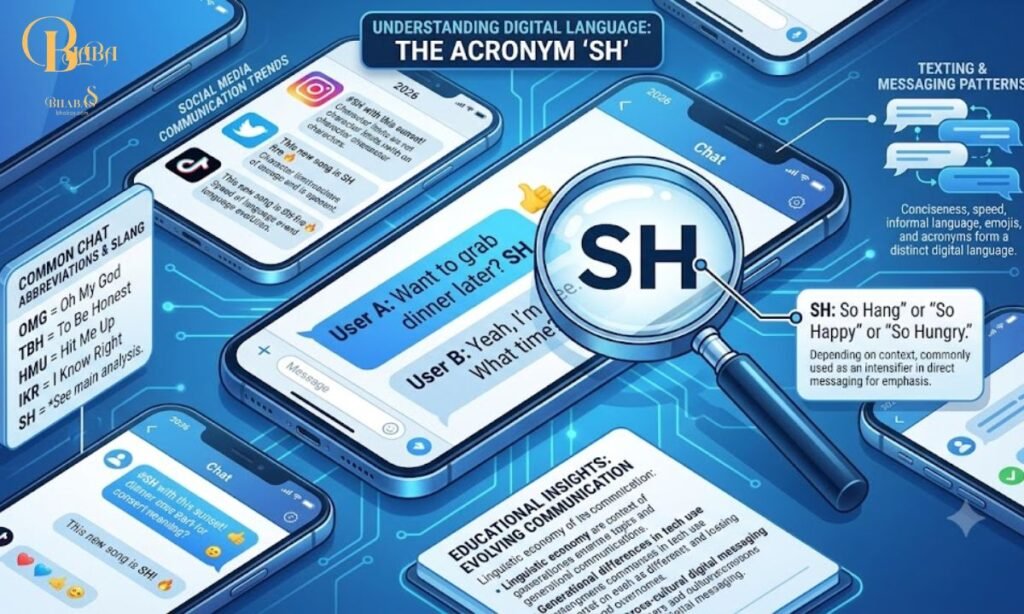
The SH meaning in text is not fixed to a single definition. Its meaning shifts based on the conversation, the platform, and the relationship between the people involved. That said, there are three interpretations you will encounter most often:
- Shh / Be quiet The most common casual use. Someone types “SH” to tell another person to lower their voice, stop talking, or keep something to themselves. It works the same way the spoken sound “shh” does, just faster to type.
- Same Here Used to express agreement or shared feelings. If someone says “I’m exhausted today,” a reply of “SH” can mean “same here,” similar to how people use “mood” or “same.”
- Self-Harm In mental health discussions, support communities, and certain areas of social media, SH is a coded abbreviation for self-harm. This meaning is serious and requires careful attention to context.
A quick-reference table of the most common meanings:
| Meaning | Context | Example |
| Shh / Be quiet | Casual texting, social media | “SH, don’t tell anyone 🤫” |
| Same Here | Agreement in conversations | “SH, I feel that way too” |
| Self-Harm | Mental health, support communities | “She’s been dealing with SH” |
| Study Hall | School-related chats | “See you in SH after class” |
| Social History | Medical records, clinical notes | Patient SH noted in intake form |
| Shell (script) | Programming, tech discussions | “Run it as an .sh file” |
| So Hot | Informal, flirty conversations | “That movie was SH” |
Context is the deciding factor every time. Reading the full message, noticing the platform, and considering the tone will almost always reveal which meaning applies.
Background & History
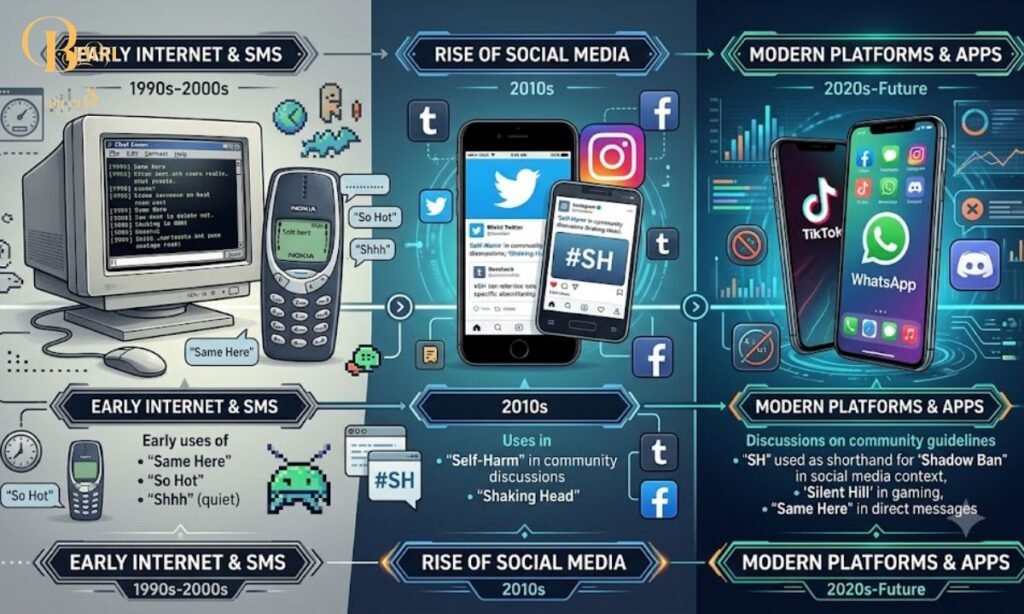
The abbreviation SH did not appear overnight. It has a layered history that stretches back before the internet even existed.
The sound “shh” is one of the oldest and most universal sounds humans use. Across different languages and cultures, people instinctively make this sound to signal silence or secrecy. It is onomatopoeic, meaning the word itself mimics the sound it describes. Early written English texts from the Middle English period already used “sh” in scripts and dialogues to indicate a hushing sound.
When SMS texting became popular in the late 1990s and early 2000s, character limits pushed people to shorten everything. Chat rooms and instant messaging platforms accelerated this even further. Users started dropping extra letters, and “shh” became “sh.” From there, it spread naturally into the broader texting vocabulary.
The self-harm meaning of SH developed later, primarily in online support forums and mental health communities. People used it as a discreet shorthand to discuss a sensitive topic without spelling it out completely, partly to avoid drawing attention and partly to bypass content filters on certain platforms.
By 2026, SH is firmly embedded in everyday digital communication. It appears in texts, captions, comments, gaming chats, and clinical notes each environment giving it a slightly different role.
Usage in Various Contexts
Casual Texting
In everyday text conversations between friends, SH is almost always lighthearted. People use it to hush a friend who is about to reveal a secret, to agree with something someone said, or simply as a quick playful reaction. The tone is usually relaxed and the intent is clear from surrounding messages.
Examples:
- Friend 1: “I just found out who likes you.” Friend 2: “SH! Don’t say it in the group chat!”
- Friend 1: “I’m so tired of Mondays.” Friend 2: “SH, honestly same.”
Social Media
On Instagram, Twitter/X, and Snapchat, SH often appears in comments as a reaction. Someone might use it to express agreement with a post, signal that something should be kept quiet, or add a playful tone to a comment thread. In captions, it can suggest suspense or secrecy around an upcoming reveal.
Gaming Communities
In gaming environments like Discord servers or in-game chat, fast communication is essential. Players use SH to mean “be quiet” when coordinating a move, or as a shorthand acknowledgment similar to “got it” or “okay.” The abbreviation fits naturally into the rapid-fire communication style of multiplayer games.
Sensitive Discussions
This is where understanding context matters most. In private conversations, mental health forums, or certain TikTok comment sections, SH is used as shorthand for self-harm. People often use it because spelling out the full term feels too direct, or because they are trying to communicate discreetly. If you notice SH appearing alongside emotional language, expressions of pain, or discussions about struggles, take the message seriously and respond with care.
Common Meanings of SH
SH Meaning in Medical
In clinical and healthcare settings, SH carries specific professional definitions. Medical professionals use it as shorthand for Social History in patient intake forms and clinical notes. Social history covers a patient’s lifestyle, occupation, living situation, and habits information that gives context to their overall health. You may also see SH used in documentation to refer to self-harm, written the same way providers use “MH” for mental health or “SI” for suicidal ideation.
SH Meaning in Therapy
In therapy and psychological support contexts, SH stands for self-harm, which refers to the act of deliberately injuring one’s own body as a way to cope with emotional distress. Therapists, counselors, and mental health professionals use this abbreviation in case notes and peer discussions. It is one of the most recognized abbreviations in psychology and psychiatry, appearing in DBT (Dialectical Behavior Therapy) frameworks, clinical assessments, and support group documentation. If someone brings up SH in a therapeutic context, the conversation calls for empathy, patience, and professional support where appropriate.
SH Meaning in School
Among students, SH commonly stands for Study Hall, a scheduled period during the school day when students work independently or complete assignments. It has been used in student planners and class schedules for decades and is a well-established abbreviation in educational settings. You might see a student text “I’ll be in SH until 3” and mean they are in a supervised free period at school, nothing more.
In some regions, SH also stands for Senior High, used to distinguish high school grades from middle or junior high. This usage appears in school directories, enrollment forms, and student conversations alike.
SH Meaning in TikTok
TikTok has given SH a particularly prominent role, and it carries two distinct meanings on the platform. In lighter content, SH appears in comments and captions to mean “same here” or as a quick reaction. However, in mental health-related content, SH frequently refers to self-harm. Creators and commenters use it to avoid triggering content moderation filters while still being able to discuss the topic. Parents and guardians should be aware that when SH appears in emotionally charged TikTok content, especially on accounts that discuss mental health, trauma, or personal struggles, the self-harm meaning is often intended. Recognizing the difference between a casual “same here” and a coded reference to self-harm is important when monitoring the content young people engage with.
Common Misconceptions & Clarifications
Several misconceptions about SH circulate online and can lead to real miscommunication. Here are the most important ones to clear up:
Misconception 1: SH always means self-harm. This is not true. The majority of casual, everyday uses of SH in texting have nothing to do with mental health. Someone telling a friend “SH, I’ll explain later” almost certainly means “shh” keep quiet.
Misconception 2: SH is rude or offensive. In casual contexts, SH is generally neutral and often playful. It is not inherently aggressive. However, tone matters. Using it sharply in a tense conversation could come across as dismissive.
Misconception 3: SH is only used by teenagers. While Gen Z and younger users popularized many uses of SH, the abbreviation appears across age groups. Adults use it in casual texts, and professionals use it in clinical documentation.
Misconception 4: SH is the same as SMH. These are two completely different abbreviations. SMH stands for “shaking my head” and expresses disappointment or disbelief. SH and SMH are unrelated in meaning.
Misconception 5: Context does not matter if you know the abbreviation. Context is everything with SH. Knowing its possible meanings is only step one. The platform, the relationship, and the surrounding conversation always determine which meaning actually applies.
Similar Terms & Alternatives
If SH feels too ambiguous for a particular conversation, there are alternatives that communicate the same ideas more clearly:
| Instead of SH (meaning) | Alternatives |
| Shh / be quiet | Hush, quiet, 🤫, shhh, lower your voice |
| Same here | Same, mood, agreed, fr, I feel that, +1 |
| Self-harm (support context) | Spelling it out, NSSI, deliberate self-injury |
| Study hall | Free period, library hour |
Using full words or recognized substitutes removes the risk of misinterpretation, especially in sensitive or important conversations.
How to Respond to This Term
Your response to SH should always match the meaning behind it. Here is a practical breakdown:
If SH means “shh” or be quiet: Play along with the tone. If it is lighthearted, a playful response works well. You can reply with “okay okay 😂” or simply acknowledge the hint. If someone genuinely wants you to keep something private, confirm that you understand.
If SH means “same here”: Respond naturally as you would to any agreement. Continue the conversation normally. A simple “right?” or “exactly” keeps things flowing.
If SH appears in an emotional or mental health context: Do not reply casually. Take a moment to acknowledge what the person might be going through. A simple “hey, are you okay?” or “I’m here if you want to talk” opens the door without putting pressure on them. If you believe someone is in immediate distress, encourage them to speak with a trusted adult or contact a crisis support line like the 988 Suicide and Crisis Lifeline (available 24/7 in the US by calling or texting 988).
Regional or Cultural Differences
The SH meaning in text can vary slightly depending on where a person is located and what cultural context surrounds them.
In South Asian countries, including Pakistan and India, SH in casual conversation most commonly refers to “shh” or silence, and the self-harm meaning is less widely known among general users, though it does appear in mental health communities.
In Western countries, particularly the US and UK, both the casual and mental health meanings of SH are widely recognized. Parents, educators, and mental health professionals in these regions are specifically trained to watch for SH in teen communication.
In East Asian gaming and online communities, SH often functions as a quick acknowledgment or agreement signal, similar to “got it” or “okay.”
The educational meaning (Study Hall or Senior High) is most commonly used in American school contexts and may not be familiar to users in other countries where those terms are not standard.
Comparison with Similar Terms
Understanding SH becomes easier when you compare it with abbreviations that serve similar functions:
| Abbreviation | Meaning | Similarity to SH |
| SMH | Shaking my head | Both are short reactions, but SMH expresses disapproval while SH signals quiet or agreement |
| IKR | I know, right | Like SH (same here), IKR expresses agreement |
| NGL | Not gonna lie | Both are reaction-based, used to add tone to a statement |
| NSSI | Non-suicidal self-injury | Technical alternative to SH in clinical settings |
| SSH | Secure Shell (tech) / soft shush | Technically different but phonetically close to SH |
The key distinction between SH and most other abbreviations is its flexibility. Most internet slang terms carry one primary meaning. SH carries several, which is what makes it both versatile and potentially confusing.
Usage in Online Communities & Dating Apps
Online communities have their own internal language, and SH fits into that ecosystem naturally. On Discord servers, SH is used to quiet a busy chat or signal agreement. On Reddit, it may appear in mental health subreddits as a discreet reference to self-harm, or in casual threads as simple agreement.
On dating apps, SH typically takes on a lighter tone. Someone might use it playfully to signal that something should stay between the two of them, adding a flirty or secretive vibe to the conversation. It can also be used to express quick agreement when making plans. In these contexts, the self-harm meaning is rarely intended, but it is always worth reading the full conversation before assuming.
Fan communities and niche online groups sometimes develop their own specific uses for SH depending on the platform culture. Gaming guilds, K-pop fan accounts, and creative writing communities may each use it slightly differently, reinforcing the point that context shapes meaning.
Hidden or Offensive Meanings
SH does carry a few less obvious meanings that are worth knowing about.
In some informal circles, SH is used as a censored stand-in for a profanity specifically a softened way to type or say a word starting with those letters without writing it in full. This usage is relatively rare and highly dependent on tone and audience.
The self-harm meaning of SH is not offensive in itself, but using it carelessly around someone who has personal experience with the topic can feel dismissive or triggering. Awareness of who you are speaking to matters.
There is no universal hidden meaning to SH that is broadly offensive, but as with any abbreviation, using it without understanding your audience or the context of the conversation carries risk. If you are unsure which meaning someone intends, it is always fine to ask.
Suitability for Professional Communication
The short answer is: SH does not belong in professional communication.
Workplace emails, business messages, client communications, and formal reports all require clarity. Using abbreviations like SH in these settings risks confusion, especially for colleagues or clients who are not familiar with digital slang. The self-harm meaning of SH adds another layer of risk a reader unfamiliar with casual usage might interpret an innocent “SH” as something serious.
In professional settings, the better approach is always to write out full words. Instead of SH, write “same here,” “noted,” “please keep this confidential,” or whatever the intended meaning actually is. Clear language builds trust and avoids misunderstandings.
The only professional context where SH is appropriate is in clinical or medical documentation, where it is an established abbreviation with a specific, agreed-upon meaning known to all parties involved.
Conclusion
Understanding the SH meaning in text is genuinely useful in today’s digital communication landscape. This two-letter abbreviation can mean something playful, something agreeable, or something that requires real emotional sensitivity and the only way to know which is to pay attention to context, platform, and tone. Whether someone is telling you to keep a secret, agreeing with what you said, or quietly referencing a personal struggle, reading the full message always makes the meaning clear.
The next time you see SH in a chat or comment, take a moment before responding. Most of the time it is casual and harmless. But when the context suggests something more serious, responding with care and empathy makes a real difference. Staying informed about how language works online is one of the simplest ways to communicate better and connect more honestly with the people around you.

David is a passionate writer with four years of experience in blessings and prayers blogging. He currently works at Bhabas.com, crafting heartfelt messages that inspire hope, offer comfort, and help people express emotions in a meaningful and lasting way.