- More Than Just Fireworks
Every fourth day of July, the skies above the United States erupt in color. Grills fire up across suburban backyards, flags line every street corner, and millions of Americans gather with family and friends to celebrate something far larger than any single moment in time. United States Independence Day — July 4th — is the country’s most beloved national holiday, and it carries the weight of centuries of history, sacrifice, courage, and ambition.
But what does Independence Day truly mean? For many people, it is a day off work, a reason to barbecue, and a chance to watch spectacular fireworks. For others, it is a profound moment of national reflection — a reminder of the ideals that the country was built upon and the ongoing effort to live up to them. For history lovers, it is a doorway into one of the most dramatic political stories ever told.
This blog post explores the full story of United States Independence Day — its origins, the events that made it possible, the people who risked everything, the evolution of its celebrations, and its deep significance in contemporary American life. Whether you are a student, a history enthusiast, a teacher, or simply someone curious about the holiday you celebrate every summer, this is the complete guide you have been looking for.
The Road to Revolution: Why Independence Became Necessary
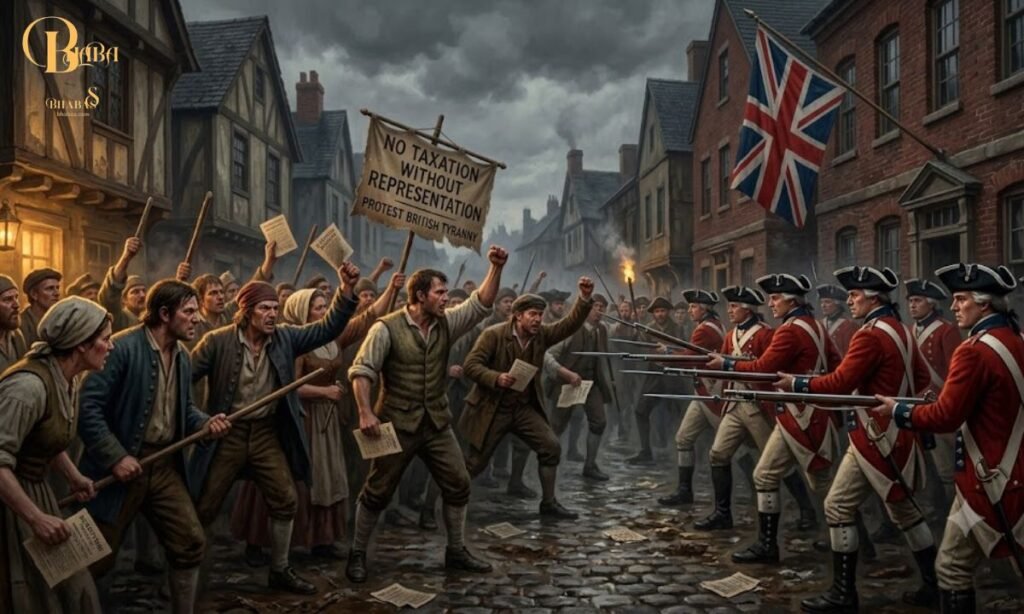
To understand July 4th, you have to understand why thirteen American colonies decided to break from the most powerful empire on earth.
By the 1760s, Britain and its American colonies had developed a growing tension. The British government, burdened by massive war debts from the French and Indian War (1754–1763), turned to the colonies as a source of revenue. A wave of new taxes followed — the Stamp Act of 1765, the Townshend Acts of 1767, and the Tea Act of 1773. Each new policy inflamed colonial resistance, not simply because of the financial burden, but because of a fundamental political principle: the colonists believed they should not be taxed by a Parliament in which they had no elected representation.
“No taxation without representation” became one of the rallying cries of the colonial resistance movement. It was not just a slogan — it was a declaration of a political philosophy that had been brewing in Enlightenment thinkers across Europe and America. Thinkers like John Locke had argued that governments derived their authority from the consent of the governed, and that citizens had natural rights that no government could rightfully take away. These ideas found fertile ground in the minds of colonial leaders.
Events escalated rapidly. In 1770, British soldiers fired into a crowd of civilians in what became known as the Boston Massacre. In 1773, colonists disguised as Mohawk Indians dumped an entire shipment of British tea into Boston Harbor in protest of the Tea Act — an event now known as the Boston Tea Party. Britain responded with the Coercive Acts of 1774, which the colonists called the Intolerable Acts, closing Boston’s port and effectively placing Massachusetts under military rule.
By 1775, armed conflict had broken out. The Battles of Lexington and Concord in April 1775 marked the beginning of the American Revolutionary War. Colonial militiamen exchanged fire with British regulars, and what had been a political dispute had become a military struggle. The point of no return was rapidly approaching.
The Continental Congress and the Move Toward Independence

The Second Continental Congress convened in Philadelphia in May 1775, just weeks after the shots fired at Lexington and Concord. Delegates from all thirteen colonies gathered to coordinate the colonial response to British military action. At this point, the official goal was not yet independence — many delegates still hoped for reconciliation with Britain. But the months that followed steadily closed that door.
In January 1776, Thomas Paine published his pamphlet Common Sense, a work of political writing that fundamentally changed the conversation. Written in plain, accessible language rather than the lofty rhetoric of academic debate, Paine argued directly and powerfully that monarchy was an absurd and corrupt form of government, that the colonies had every reason to seek full independence, and that they had the capability to build a better, freer society. It sold an estimated 500,000 copies at a time when the total colonial population was roughly 2.5 million — a staggering reach. Common Sense brought the idea of independence out of the halls of the wealthy educated elite and into the minds of ordinary colonists.
By the spring of 1776, multiple colonies had already instructed their delegates to support independence. On June 7, 1776, Virginia delegate Richard Henry Lee formally proposed a resolution before the Continental Congress stating that the colonies “are, and of right ought to be, free and independent States.” The Congress appointed a Committee of Five to draft a formal declaration: Thomas Jefferson, John Adams, Benjamin Franklin, Roger Sherman, and Robert R. Livingston.
Jefferson was selected as the primary author. Working in a rented room in Philadelphia over the course of roughly two weeks, he produced a draft document that was both a political argument and a philosophical statement. The Declaration of Independence was not simply a list of grievances against King George III — though it contained those. It was a foundational document that articulated the philosophical basis for self-governance and human rights.
July 4, 1776: The Day That Changed the World
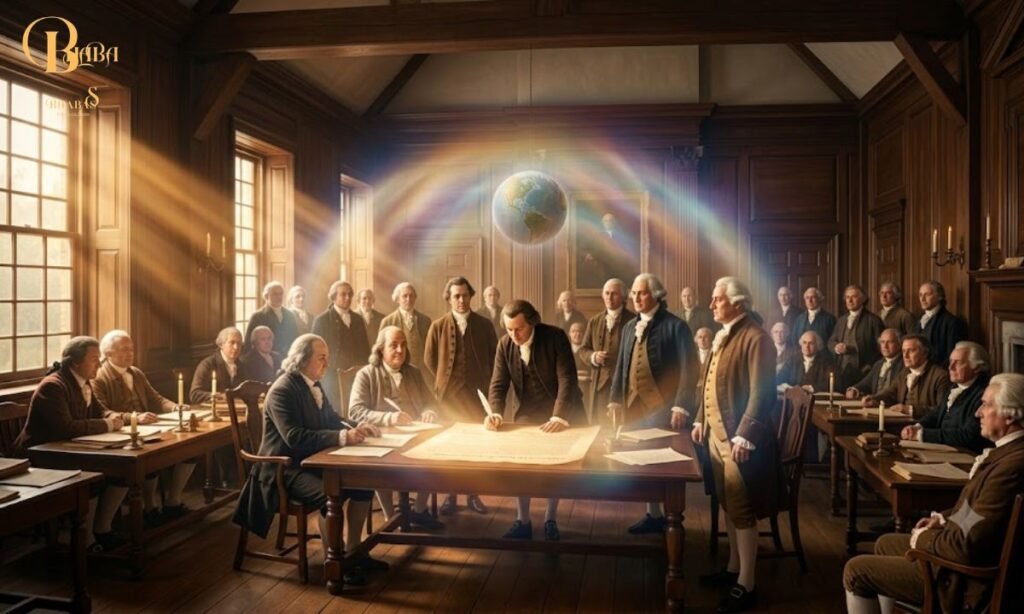
After days of debate, revisions, and deletions — including the removal of a controversial passage condemning the transatlantic slave trade — the Continental Congress voted to adopt the Declaration of Independence on July 4, 1776. Fifty-six delegates eventually signed the document, fully aware that by doing so they were committing what the British Crown would consider treason, an act punishable by death.
The opening lines of the Declaration remain among the most recognizable words in the English language:
“We hold these truths to be self-evident, that all men are created equal, that they are endowed by their Creator with certain unalienable Rights, that among these are Life, Liberty and the pursuit of Happiness.”
This sentence was revolutionary in 1776 — and its implications continue to reverberate more than two centuries later. It declared not just that these specific colonists deserved rights, but that all human beings inherently did. It set a standard that the newly formed nation would spend generations trying to meet — sometimes failing, sometimes rising, but always measured against the ideal it had proclaimed to the world.
The delegates who signed the Declaration came from vastly different backgrounds. John Hancock, the president of the Congress, famously signed his name in oversized letters. Benjamin Franklin, already one of the most celebrated intellects of the age, signed at 70 years old. Thomas Jefferson was just 33. John Adams was 40. Each of them signed knowing the full weight of what they were doing. As Franklin reportedly quipped to the assembled delegates, “We must, indeed, all hang together, or most assuredly we shall all hang separately.”
The Revolutionary War: The Fight That Made Independence Real

Adopting the Declaration was a statement of intent. Winning independence required years of brutal warfare.
The Revolutionary War lasted from 1775 to 1783. The Continental Army, led by General George Washington, faced a far better-equipped and more experienced British military force. The early years of the war were marked by significant defeats and desperate retreats. Washington’s famous crossing of the Delaware River on the night of December 25–26, 1776, followed by the surprise attack on Trenton, New Jersey, was a turning point that restored flagging morale.
France, which had a long-standing rivalry with Britain, officially entered the war as an American ally in 1778 after the American victory at the Battle of Saratoga. French military support, including troops, naval power, and financial resources, proved decisive. The war effectively ended when a combined American and French force surrounded British General Cornwallis at Yorktown, Virginia, in October 1781, forcing his surrender.
The Treaty of Paris, signed in September 1783, officially recognized the United States of America as an independent nation. The thirteen colonies had become a country. What had begun as a political dispute had transformed into the birth of a new form of government — a democratic republic founded on the principles written into the Declaration of Independence.
How Independence Day Became a National Celebration
It may surprise many people to learn that July 4th was not immediately established as a formal national holiday. The early celebrations were organic and varied — parades, public readings of the Declaration, bonfires, and cannon fire marked the occasion in different communities. John Adams famously wrote to his wife Abigail on July 3, 1776, expressing his belief that the anniversary of independence “ought to be solemnized with Pomp and Parade, with Shews, Games, Sports, Guns, Bells, Bonfires and Illuminations from one End of this Continent to the other from this Time forward forever more.” He was, as it turned out, exactly right.
Philadelphia held what is often considered the first organized Independence Day celebration in 1777, featuring a ship parade, fireworks, and a public dinner for members of Congress. As the decades passed, July 4th celebrations became more elaborate and widespread across the growing nation.
Congress officially declared July 4th a federal holiday in 1870, and in 1938 it became a paid federal holiday. Fireworks — inspired by the “rockets’ red glare” of wartime and the European tradition of celebratory pyrotechnics — became central to Independence Day festivities in the 19th century and have remained so ever since.
Modern Independence Day Celebrations Across America
Today, July 4th is celebrated with remarkable energy and creativity across all fifty states and American territories. No two celebrations are exactly alike, but they share a common spirit of patriotism, community, and joy.
Fireworks displays are the centerpiece of the holiday. Cities large and small light up their skies on the night of July 4th. New York City’s Macy’s Fourth of July Fireworks Spectacular is one of the largest in the world, drawing massive crowds to the banks of the Hudson River and the East River for a breathtaking show. Washington D.C. hosts celebrations on the National Mall with fireworks over the Washington Monument. Boston’s Boston Pops Orchestra performs a free concert on the Esplanade followed by a fireworks display over the Charles River — a tradition dating back to 1974.
Parades wind through the main streets of towns and cities across the country. From small rural communities with local fire trucks and marching bands to large urban parades with elaborate floats and military processions, the parade remains one of the most communal expressions of Independence Day pride.
Barbecues and cookouts are perhaps the most universally practiced Independence Day tradition. Families and friends gather in backyards, parks, and beaches to grill hot dogs, hamburgers, ribs, and corn on the cob. Cold drinks, potato salad, watermelon, and pie round out a quintessentially American summer spread. According to the National Retail Federation, Americans spend billions of dollars on food alone for the Fourth of July holiday each year.
Outdoor activities — swimming, hiking, boating, and sports — fill the long summer day. July 4th falls at the height of summer in the Northern Hemisphere, making it a natural occasion for outdoor recreation and relaxation.
Public readings of the Declaration of Independence are held at historic sites across the country, including Independence Hall in Philadelphia, where the original Declaration was adopted, and at many state capitals, courthouses, and community centers.
The Symbolism of Independence Day: Flags, Colors, and Icons
The visual language of Independence Day is instantly recognizable. Red, white, and blue — the colors of the American flag — appear on everything from clothing and decorations to food and face paint. But these colors carry specific meaning. Red represents valor and hardiness. White represents purity and innocence. Blue represents vigilance, perseverance, and justice.
The American flag itself — the “Stars and Stripes” — is central to July 4th symbolism. The flag has evolved since the original thirteen-star design of 1777, gaining new stars as states joined the Union. The current 50-star flag, adopted on July 4, 1960, following Hawaii’s admission to statehood, is the longest-serving version of the American flag in history.
The Statue of Liberty, a gift from France dedicated in 1886, stands as one of the most powerful symbols of American independence and democratic ideals. Her torch represents the light of freedom illuminating the world, and the tablet she holds is inscribed with the date July 4, 1776.
The Liberty Bell in Philadelphia, with its famous crack, rang out on July 8, 1776, to call citizens to hear the first public reading of the Declaration of Independence. Today it serves as one of the most iconic symbols of American freedom and is visited by millions each year.
Independence Day and the Ongoing Story of American Freedom
The ideals proclaimed in the Declaration of Independence in 1776 were aspirational. They described a vision of human equality and natural rights that the society of 1776 did not fully practice. The same founders who wrote “all men are created equal” lived in a nation where millions of enslaved people were denied every right the Declaration proclaimed. Women could not vote. Indigenous peoples were dispossessed of their lands.
The history of the United States since 1776 is in significant part the story of expanding the circle of freedom and equality — imperfectly, incompletely, and often painfully, but persistently. The abolition of slavery after the Civil War, the suffrage movement that secured voting rights for women in 1920, the Civil Rights Movement of the 1950s and 60s, and countless other struggles represent the ongoing effort of Americans to make real the promise of the Declaration.
Frederick Douglass, the great abolitionist leader and himself a formerly enslaved man, delivered a famous speech on July 5, 1852, asking pointedly what the Fourth of July meant to enslaved Americans. It was a searing and necessary challenge — and it reflects the way that Independence Day has always been both a celebration of achieved freedoms and a reminder of freedoms yet to be secured.
This complexity is part of what makes Independence Day significant beyond its surface-level festivities. It is an occasion not only for celebration but for honest reflection on where the country has been, where it stands, and what ideals it is still striving to embody.
Fun Facts About Independence Day
- John Adams and Thomas Jefferson, both signers of the Declaration of Independence, both died on July 4, 1826 — exactly fifty years after the adoption of the Declaration.
- James Monroe, another Founding Father and the fifth U.S. President, also died on July 4, 1831.
- The Declaration of Independence was not signed on July 4th by most delegates — the majority signed on August 2, 1776. July 4th was the date Congress approved the final text.
- Calvin Coolidge, the 30th U.S. President, was born on July 4, 1872, making him the only American president born on Independence Day.
- The Philadelphia celebration of 1777 reportedly included a thirteen-gun salute — one for each colony — both at sunrise and sunset.
- Americans buy approximately 285 million pounds of hot dogs for the July 4th holiday period each year.
- The fireworks industry in the United States generates hundreds of millions of dollars in revenue each Independence Day season.
Independence Day Around the World
Independence Day is distinctly American, but its spirit resonates internationally. The American Revolution inspired democratic and independence movements across the world — from the French Revolution of 1789 to independence movements across Latin America, Asia, and Africa in the 19th and 20th centuries. The Declaration of Independence has been cited by independence and human rights movements across the globe as a foundational statement of universal principles.
Many countries that host large American expatriate communities hold July 4th celebrations, from London to Tokyo to Sydney. American embassies and consulates around the world host Independence Day receptions attended by local dignitaries and American citizens living abroad.
How to Celebrate Independence Day Meaningfully
Beyond the hot dogs and fireworks, here are some ways to make July 4th a truly meaningful celebration:
Visit a historic site. Independence Hall in Philadelphia, where the Declaration and Constitution were debated and adopted, is one of the most significant historical sites in the United States. The National Mall in Washington D.C., with its monuments and memorials, offers a powerful immersion in American history.
Read the Declaration of Independence. The full text is freely available online and takes about ten minutes to read aloud. Many American families have made it a July 4th tradition to read it together.
Learn about someone who fought for American ideals. From Revolutionary War soldiers to civil rights activists to modern veterans, countless individuals have contributed to the ongoing story of American freedom.
Attend a local parade or community event. Small-town July 4th celebrations often capture the spirit of the holiday in a particularly warm and genuine way.
Watch the fireworks and remember what they represent. The explosion of light and color in the night sky echoes the sacrifices made so that the United States could exist — and continues to symbolize the bright ideals that the country aspires to live up to.
Conclusion: The Living Legacy of July 4, 1776
- United States Independence Day is many things at once. It is a summer holiday full of food, family, and fireworks. It is a history lesson written in light across the night sky. It is a reminder that ideas — specifically the idea that human beings have inherent rights and the ability to govern themselves — can change the world. And it is a challenge, renewed every year, to live up to the bold and beautiful words written by Thomas Jefferson on behalf of a nation that was just being born.
- The story of July 4th, 1776, did not end when the delegates signed their names to the Declaration. It continued through the Revolutionary War, the drafting of the Constitution, the Civil War, the Civil Rights Movement, and every era of American history since. It continues today, in the life of every American who believes in the promise of the nation and works to make it more real.
- So this July 4th, when the sky lights up and the crowd cheers and the smell of grilled food fills the warm summer air, take a moment to think about what it all means. Think about fifty-six men who signed their names to a revolutionary document and changed the course of history. Think about all the people, named and unnamed, who have fought to make the ideals of that document real for everyone. And celebrate — loudly, joyfully, and with full appreciation for what this remarkable holiday represents.
- Happy Independence Day, America.

David is a passionate writer with four years of experience in blessings and prayers blogging. He currently works at Bhabas.com, crafting heartfelt messages that inspire hope, offer comfort, and help people express emotions in a meaningful and lasting way.