The Morning the Maple Leaf Means Something Different
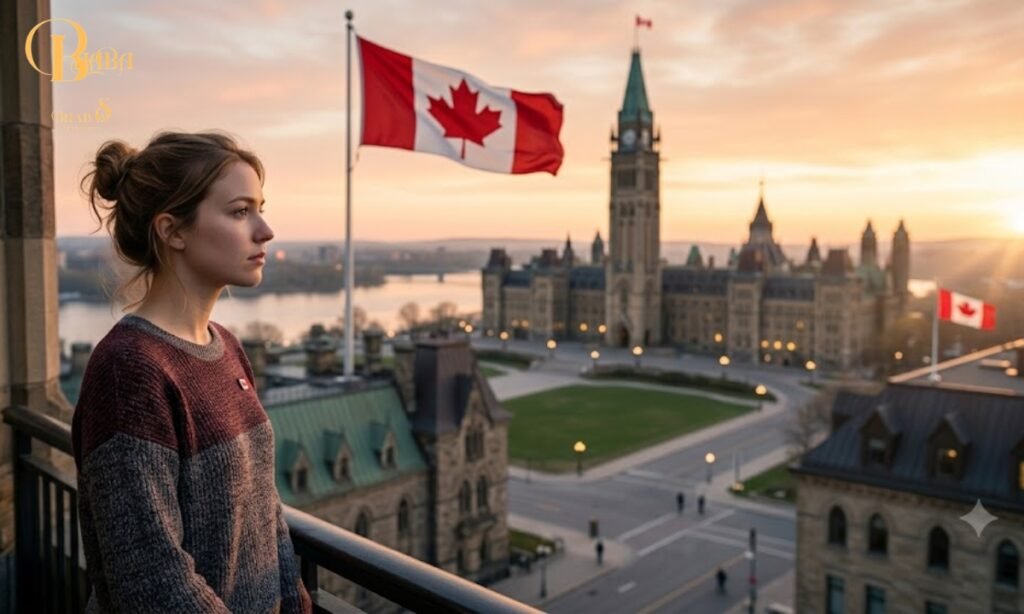
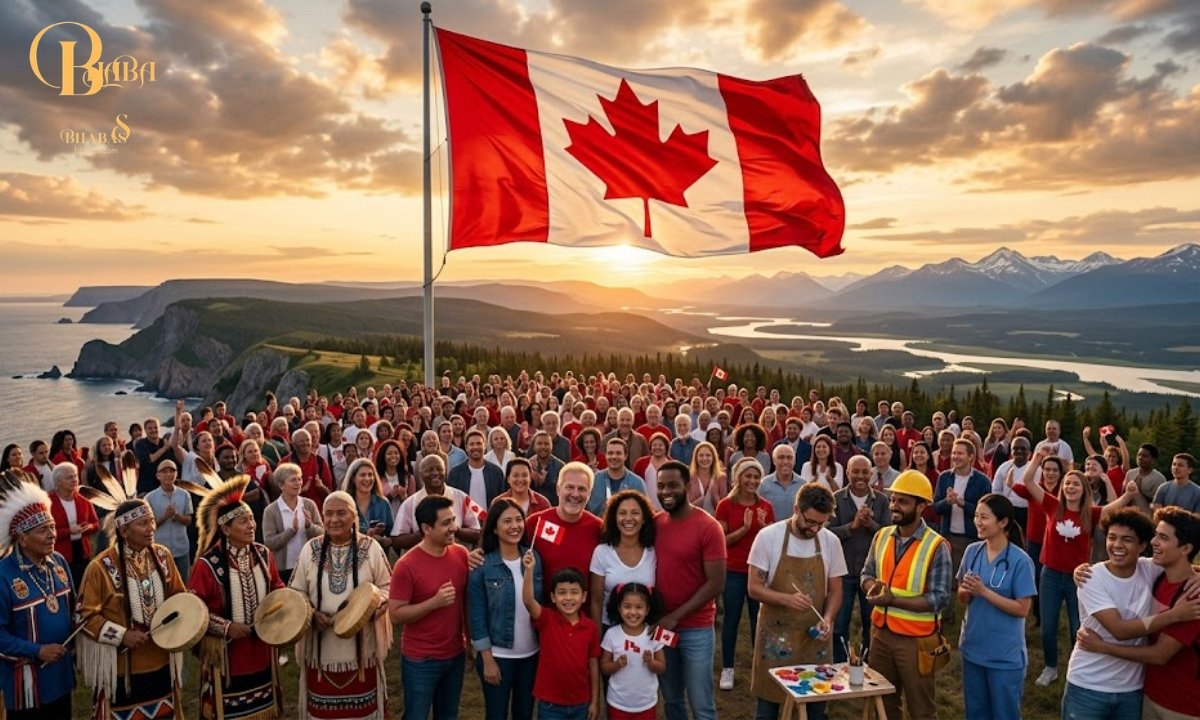
There is a specific kind of feeling that arrives every July 1st — not loud, not fireworks-first, but quiet. It arrives in the pause before the celebrations begin. It lives in the steam rising from a Tim Hortons cup on a dewy morning porch in Prince Edward Island, in the long golden light breaking over the Rockies before anyone else is awake, in the loon call echoing across a lake somewhere north of everywhere.
It is the feeling of a country remembering itself.
Canada Day 2026 lands at a particular crossroads in the life of this nation — a moment where Canadians are being asked, more urgently than ever, who they are and what they intend to do about it. And rather than offering a rehearsed answer, Canada keeps doing something remarkable: it keeps choosing complexity over simplicity, inclusion over exclusion, and conversation over conclusion.
That is not weakness. That is, in fact, a kind of national courage the world does not always recognize for what it is.
What July 1st Actually Celebrates
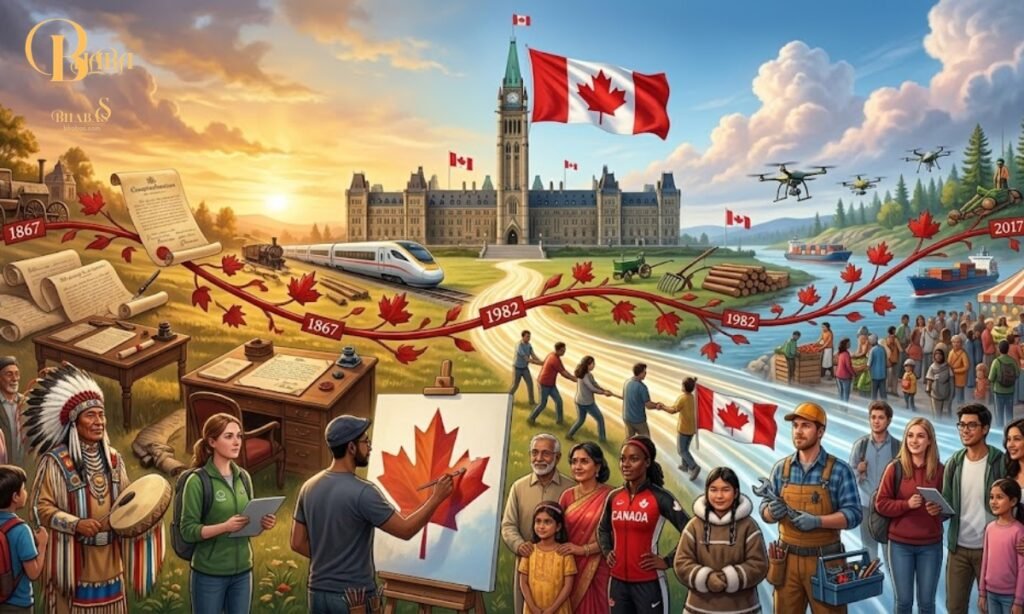
Most people know the date — July 1, 1867 — when the British North America Act united the Province of Canada, Nova Scotia, and New Brunswick into a single dominion. But the history books rarely capture what was extraordinary about that act: it was, at its core, a negotiated country.
Canada was not won in a single revolution. It was argued into existence. French and English, Protestant and Catholic, East and West — each voice demanded space at the table. The result was not a perfect agreement. It was a living arrangement, built with the understanding that the conversation would never truly be finished.
That truth is both Canada’s greatest tension and its greatest strength.
To celebrate Canada Day in 2026 is not to pretend that the country has arrived at some final, polished version of itself. It is to celebrate the audacity of continuing — of choosing, generation after generation, to stay in the room together and keep talking.
The Canada That Doesn’t Make the Postcards
Let’s be honest about something.
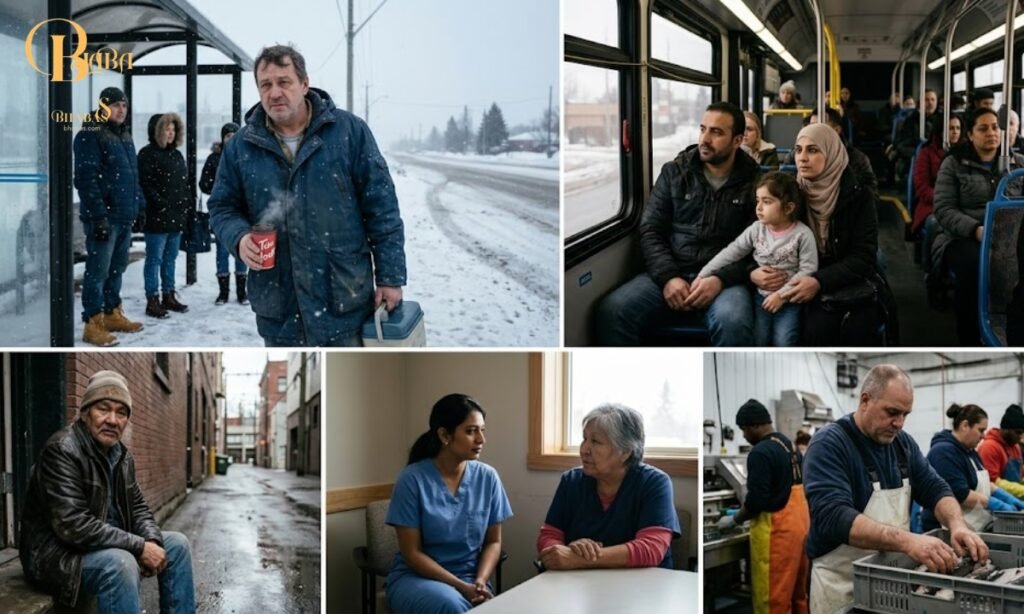
The Canada of moose and maple syrup and cheerful apologies is real. And it is also a fraction of the story.
The Canada of 2026 is also the Canada of residential school survivors still waiting for full reconciliation. It is the Canada of newcomers who crossed oceans and deserts and bureaucratic labyrinths to stand on this ground and call it home. It is the Canada of Indigenous land defenders, of Arctic communities watching coastlines disappear, of first-generation Canadians who speak three languages and belong, fully, to all of them.
To love Canada truly — not sentimentally, but faithfully — is to hold all of this at once.
This Canada Day, the most powerful thing we can say is not “Canada is perfect.” The most powerful thing we can say is: Canada is unfinished, and we are still here, still building.
That is not a small thing. In a world where nations are fracturing, retreating inward, and pulling up drawbridges, Canada’s continued willingness to face its contradictions openly is, quietly, extraordinary.
What Makes Canada Genuinely Rare in 2026
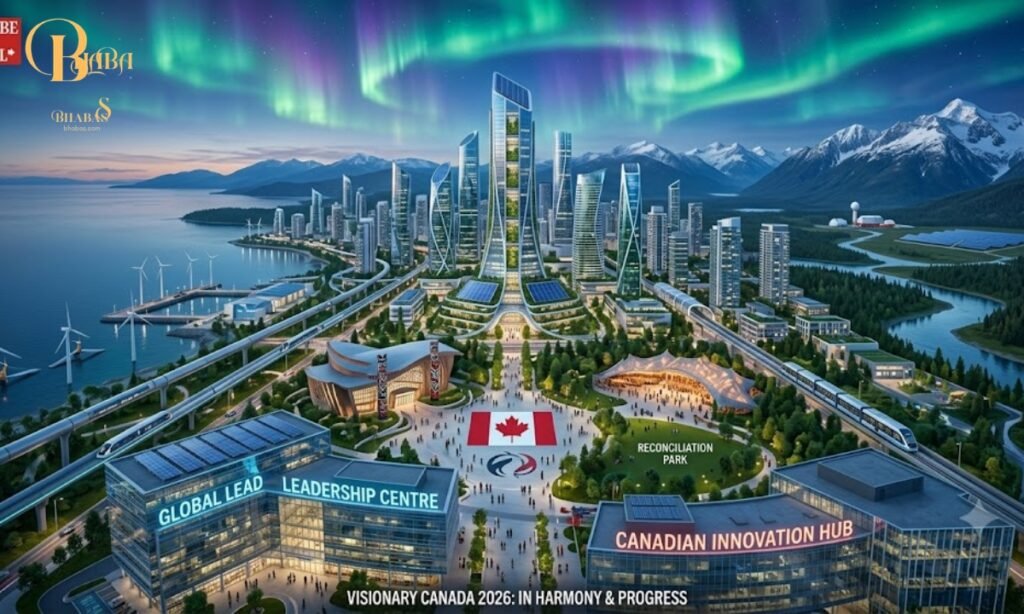
Ask a political scientist, an anthropologist, or a poet — they will all circle the same observation: Canada is one of the only countries on earth where multiculturalism is not a policy experiment. It is a lived, daily, imperfect, breathing reality.
In the city of Toronto alone, over 200 languages are spoken. In Vancouver, Richmond’s night markets feel like Hong Kong transported and reimagined. In Montréal, a single arrondissement can hold conversations in French, Arabic, Haitian Creole, and Spanish without anyone finding it remarkable. In Winnipeg, the largest urban Indigenous population in Canada is reshaping the cultural identity of an entire city from within.
None of this is effortless. All of it is meaningful.
Canada is not a melting pot. The metaphor Canadians have always preferred is the mosaic — distinct pieces, each keeping its shape and colour, forming something larger and more beautiful together than any single piece could be alone.
In 2026, as identity politics fractures societies around the globe, the Canadian mosaic looks less like a quiet domestic ideal and more like a radical act of political imagination.
From Sea to Sea to Sea: The Geography of a Soul
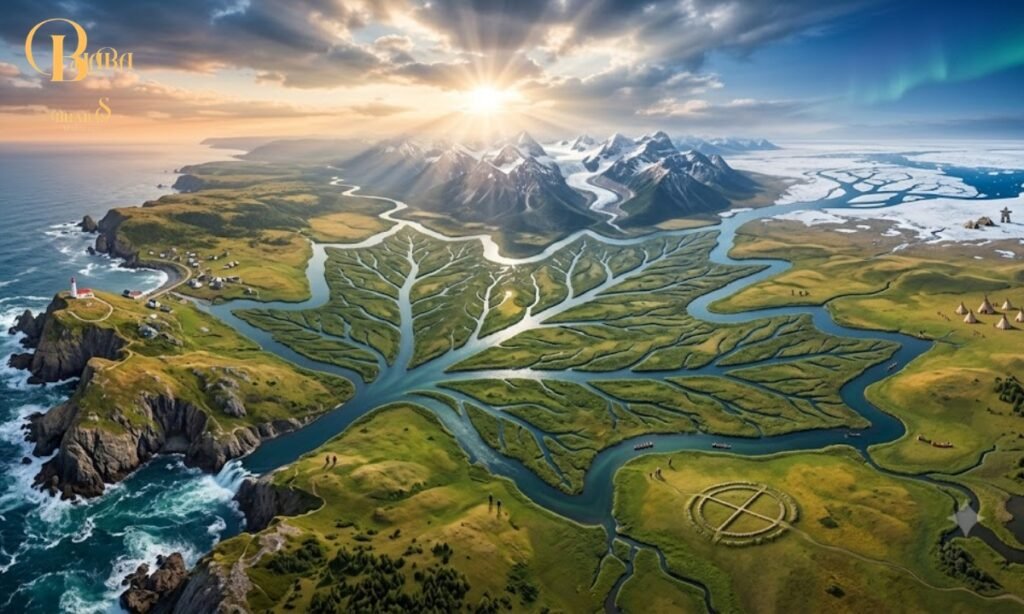
There is a reason the country’s motto is A Mari Usque Ad Mare — from sea to sea. Canada is, among other things, a geography that humbles.
Stand on the edge of Cape Breton and watch the Atlantic hurl itself against the cliffs and you understand something about endurance. Drive the Trans-Canada through the shield and the plains and feel the hours dissolve and you understand something about distance and patience. Watch the northern lights spiral green and violet over Yellowknife in January and you understand something that has no name in English — a kind of sacred smallness, a grateful belonging.
This land shaped the people who have lived here for thousands of years. It continues to shape everyone who arrives.
The Indigenous nations of Turtle Island — the Cree, the Anishinaabe, the Haudenosaunee, the Métis, the Inuit, and hundreds more — have always known what the land asks of those who live on it: humility, reciprocity, care. That wisdom, long suppressed by colonial institutions, is returning to the center of Canadian public life. This Canada Day, more communities are hosting Two-Row Wampum ceremonies, land acknowledgments, and Indigenous-led cultural events alongside the fireworks than at any point in this country’s recent history.
That is not virtue signaling. That is a country slowly, imperfectly, genuinely learning to honor its oldest and most important relationships.
The Generation That Will Define Canada Next
The Canada of 2026 is, in measurable ways, the most diverse it has ever been. Somewhere between 25 and 30 percent of the population is foreign-born. The median age of newcomers is younger than the median age of native-born Canadians. The suburbs of major cities are being rebuilt, street by street, by people whose parents grew up on different continents.
And something fascinating is happening.
The children of these newcomers — and their children — are not caught between worlds. They are inventing new ones. They are Somali-Canadian poets writing in three languages. They are Filipino-Canadian chefs fusing Ilocano flavours with Quebec terroir. They are second-generation Pakistani-Canadian hockey players and Haitian-Canadian politicians and Iranian-Canadian scientists who are expanding what “Canadian” has ever meant or could mean.
This is the generation that will define what Canada chooses to be next.
They deserve a Canada Day that sees them clearly. Not as a symbol, not as evidence of policy success, but as full participants in the national story — people with agency, with complexity, with something to say about the country’s future that no one born here forty years ago would have imagined.
If Canada can honor that — genuinely, practically, not just ceremonially — then the 159th birthday of this Confederation will be something worth celebrating with full hearts.
Reconciliation Is Not a Chapter. It’s the Story.
There is no honest Canada Day message in 2026 that does not address the ongoing journey of reconciliation between Canada and its Indigenous peoples.
Not because it is required. Because it is true.
The Truth and Reconciliation Commission’s 94 Calls to Action remain a living document — some calls answered, many still waiting, all of them urgent. The National Day for Truth and Reconciliation on September 30th has grown in meaning every year since its establishment. Orange Shirt Day resonates deeper with each passing year as more Canadians come to understand what residential schools actually were, what they actually did, and what healing actually requires.
July 1st and September 30th are not in competition. They are in conversation.
To celebrate Canada Day with clear eyes is to hold space for both: the genuine pride in what this country has built and the genuine accountability for what it has broken. That kind of mature patriotism — loving your country enough to demand it be better — is harder than waving a flag. It is also more durable.
Five Ways to Make This Canada Day Count
1. Attend an Indigenous-led event. Pow wows, cultural gatherings, and public ceremonies are taking place in cities and towns across the country. Show up, listen, and learn.
2. Read something written by a Canadian you’ve never heard of. Canada has one of the most quietly extraordinary literary traditions on earth. Branch past the familiar names and find a voice from a community or region you don’t know well.
3. Learn one fact about the land you’re standing on. The Treaty territory, the traditional territory, the name in the language that was spoken there for thousands of years before English or French arrived.
4. Share a meal across a cultural boundary. Find a restaurant, a community feast, a neighbour’s backyard — and eat food you didn’t grow up with, made by someone whose story is part of Canada’s story now.
5. Tell someone why you love this country — specifically. Not generically. Not “it’s nice here.” Find the real, particular reason. The exact landscape, the exact moment, the exact person who made you feel like you belonged. Write it down. Say it out loud. Send it to someone who might need to hear it.
A Country That Keeps Choosing
On July 1, 1867, three colonies made a choice.
Every July 1st since then, the descendants of those colonists, and the survivors of those they colonized, and the millions who have arrived from every corner of the planet, make the choice again.
The choice is not between perfection and failure. The choice is between engagement and withdrawal. Between accountability and denial. Between a future built together and a retreat into smaller, harder, lonelier versions of ourselves.
Canada keeps choosing engagement. Imperfectly, frustratingly, with arguments and contradictions and occasional backslides — but choosing it.
That is worth celebrating. Loudly, joyfully, and with full awareness of what the celebration requires of us.
Happy Canada Day, 2026
To the fisherman on the wharf in Lunenburg watching the fog lift.
To the grandmother in Brampton who has worn her sari every July 1st for thirty years because this is her country and she has never needed to explain that to anyone.
To the teenager in Whitehorse who hiked into the backcountry just to watch fireworks from a ridge where no one else could see them.
To the residential school survivor in Thunder Bay who finds a reason, every year, to keep building something better for their grandchildren.
To the new citizen who just raised their right hand and spoke the oath with a trembling voice because it meant everything.
To every person, from every nation, every language, every background, every wound and every hope — who chose Canada, or was born into it, or is still figuring out what it means to belong:
This country is yours. Help us finish building it.
Happy Canada Day.

David is a passionate writer with four years of experience in blessings and prayers blogging. He currently works at Bhabas.com, crafting heartfelt messages that inspire hope, offer comfort, and help people express emotions in a meaningful and lasting way.