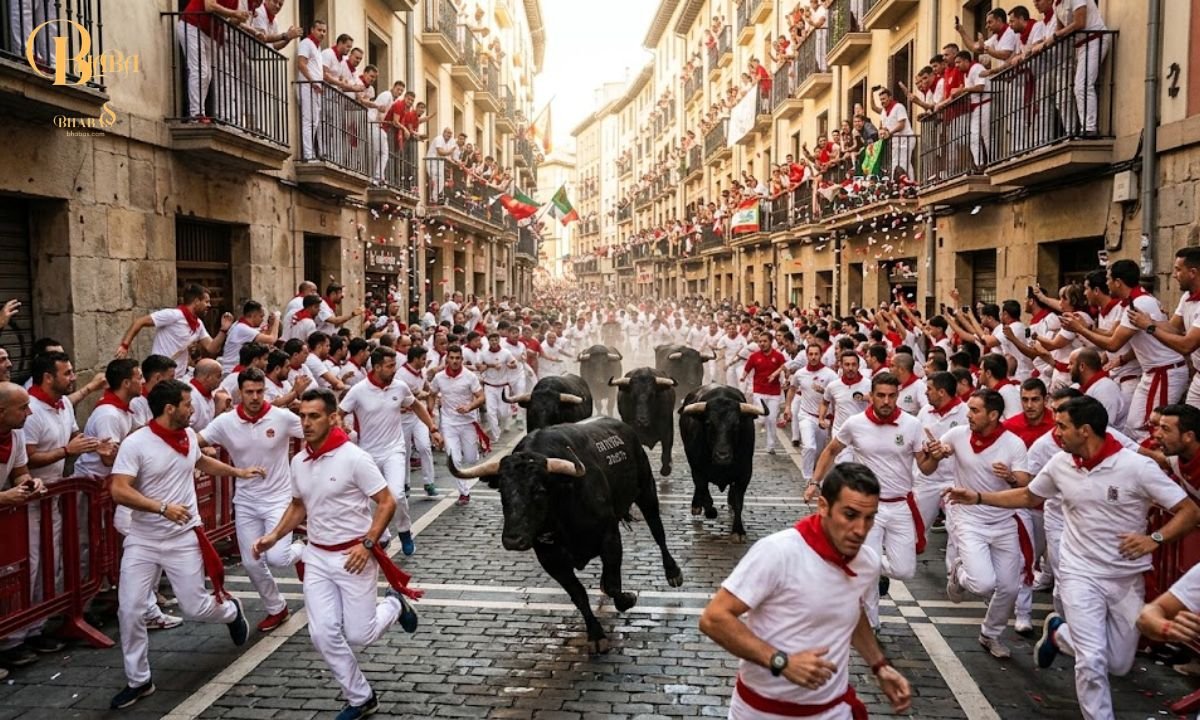
The thundering hooves. The roaring crowd. The narrow cobblestone streets of Pamplona filled with adrenaline, red scarves, and stories that last a lifetime. Spain’s Running of the Bulls — known locally as the Encierro — is one of the most iconic, thrilling, and debated festivals on the planet. Whether you’re dreaming of participating, planning to watch from the sidelines, or simply curious about what drives thousands of people to sprint beside 600-kilogram bulls every year, this complete guide has everything you need to know.a
What Is the Running of the Bulls? A Tradition Like No Other
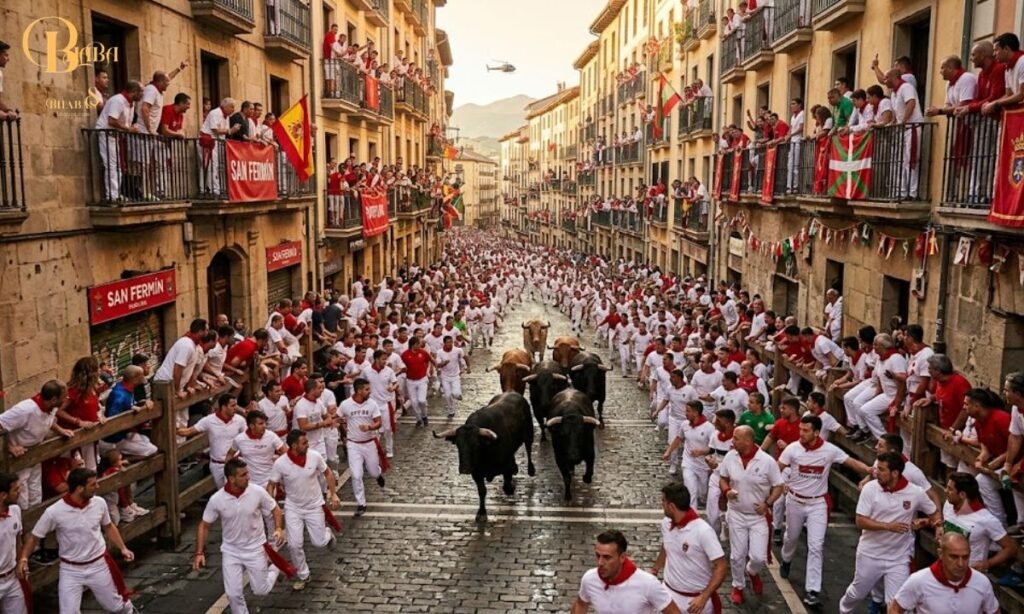
The Running of the Bulls is not just a race — it is a living, breathing piece of Spanish culture that dates back centuries. Held annually in Pamplona, the capital of the Navarre region in northern Spain, the event is the centerpiece of the San Fermín Festival, which runs every year from July 6 to July 14.
Each morning during this nine-day celebration, six Spanish fighting bulls — accompanied by six steers and several herders on horseback — are released from their holding pen at the Calle Santo Domingo and guided through 875 meters of narrow, winding streets to the Plaza de Toros (the bullring). Runners, called mozos, race just ahead of the bulls, trying to stay close without being trampled, gored, or crushed.
The entire run lasts between two and five minutes. In those few minutes, your heart beats faster than it ever has before.
The History Behind the Horns: How It All Started
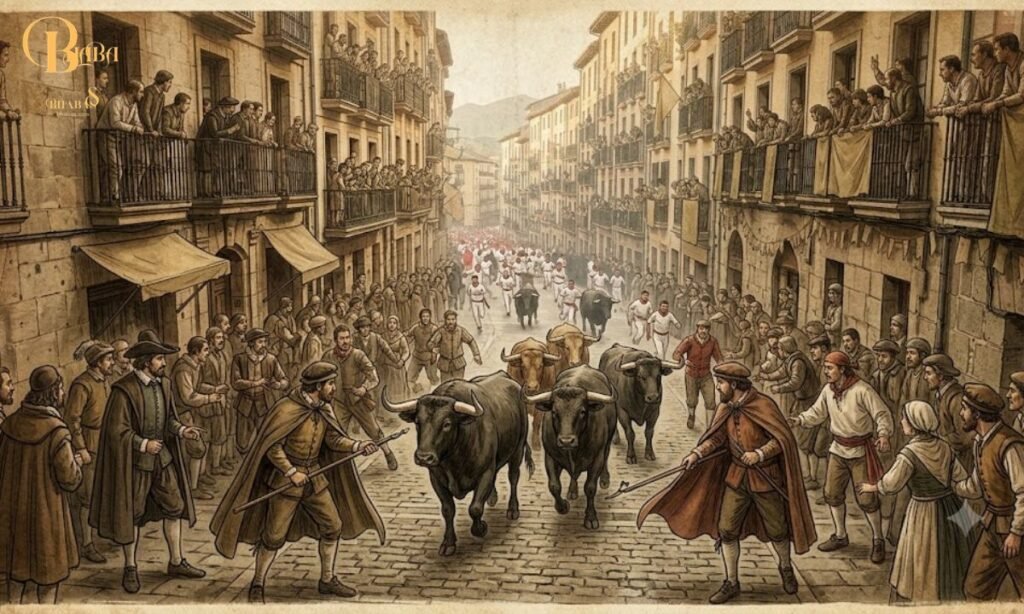
Long before Pamplona became an international spectacle, the encierro was simply a practical matter. Cattle traders needed a way to move bulls from outside the city walls to the bullring for the afternoon’s corrida (bullfight). Young men began daring each other to run alongside the animals, and what started as a logistical solution evolved into a deeply rooted cultural ritual.
By the 14th century, the tradition was well-established in the Navarre region. The San Fermín festival itself honors Saint Fermín, the patron saint of Navarre, who according to local legend suffered martyrdom in the third century. As the festival grew in religious and civic importance, the morning bull run became its most talked-about centerpiece.
The event gained global fame thanks largely to Ernest Hemingway, whose 1926 novel The Sun Also Rises painted a vivid, romantic portrait of Pamplona and the festival. Hemingway himself attended the festival multiple times and became one of its most passionate advocates. Today, a bronze statue of Hemingway stands near the entrance of the bullring — a nod to the writer who put Pamplona on the world map.
The Route: Every Corner Counts
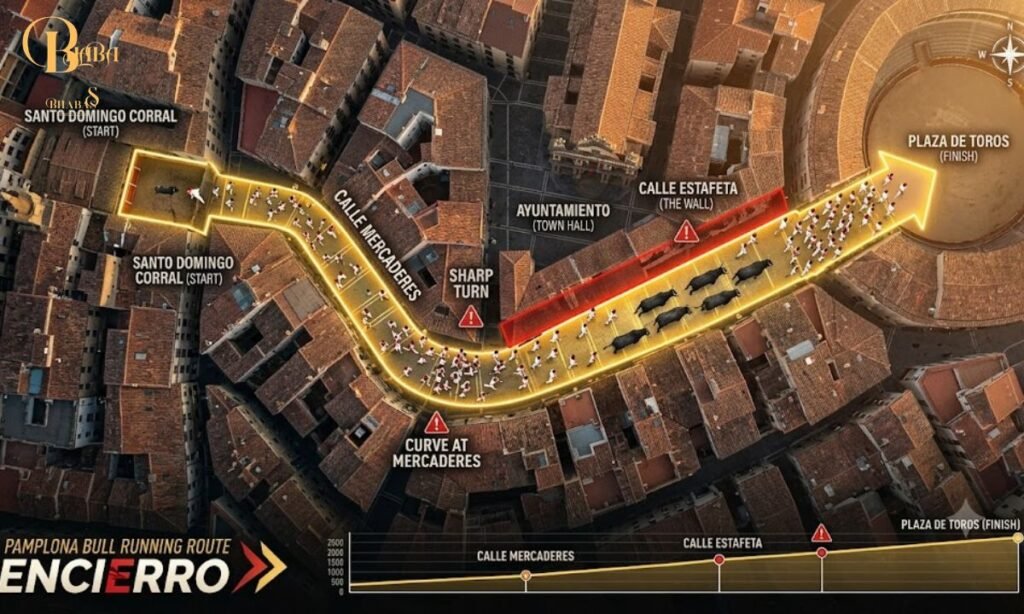
Understanding the route is crucial if you plan to participate or watch intelligently. The 875-meter course passes through several distinct sections, each with its own character and level of danger.
Calle Santo Domingo is where the run begins and is widely considered the most dangerous stretch. The street is narrow and steeply inclined, and the bulls move incredibly fast here, covering the ground in seconds. There’s little room to maneuver.
La Curva (the curve at Mercaderes) is the first sharp turn in the route. Bulls are known to slip and pile up here due to the slick cobblestones, making it chaotic and unpredictable. Runners who underestimate this corner often find themselves caught in a tangle of hooves and horns.
Calle Estafeta is the longest straight section of the route, stretching about 300 meters. This is the stretch you’ll see most frequently in photographs — a sea of white and red with bulls cutting through the crowd like arrows. Many experienced runners choose this section because they feel they have more control.
The Callejón is the narrow entrance tunnel leading into the bullring. It is claustrophobic, loud, and chaotic. Runners sometimes bottleneck here, which can lead to serious pile-ups.
The Bullring itself marks the finish line, where the crowd inside cheers wildly as runners and bulls pour through the gates. Baby bulls are then released into the ring for one last round of excitement before the morning’s event officially concludes.
The Rules: Yes, There Are Rules
The encierro is not a lawless free-for-all. Pamplona takes the safety of participants seriously — or at least as seriously as one can in an event involving half-ton animals charging at full speed.
Official rules include the following: runners must be at least 18 years old. Intoxicated runners are prohibited from participating. You may not taunt or provoke the bulls. Cameras and backpacks are not allowed on the course — they create tripping hazards and can distract the animals. Runners who fall are advised to stay down and curl into a ball, covering their head with their arms and waiting for the bulls to pass.
The traditional dress code is equally important to locals: white trousers, a white shirt, a red sash around the waist, and a red neckerchief. Wearing this attire is a sign of respect for the tradition and allows you to blend in with the crowd rather than standing out as an outsider.
What Are the Risks? Let’s Be Honest
The Running of the Bulls is dangerous. There is no soft-pedaling that fact. Since records began in 1910, 16 people have died in the official run, with many more suffering serious injuries each year. Gorings, trampling, and injuries from falls on the slippery cobblestones are common.
However, the risks are not as random as they might appear. Most injuries happen to inexperienced runners who make common mistakes: standing still in the path of the bulls, trying to touch the animals, running while intoxicated, or not understanding the flow of the crowd. Experienced runners treat the event with immense respect and preparation.
Medical teams are stationed throughout the route. The city has a well-coordinated emergency response system. First-aid stations are positioned at key points, and runners are advised to seek medical attention immediately if injured — even for minor wounds.
How to Participate: A Practical Guide for First-Timers
If you’ve decided to run, preparation is everything. Here is what you need to know before you lace up your shoes.
Arrive in Pamplona early. The festival draws enormous crowds. Accommodation fills up months in advance. Book hotels, hostels, or nearby campgrounds as early as possible. Many visitors base themselves in nearby towns like Burgete or Logroño and commute in daily.
Walk the route the day before. Knowing every corner, every narrowing, and every possible exit point can make the difference between a thrilling experience and a dangerous one. Walk it slowly. Pay attention to where the bulls might gain speed and where they might turn.
Join the crowd at the starting pen by 7:00 AM. The run begins at 8:00 AM sharp with two rockets. The first rocket signals that the bulls have been released. The second confirms all bulls are out. Runners must be in position before the first rocket fires.
Choose your spot wisely. If you’re a first-timer, many experienced runners recommend the Calle Estafeta stretch, where there’s more room and the direction of the bulls is more predictable.
Stay aware and stay sober. Never run if you’ve been drinking the night before and are still affected. The city actually checks and turns away visibly intoxicated runners at the start.
Watching the Run: The Best Spots in Pamplona
Not everyone wants to sprint alongside the bulls — and that is perfectly fine. Watching the run can be just as thrilling, especially from an elevated position.
Rented balconies along the route offer the best views. Local residents rent out their window and balcony spaces for the duration of the festival. These spots book up fast but offer an unobstructed, close-up view that no photograph can fully capture.
The wooden barricades along the course have gaps where spectators can watch for free — though competition for spots is fierce, and you’ll need to arrive very early (some people start queuing at 4:00 or 5:00 AM).
The bullring is a fantastic viewing option. Tickets to sit inside the ring and watch the runners and bulls pour in through the tunnel are available for purchase. The atmosphere inside is electric, and you’ll see the final chaotic moments of the run up close.
Local television also broadcasts the entire run live each morning, so hotels and bars throughout the city are packed with viewers who choose to enjoy the spectacle safely from indoors.
Beyond the Bulls: The Full San Fermín Festival Experience
The encierro is just one part of a much larger, week-long party. The San Fermín Festival is one of Spain’s most exuberant celebrations, and Pamplona transforms completely during these nine days.
The Opening Ceremony (Chupinazo) on July 6 is when the festival officially begins. Thousands gather in the town square as the mayor fires a rocket from the balcony of the Town Hall. At that moment, the crowd erupts — red scarves fly into the air, champagne is sprayed, and the party begins. It is one of the most joyful, chaotic, and overwhelming moments of collective human energy you will ever witness.
Evening bullfights take place at the Plaza de Toros every afternoon during the festival. These are serious, ritualized events with skilled matadors, and they remain deeply controversial. Attending is a personal decision — but understanding the bullfight gives important context to the morning run, as the two events are directly connected.
Live music, dancing, and street parades fill every evening. The riau-riau parade, giant puppet processions (gigantes y cabezudos), and fireworks displays are all part of the schedule. Pamplona’s old town becomes one enormous outdoor party.
Local food and drink deserve serious attention. Navarre is known for exceptional cuisine. Do not leave without trying pintxos (the Basque-influenced small bites), pimientos del piquillo (roasted peppers stuffed with cod or meat), and local Garnacha and Tempranillo wines. The region’s rosé wines are also outstanding and widely available.
The Controversy: Animal Rights and Cultural Debate
The Running of the Bulls is not without criticism, and any honest account of the festival must address the debate surrounding it.
Animal rights organizations, including PETA, have long campaigned against the event. Their position is that the bulls are subjected to fear, stress, and pain — and that the afternoon bullfights that follow inevitably end in the animal’s death. Large-scale protests take place outside Pamplona each year, and some cities in Spain have created cruelty-free alternatives using fake mechanical bulls.
Defenders of the tradition argue that the encierro is a centuries-old cultural heritage that cannot be reduced to a simple moral calculation. For many people of Navarre, San Fermín is not just a tourist event — it is woven into their identity, their family memories, and their sense of community. They also point out that the animals involved are specially bred Spanish fighting bulls, not domesticated livestock.
This is a genuinely complex debate without easy answers. If you attend, it is worth taking time to understand both perspectives rather than dismissing either.
Best Wishes for Your San Fermín Adventure
Whether you’re cheering from a balcony, sprinting down Estafeta, or simply soaking in the incredible atmosphere of Pamplona during festival week — we hope your experience is unforgettable.
May your feet be swift and your instincts sharp if you choose to run. May the friends you make in Pamplona become friends for life. May every pintxo be perfect and every glass of Navarrese wine bring warmth to your evenings. May the music in the streets stay with you long after you’ve returned home.
To everyone making the journey to Pamplona for San Fermín: go with open eyes, a respectful heart, and the courage to be fully present in one of the world’s great human experiences. ¡Viva San Fermín!
Quick Facts: Spain Running of the Bulls at a Glance
| Detail | Information |
| Location | Pamplona, Navarre, Spain |
| Annual Dates | July 6–14 |
| Run Start Time | 8:00 AM daily |
| Route Length | 875 meters |
| Duration of Run | 2–5 minutes |
| Minimum Age to Run | 18 years old |
| Traditional Attire | White and red |
| Festival Name | San Fermín Festival |
Final Thoughts
Spain’s Running of the Bulls is raw, real, and unlike anything else in the world. It sits at the intersection of history and adrenaline, culture and controversy, community and chaos. No matter how many photographs you’ve seen or videos you’ve watched, nothing quite prepares you for the experience of standing on those streets as the city holds its breath at 7:59 AM.
Whatever role you play in the festival — runner, spectator, critic, or curious traveler — Pamplona will leave a mark on you. And that, perhaps, is the truest measure of a tradition that has endured for centuries and shows no signs of slowing down.
Planning to attend? Share your San Fermín stories and tips in the comments below. And if you found this guide helpful, share it with someone who’s been dreaming of Pamplona.

David is a passionate writer with four years of experience in blessings and prayers blogging. He currently works at Bhabas.com, crafting heartfelt messages that inspire hope, offer comfort, and help people express emotions in a meaningful and lasting way.