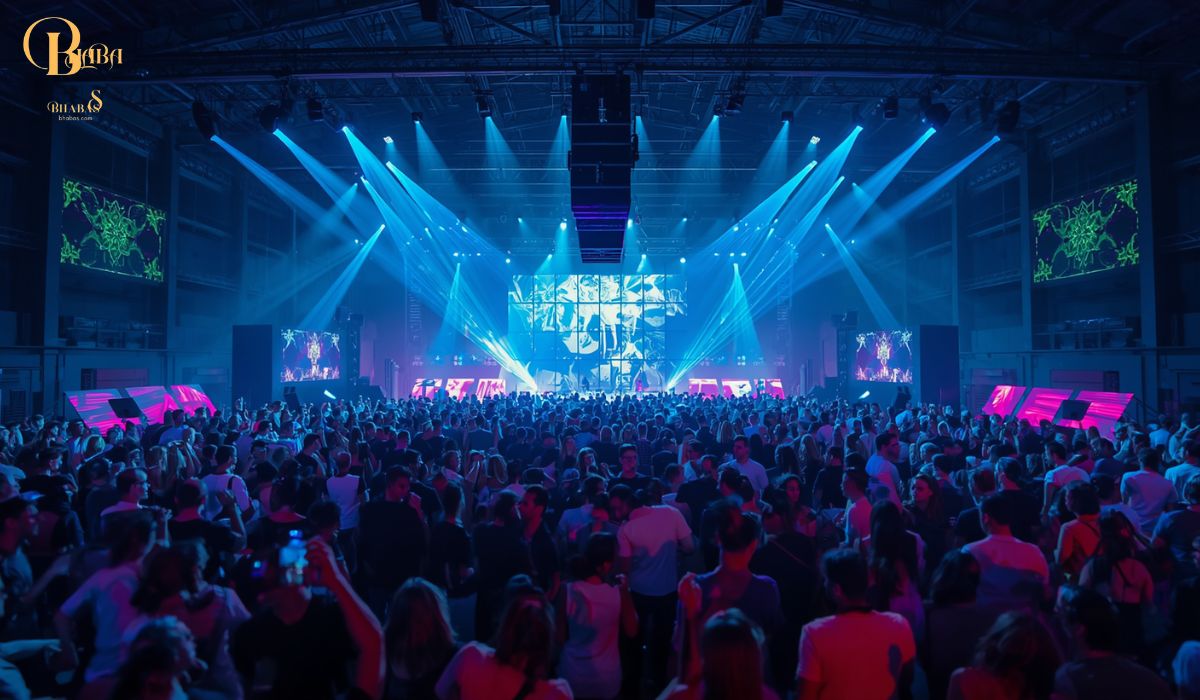
There is a specific moment at the Sónar Festival in Barcelona that no livestream, TikTok recap, or highlight reel can ever capture.
It is 3:00 AM at Sónar by Night. You are standing inside the massive, hangar-like Fira de Barcelona. The bass isn’t just sound; it is a physical force, rearranging your internal organs. On stage, an experimental Japanese duo is playing a custom-built laser harp while an AI generates fractals in real-time based on the crowd’s heartbeat. To your left, a Michelin-starred chef is handing out liquid nitrogen foam spheres. To your right, a venture capitalist in sneakers is arguing with a graffiti artist about blockchain.
This is not a music festival. This is a working prototype of the future.
For twenty-nine years, while other festivals chased the mainstream, Sónar has been busy building a playground for the intellectually curious hedonist. If Coachella is a photo op and Glastonbury is a muddy rite of passage, Sónar is a conference for the coolest species of human on earth: the one who believes that a 4/4 kick drum and a line of code can change the world.
The Anatomy of the Daywalker: Sónar by Day
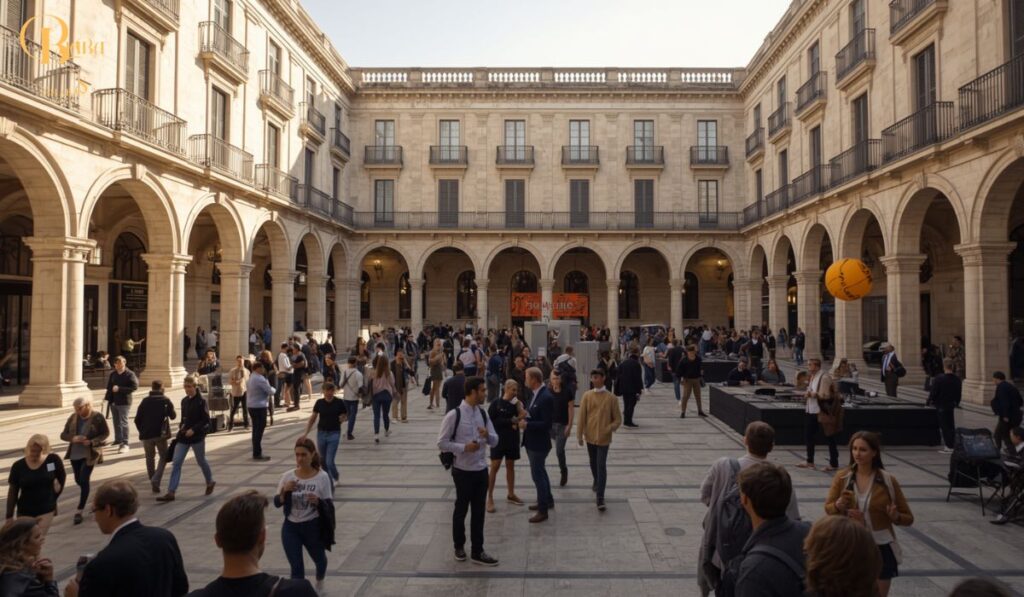
Most festivals are a war of attrition. You arrive at 2:00 PM, drink overpriced beer, suffer sunburn on a crowded field, and wait eight hours for the headliner. Sónar breaks this model completely by splitting its identity into two distinct, symbiotic personalities.
During daylight hours, the festival transforms into Sónar by Day , housed in the modernist marvel of the Fira de Barcelona Montjuïc. But don’t call it a “day party.” That implies something dirty or illicit. Sónar by Day is the brain of the operation.
Walking through the sun-drenched courtyards, you are as likely to bump into a software engineer from Berlin as you are a DJ from Detroit. The vibe is cerebral. Conversations happen over terrible (but somehow perfect) espresso on concrete steps. The music is experimental, ambient, or just warming up—think deep house, leftfield electronica, and live jazz experiments that actually work.
But the real magic of the day is Sónar+D.
This is the festival’s secret weapon. Sónar+D is a congress of digital culture and creative technology that makes SXSW look like a corporate boardroom. It is not a side-show; it is the main event for the brain.
Here, you don’t just watch a DJ spin. You watch a neuroscientist explain how dopamine release correlates with a drop in tempo. You sit in a virtual reality installation that visualizes the sound waves of a dying star. You listen to a pitch from a start-up building “haptic rave suits” so deaf people can feel the bass through their skin.
Last year, I watched a guy control a modular synth rig using only his eye movements. The year before, a collective from Amsterdam built a “silent disco” where the headphones translated body heat into rhythm.
Sónar understands a fundamental truth that the rest of the live music industry has yet to grasp: The future of music is interdisciplinary. It belongs to the coders, the architects, the visual artists, and the weirdos who think a laptop is a musical instrument, not a crutch.
The Descent into the Machine: Sónar by Night
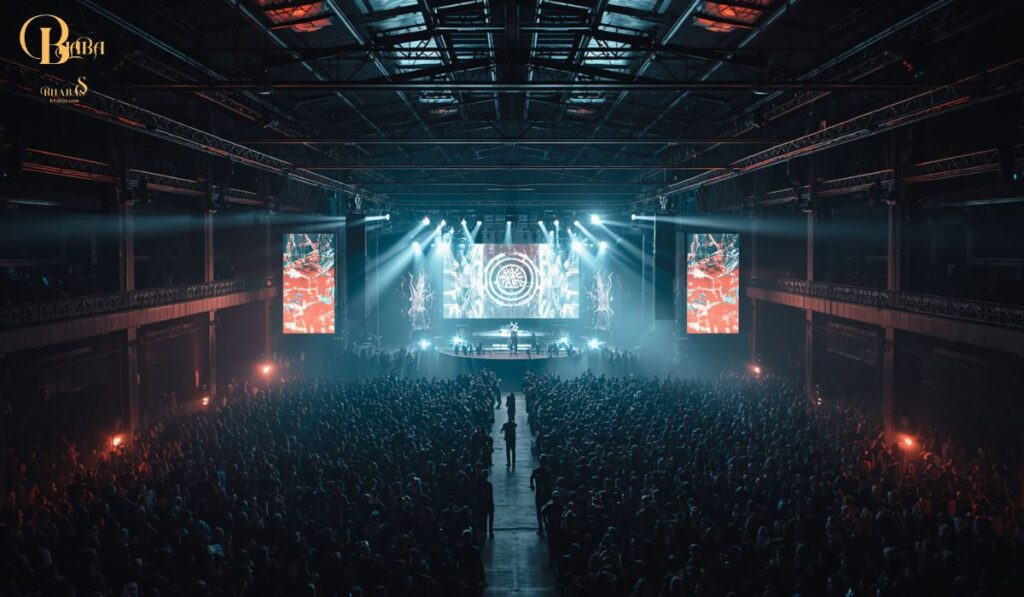
If the day belongs to the mind, the night belongs to the spine.
When the sun sets over Barcelona, the scene shifts. The intellectual energy of Montjuïc melts away, replaced by a primal, industrial pulse. You board a shuttle (or, if you’re smart, take the metro to Europa | Fira station) and you enter the campus of Sónar by Night.
Let me be clear: This is not a “main stage and three tents” situation. This is a labyrinth of sound. The venue is massive, sterile, and cavernous—like a Bond villain’s lair designed by IKEA.
There are four main stages, but the real experience is in the margins. You will find a secret DJ set inside a shipping container. You will walk down a corridor and suddenly be inside a 360-degree dome watching a Ukrainian artist melt a piano with a blowtorch in 8K resolution.
The sound quality at Sónar is legendary. Most festivals treat bass as a weapon. Sónar treats sound as architecture. The SonarClub stage is a marvel of acoustic engineering. You can stand directly in front of a Funktion-One rig and still have a conversation without screaming (though you probably won’t want to talk).
The lineup is a curator’s wet dream. Sónar does not chase the Billboard charts. They chase the bleeding edge. One set might be Aphex Twin playing a drill-n-bass masterclass that leaves you questioning reality. The next might be Rosalía (a hometown hero) doing a stripped-down flamenco-electronica fusion that makes the Spanish crowd weep with national pride. Then, at 5:00 AM, you might find an 80-year-old jazz drummer from Senegal doing a b2b with a 19-year-old hyperpop producer from Seoul.
It is global. It is weird. It is exhausting. And it is absolutely perfect.
The “Third Place” Factor
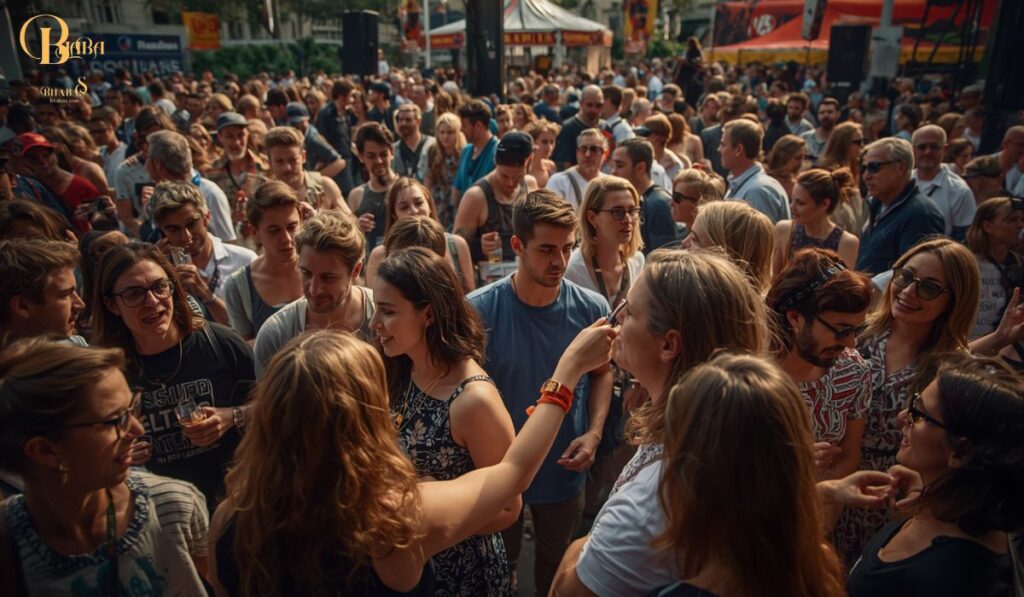
What truly sets Sónar apart from the muddy fields of Northern Europe or the VIP bottle service culture of the Americas is its unique demographic. They call this the “Sónar Family,” but it’s more accurate to call it a meritocracy of cool.
The age range at Sónar is stunning. You will see 18-year-olds in their first pair of platform boots dancing next to 65-year-old couples who have been coming since 1994. Because the festival is split between the tech conference and the music, you get a crowd that is respectful, curious, and drug-aware rather than drug-abusive.
There is no aggression. No ego. No “influencer pen” where people watch the show through their phones.
In fact, try to film a set at Sónar on your phone. Go ahead. You will feel a gentle, unspoken pressure to put it away. People are here to experience, not to document. That is increasingly rare in 2026. It feels like a secret society for people who still think music is magic, not content.
Barcelona: The Third Headliner
You cannot write about Sónar without acknowledging the venue: Barcelona. The festival doesn’t just happen in Barcelona; it breathes with the city.
Sónar owns the “Urban Festival” crown because it doesn’t wall itself off. During the day, the festival flows into the streets. You will find official Off-Sónar parties in hidden plazas in El Raval. You will find DJs playing on the beach at sunset that aren’t officially affiliated with the festival but might as well be.
The food, naturally, is incredible. You leave the festival grounds for an hour to eat patatas bravas and jamón at a local cervecería. You drink vermouth out of a tap. You sleep for four hours, wake up, and buy fresh orange juice from a stand on Las Ramblas.
The city becomes the hotel lobby for the world’s best club.
The Sound of Tomorrow
Let’s talk about the music, because despite the tech and the vibe and the city, Sónar’s longevity comes down to one thing: curation.
In 1994, when Sónar started, electronic music was still scary to mainstream audiences. It was the sound of warehouses and illegal raves. Sónar put it in a museum (the CCCB) and said, “This is art.” They legitimized the DJ as a musician.
In 2026, they are doing the same thing for AI, for Web3 music rights, for bio-sensing wearables, and for ambient music.
While the rest of the world is fighting over which rock band from the 90s should reunite, Sónar is booking the artist that hasn’t even released an album yet. They are booking the algorithm. They are booking the sound of a glacier melting, turned into a beat.
This forward-looking ethos means you rarely get “nostalgia acts” at Sónar. You get visionaries. You get pioneers. You get the feeling that you are witnessing the future five years before your friends back home hear about it.
There is a specific phrase attendees use: Getting Sonared. It means being so overwhelmed by the sensory input—the lights, the bass, the heat, the weird art—that you have to sit down on the cold concrete floor for ten minutes just to process reality. It is a compliment. It is a rite of passage.
Practical Magic: How to Survive the Blueprint
Because I want you to experience this properly, and because this isn’t a puff piece, let’s get tactical. Sónar is a marathon, not a sprint. If you treat it like a normal festival, you will collapse by midnight on Friday.
1. The Sleep Strategy: Do not stay at Sónar by Night until 6:00 AM on Friday if you have tickets for Day on Saturday. You will ruin yourself. Pick your nights. Usually, Friday night is the “exploration” night. Saturday night is the “destroy your body” night.
2. The Shoe Mandate: This is a concrete jungle. Those sleek leather sneakers? Leave them at the hotel. You need orthopedic-level support. You will walk fifteen miles a day between venues and stages.
3. The +D Pass: If you go to Sónar only for the music, you are wasting half your ticket price. Buy the full pass. Spend three hours at Sónar+D. Watch the talks. Play the VR games. Talk to the nerds. It will change how you hear the music at night.
4. Hydration is not a joke: Barcelona in June is a dry furnace. The combination of day-drinking, sun, and dancing creates a hangover that is medically dangerous. Drink water. Drink more water. Then have a coffee.
5. The Metro is your friend: Taxis are a nightmare at 4:00 AM. The Barcelona Metro runs all night during Sónar weekend. Buy a T-Casual pass. Ride the rails with the happy, sweaty masses. It is part of the experience.
The Verdict: A Festival for the Architects of Culture
Why does Sónar matter? In a saturated market of “premium” festivals, where tickets cost a mortgage payment and the lineup looks exactly the same as three other festivals, Sónar remains stubbornly, beautifully unique.
It is not for the casual fan. It is for the obsessive. It is for the person who reads liner notes. It is for the person who wonders what happens when you run a 303 synth through a granular delay pedal made in someone’s garage. It is for the person who thinks the future is terrifying, but wants to dance through the apocalypse anyway.
Sónar doesn’t just reflect culture. It manufactures it. Every major festival trend of the last decade—the rise of immersive art, the integration of food and music, the day-to-night format, the corporate sponsorship of “experiences”—Sónar did it first, and they did it better.
Attending Sónar is not a vacation. It is a pilgrimage to the center of the avant-garde. You will return home sleep-deprived, dehydrated, and utterly wrecked. But your mind will be buzzing. You will see sound in color. You will listen to your Spotify playlists differently. You will suddenly want to buy a synthesizer, or learn to code, or move to Barcelona.
You will have been changed.
Because in the end, the bass always fades. The laser harps get packed up. The AI fractals shut down. But the feeling—that electric, optimistic, terrifyingly beautiful feeling that the future is loud, bright, and inclusive—that stays.
Buy the ticket. Take the ride. Just remember to bring earplugs. The future is loud.

David is a passionate writer with four years of experience in blessings and prayers blogging. He currently works at Bhabas.com, crafting heartfelt messages that inspire hope, offer comfort, and help people express emotions in a meaningful and lasting way.