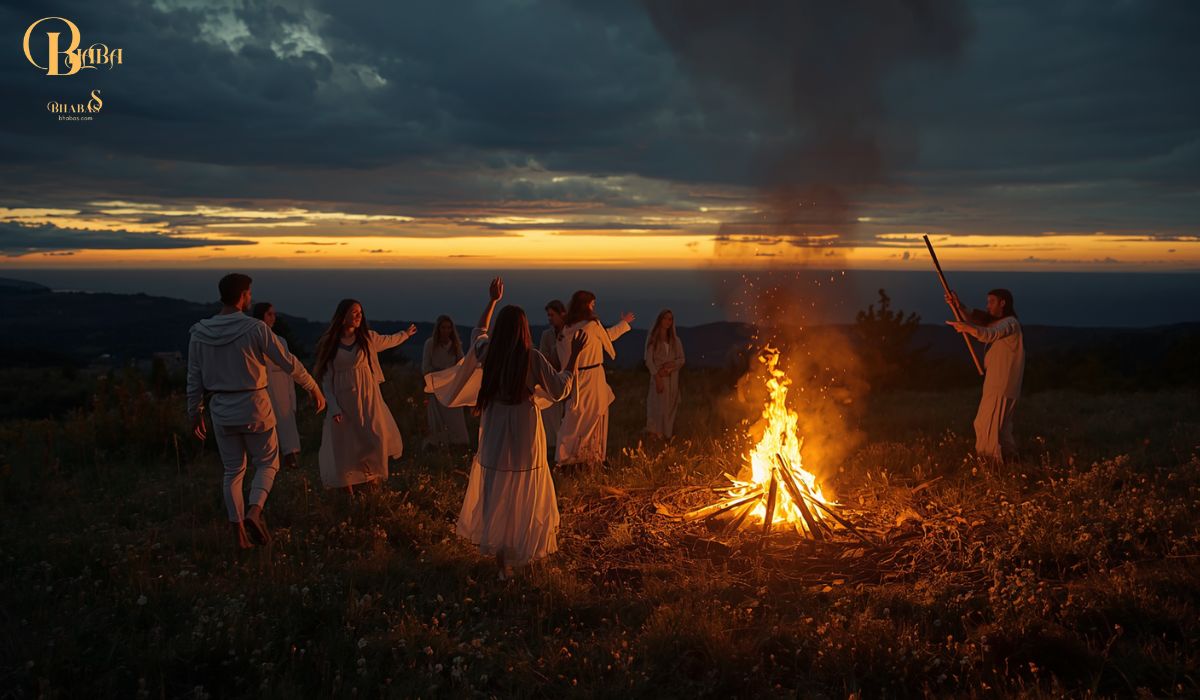
There is a moment, just as the sun dips below the horizon on June 23rd, when the air changes.
It is not a meteorological shift you can track on a barometer. It is older than that. It is the moment the manic, bright energy of the summer solstice exhales. The longest day has ended, but the night refuses to be afraid. This is Saint John’s Eve. And for those who know how to listen, it is the single most powerful night of the year to burn away the old and summon the new.
In a world that demands we be productive, linear, and data-driven, Saint John’s Eve arrives as a rebellion. It is a pagan heart beating inside a Christian calendar. It is fire, water, and herbs. It is the threshold where the mundane meets the mystical. If you have felt stuck, stagnant, or disconnected from the rhythm of the earth, this night is your reset button.
Let’s walk through the bonfire smoke. Let’s talk about why this forgotten vigil might just be the spiritual adrenaline shot you need.
The Night That Doesn’t Belong to Anyone (And Everyone)
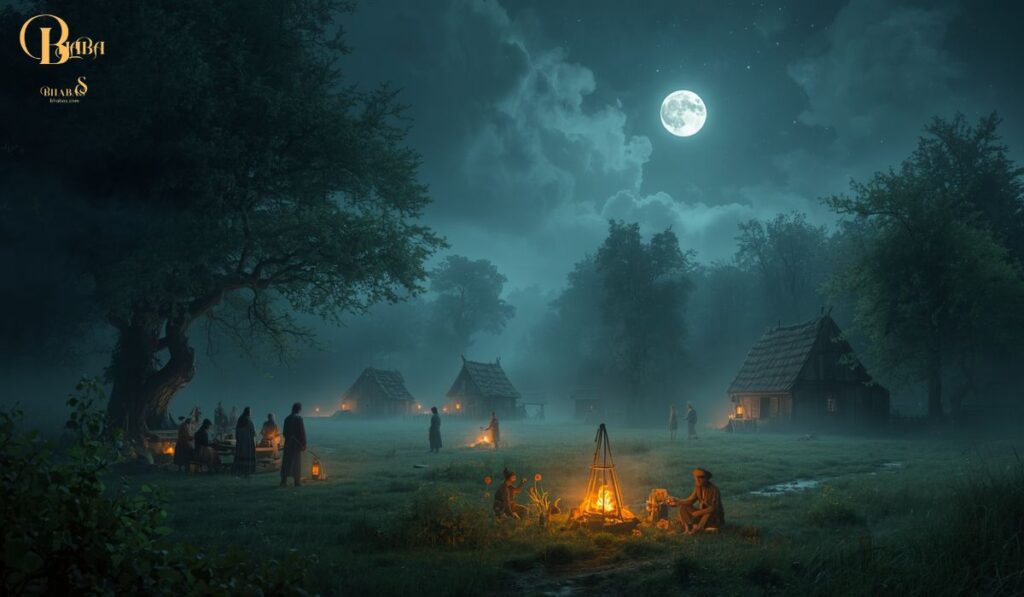
To understand Saint John’s Eve, you have to stop asking whether it is “Christian” or “Pagan.” It is both. It is neither. It is the residue of humanity’s oldest obsession: the sun.
Long before John the Baptist was a figure in the desert, every culture in the Northern Hemisphere celebrated the summer solstice. The Slavs called it Kupala Night. The Celts held Midsummer. The Norse lit Balder’s Balefire. Then, as history often does, the Church reframed the date. They dedicated it to Saint John the Baptist, born exactly six months before Jesus (Luke 1:36). If Christmas is the light coming into the world, Saint John’s Eve is the acknowledgment that the light must now begin to fade.
But the peasants never forgot the old ways. They simply hid them in plain sight.
On this night, gravity feels weaker. Folklore across Europe whispers that the veil—that invisible curtain between the living and the “other”—is gossamer thin. Spirits walk. Ferns bloom with magical flowers that grant invisibility. Water becomes a healing balm. This is not just superstition; it is a psychological truth. When you tell yourself that a specific night holds power, you grant yourself permission to do things you wouldn’t normally do. You jump over a fire. You strip down in a dew-soaked field. You scream your regrets into the wind.
That is the magic. It is the magic of intention.
The Alchemy of the Bonfire
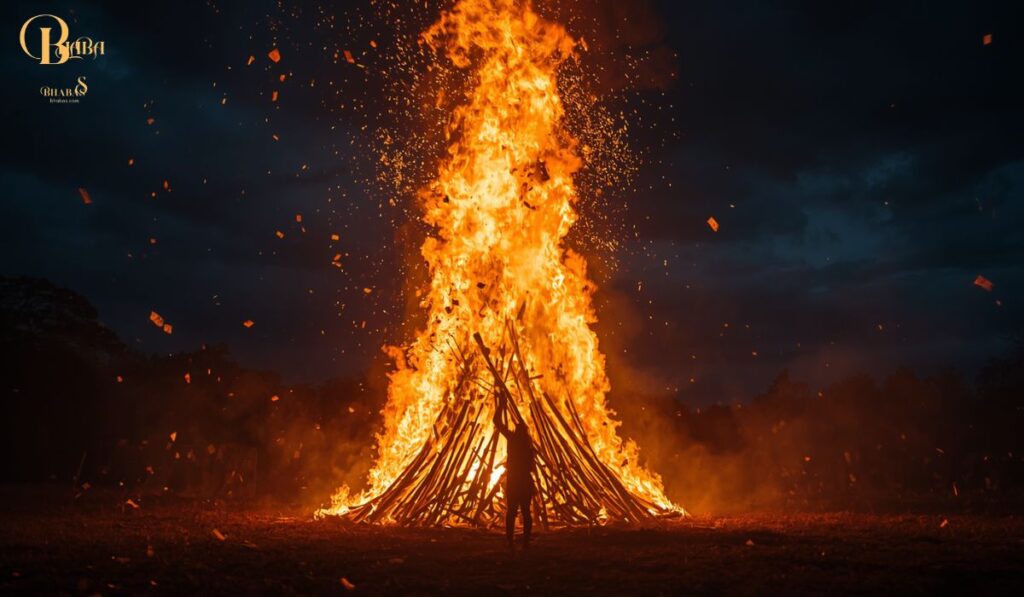
You cannot have Saint John’s Eve without the fire. It is the heart of the ritual.
In the Pyrenees, in rural Portugal, in the Nordic fjords, the bonfires are lit as soon as the sky turns indigo. But this is not a cozy campfire. This is a bale fire—a cleansing furnace. Historically, the bones of the previous year’s slaughtered animals were thrown into these flames (the word “bonfire” actually comes from “bone fire”).
For you, tonight, the fire represents combustion. Not of wood, but of identity.
What burns on your Saint John’s fire?
You write down the job that humiliates you. You write down the relationship you’ve outgrown. You write down the addiction to your phone, the jealousy you feel scrolling through social media, the version of yourself that apologizes for existing. You throw it into the flames.
And here is the unique rule of this night: You do not watch it burn with sadness. You dance. The fire of Saint John is not a funeral pyre for your ego; it is a rocket booster. The higher the flame leaps, the higher your frequency rises. When you jump over the embers (carefully, of course), you are not just playing a game. You are physically vaulting over your past self. You land on the other side as someone new.
The Dew of Forgetfulness and Forgiveness
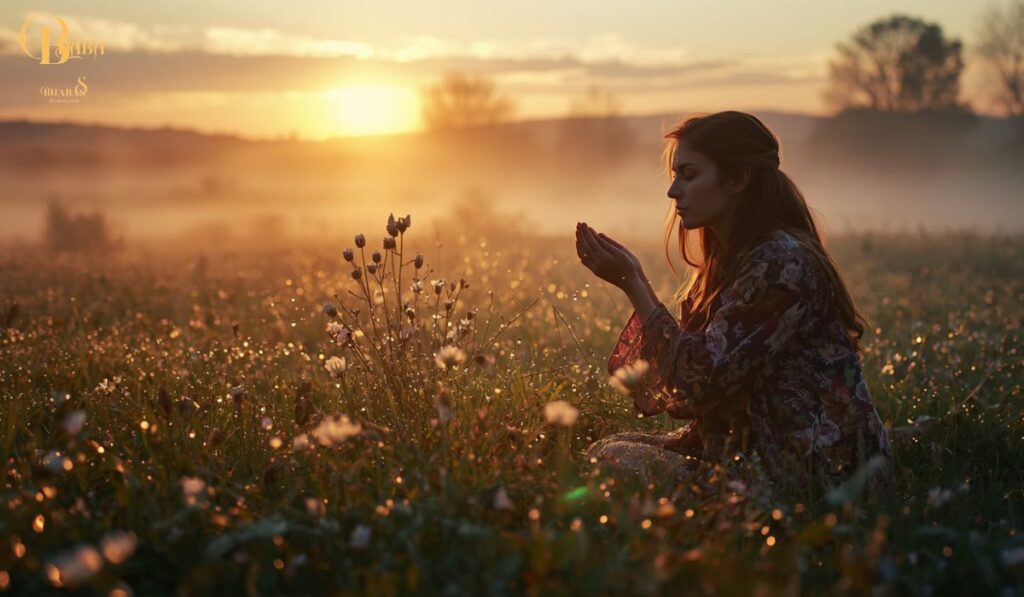
While the men tend to the fire in many traditions, the women go hunting for the dew.
Before dawn breaks on June 24th, the grass holds a power no pharmacy can replicate. Saint John’s Dew is said to cure skin ailments, erase freckles, and—most importantly—wash away despair. In Hungary, girls would roll naked in the dew to stay beautiful. In England, maidens would wash their faces in it to see their future husband’s face in a mirror.
But let’s strip away the patriarchal romance of “finding a husband.” Let’s look at what the dew actually is.
It is the condensation of the night’s breath. It is the earth sweating out the heat of the solstice. When you wash your face in the dew of Saint John’s Eve, you are performing an act of radical self-forgiveness. You are taking the tears you cried in the dark months and turning them into a blessing.
Tonight, take a bowl. Go outside at dawn. Collect the water from the leaves. Say this aloud: “I forget the winter. I forgive the frost. I am new.” Wash your hands, your face, and the back of your neck. You will feel a lightness that is not placebo. It is the lightness of ritual.
The Herbs of the Threshold: St. John’s Wort
You cannot write about this night without bowing to the plant that owns it: Hypericum perforatum, or St. John’s Wort.
This is the solar herb. Look closely at its leaves under the light, and you will see tiny perforations that look like windows. Folklore said these were the windows where the light of the solstice enters the plant. They are actually oil glands, but let’s stay in the magic for a moment.
St. John’s Wort is nature’s antidepressant. It is the herb of boundary setting. It was traditionally gathered at midnight on Saint John’s Eve, hung over doorways, and placed under pillows to ward off evil spirits (read: to ward off anxiety and nightmares).
A modern ritual for you:
On this evening, gather a bundle of wild St. John’s Wort (if available), or buy dried herb. Tie it with a red thread. As you tie each knot, state a boundary you are setting for the rest of the year.
- Knot one: I will not be available for chaos.
- Knot two: I will not shrink myself to make others comfortable.
- Knot three: I will protect my peace as fiercely as this plant protects the home.
Hang it by your front door. Leave it there until the next solstice. You will be surprised how many arguments never cross your threshold.
The Water Pilgrimage
While fire is the masculine expression of this night, water is the feminine. You need both. You need the yin and the yang.
In many coastal towns of Spain and Latin America (La Noche de San Juan), people head to the beach at midnight. They bathe backwards—walking into the sea facing the land. They jump seven waves. They leave their worries in the salt.
If you do not live near the ocean, a cold shower or a bath with salt and rosemary works just as well. The rule of the water is submersion. You must go under completely. When you surface, you spit out the old year. You cough up the disappointments.
Do this at exactly 11:00 PM. The water is colder than you expect. That shock to the system triggers a vagus nerve response. It forces you into the present moment. You cannot be anxious about your credit score when ice water is hitting your ribs. That presence is the magic.
What the Fortune-Telling Reveals (It’s Not Your Husband)
A huge part of Saint John’s Eve is divination. In the old days, girls would put eggs in ash to see the shape of their future spouse’s profession. They would peel apples in a single strip and throw the peel over their shoulder to see the initial of a lover.
We are going to update that.
Let’s not ask “Who will love me?” Let’s ask “What will I love?”
The Salt Ritual:
Take a handful of coarse salt. Hold it in your dominant hand. Think of a question you are afraid to ask. It could be: “Should I quit my job?” or “Is this friendship over?” or “Am I on the right path?”
Throw the salt over your left shoulder (where the negative spirits sit in folklore). Do not look back. Walk away immediately.
The answer will not appear in the salt. The answer will appear in the silence that follows. Your gut will drop or rise. That feeling—that immediate, visceral reaction—that is your divination. Trust it.
The Fern Flower: Chasing the Impossible
The most beautiful myth of Saint John’s Eve is the Fern Flower.
In Slavic and Baltic traditions, the fern never blooms. Except on this one night. For a single second at midnight, a tiny, fiery flower appears on the fern frond. Whoever finds it gains the ability to understand the language of animals, see buried treasure, and know the future.
Of course, you will not find a literal flower on a fern. Ferns reproduce via spores. They don’t bloom.
But you will find something if you go looking.
You will find the treasure of silence. You will find the treasure of walking through a forest at midnight, alone, with only the owl and the wind for company. You will find that you are not afraid of the dark. You will find that the treasure was never gold—it was the courage to look for magic in a cynical world.
Go out at 11:30 PM. Find a fern. Sit with it. Don’t look for a flower. Look for the feeling of being fully alive. That is the real treasure. That is the Athanatos—the undying spark.
A 5-Step Ritual for the Modern Seeker
You don’t need a village or a bonfire the size of a house. You need intention. Here is your blueprint for Saint John’s Eve, tailored for the lone wolf or the small tribe.
Step 1: The Purge (Sunset, 8:00 PM)
Write down three things that must die this year. Do not be polite. Be brutal. “My need for approval.” “My procrastination.” “The relationship that hurts me.”
Fold the paper three times.
Step 2: The Water (9:00 PM)
Take a bath or shower. As the water runs, say: “Earth, receive my heaviness. Water, wash away the lie. Air, breathe through my emptiness. Fire, tell me how to die.” (Yes, die. Die to the old self.)
Step 3: The Herbal (10:00 PM)
Light a single candle (your bonfire). Hold the paper you wrote over the flame. Let it catch. Drop it into a heat-proof bowl (a cauldron or a ceramic dish). Watch it turn to ash. Do not look away. This is your ego dissolving.
Step 4: The Threshold (11:00 PM)
Take the ash. Go to your front door. Open it. Blow the ash outside. Say: “You do not live here anymore.” Close the door. Lock it. You have just exorcised your own ghost.
Step 5: The Vigil (Midnight)
Stay awake until 12:01 AM. Do not look at a screen. Look at the candle. Drink water. Listen. At the stroke of midnight, whisper: “I am the light and the dark. I am the waning and the waxing. I am the Saint and the Sinner. So mote it be.”
Go to sleep. You will dream vividly. Write it down in the morning. That dream is the map for the next six months.
Why This Matters Right Now
We live in an age of digital solstices. We celebrate the “launch” of a product, the “drop” of a sneaker, the “premiere” of a show. We have lost the biological clock. We have forgotten that the earth has a rhythm that predates Wi-Fi.
Saint John’s Eve is a homecoming. It is the night where you are allowed to be superstitious, messy, loud, and emotional. It is the night where you don’t have to optimize your sleep schedule. You stay up because the veil is thin. You stay up because the ancestors stayed up.
When you light that candle tonight—even if it is a single tea light on a kitchen counter—you are joining a chain of humanity stretching back ten thousand years. You are saying, “I am still here. I still watch the skies. I still believe that a leaf can heal and a fire can transform.”
Do not let this night pass you by like a Tuesday. Mark it. Burn for it.
A Final Note on the Food (Because the Body is a Temple)
Traditionally, people eat grilled sardines, potatoes, and drink Flaming Doctor Pepper or herbal wine. But the real power food is herb bread—specifically, bread baked with rosemary, thyme, and St. John’s Wort infused oil. Knead the dough with your hands. As you knead, punch your frustrations into the gluten. Bake it. Eat it warm at midnight. This is communion. Not with a distant God, but with the salt of your own skin.
The Morning After
On June 24th, you will wake up tired. You stayed up late. You burned things. You maybe jumped over a candle or rolled in wet grass. But you will also wake up light.
The headache you’ve been carrying for three weeks? Gone.
The weight on your chest? Lifted.
The argument you’ve been rehearsing in your head? Irrelevant.
This is not magic in the Harry Potter sense. This is magic in the sense of psychodrama. You gave your pain a container (the fire). You gave your anxiety an action (the water). You gave your hope a shape (the herb bundle). You rewired your nervous system through ritual.
That is the power of Saint John’s Eve. It is the permission slip to be the high priestess or priest of your own life.
The Last Word:
As the sun sets on June 23rd, do not scroll. Do not watch television. Go outside. Look at the sky. It is the exact same sky your great-great-grandmother looked at. The same moon. The same threshold.
Take a deep breath.
The veil is thin.
Walk through it.
Happy Saint John’s Eve. May your fire burn bright, and your dew run deep.

David is a passionate writer with four years of experience in blessings and prayers blogging. He currently works at Bhabas.com, crafting heartfelt messages that inspire hope, offer comfort, and help people express emotions in a meaningful and lasting way.