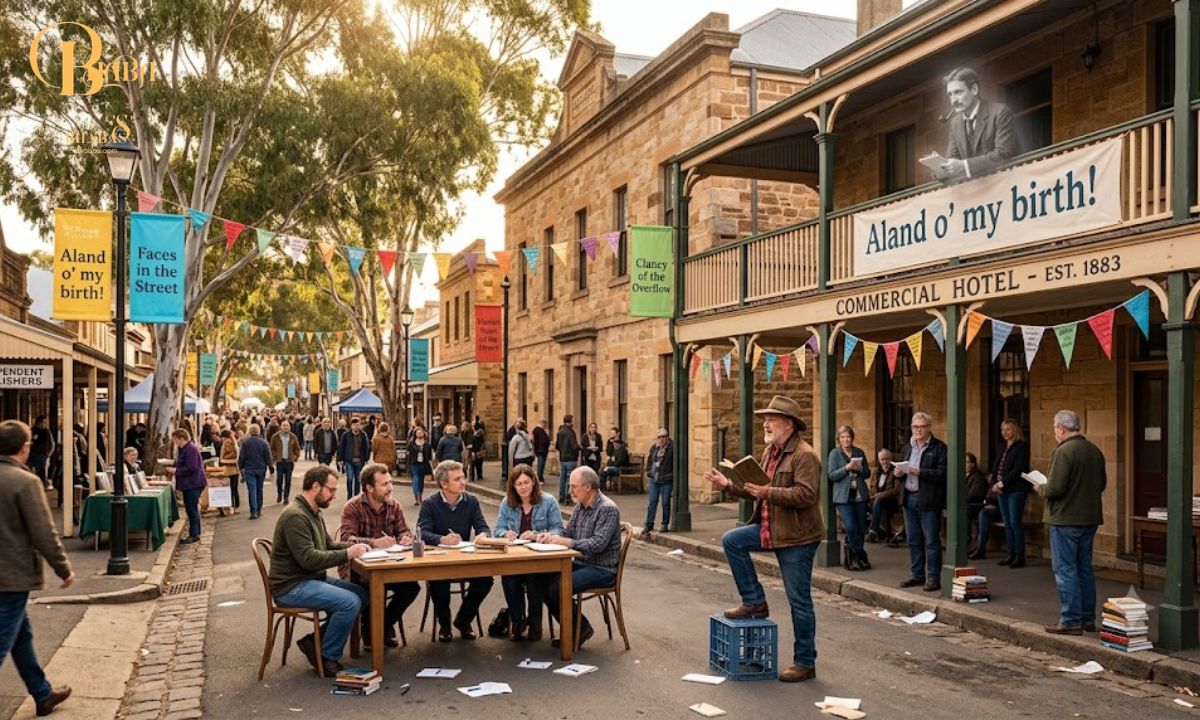
There is a specific kind of silence that exists in the Australian bush just before dawn. It isn’t empty. It is heavy. It smells of wet eucalyptus and cold ironbark. It carries the weight of every swagman who ever walked a dirt track looking for work, and every poet who ever sat by a campfire trying to turn that loneliness into a line of verse.
In the small town of Gulgong, New South Wales, that silence doesn’t stand a chance every June.
Because during the first full week of winter, the ghost of Henry Lawson wakes up. And he doesn’t come alone. He brings the shearers, the drovers, the drunkards, the true believers, and the heartbroken romantics. He brings the raw, bleeding heart of the Australian identity—the one we usually hide behind a veil of sarcasm and a barbed-wire fence.
Welcome to the Henry Lawson Festival. But forget everything you think you know about “folk festivals.” This isn’t knitted jumpers and lukewarm tea. This is a reckoning with who we are.
The Man Who Saw Through the Paint
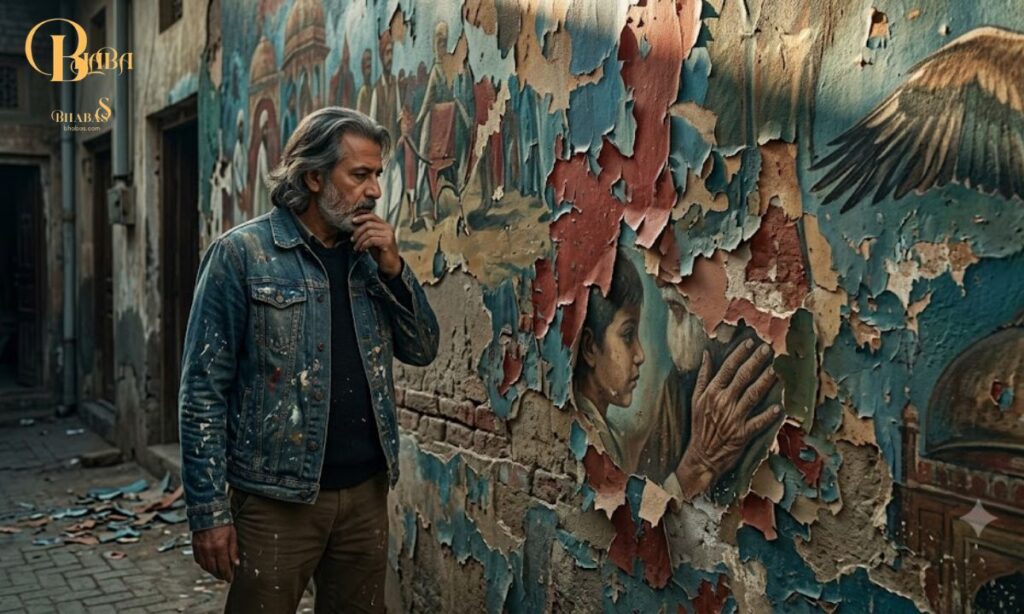
Before we talk about the festival, we have to talk about the man. Because you cannot understand the energy of Gulgong in June unless you understand why Henry Lawson still hurts us.
Born in 1867 on the goldfields, Lawson was not a romantic. He was a realist with a broken heart. While other poets wrote about the “glorious pastoral idyll” of Australia, Lawson wrote about the flies. He wrote about the dust. He wrote about the wife waiting in a bark hut for a husband who would come home drunk or not at all.
He wrote: “For the bush will never suit you, and the times are very hard.”
That is the secret ingredient of this festival. It is not a celebration of triumph. It is a celebration of survival. It honors the struggle of the human spirit against the vast, indifferent landscape of this continent.
When you walk into Gulgong today, you are walking into a town that Lawson himself immortalized. He called it “Gulgong’s Golden Gravel” and “The Rises.” The streets haven’t changed much. The Prince of Wales Opera House still stands. The open-air museum that is the town itself—with its 130 heritage-listed buildings—becomes a living manuscript.
When a Town Becomes a Living Poem
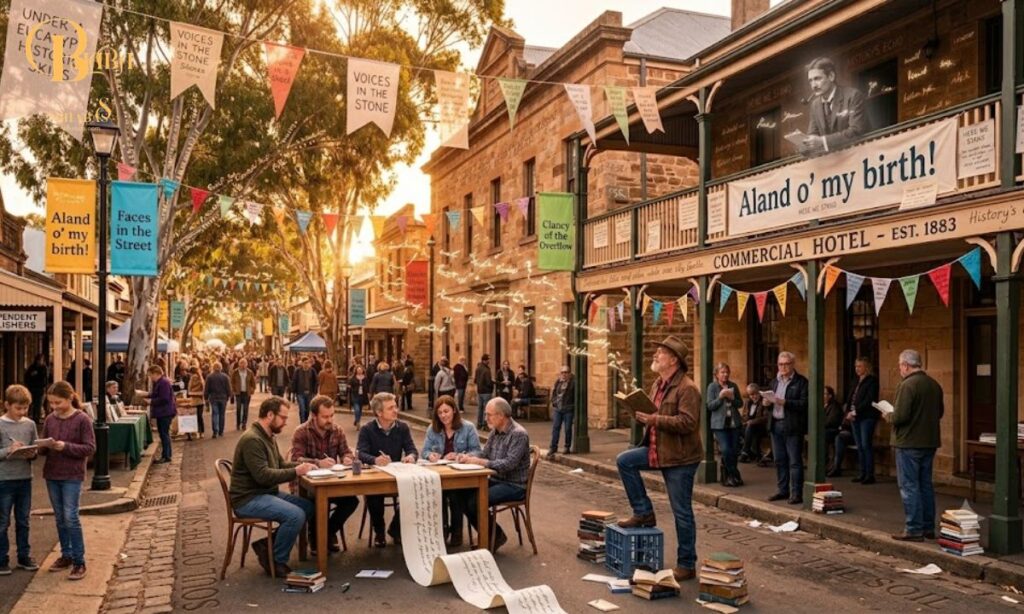
Here is where the Henry Lawson Festival does something radical. It refuses to be confined to a stage.
Most festivals are a destination. You drive to a field, park your car, and walk into a cordoned-off zone of “culture.” The Henry Lawson Festival rejects that premise. The entire town of Gulgong is the venue. The footpaths are the red carpet. The shopfronts are the galleries. The pub on the corner? That isn’t just a place to buy a beer; that is the podium.
From June 5th to June 9th (mark your calendars for 2026, but the spirit is eternal), the population of roughly 2,000 swells with poets, painters, pushbike riders, and truth-seekers.
But let’s strip away the brochure language. What actually happens?
The Arts & Writing Competition
This is not highbrow nonsense. Sure, there are strict categories (Open Poetry, Bush Poetry, Short Stories, Art), but the judging criteria are uniquely Australian. Judges aren’t looking for academic cleverness. They are looking for heart. They are looking for the line that makes the grizzled old shearer in the back row wipe his eye. This competition has launched careers, yes—but more importantly, it has validated the stories of people who thought no one wanted to hear them.
The Golden Wattle Procession
Every year, there is a street procession. It sounds quaint. It is not. It is a river of light moving through a winter town. Children carry lanterns. Local legends ride vintage bikes. The Gulgong Pipe Band plays, and the sound of bagpipes in a cold Main Street cuts through the night like a knife. It is a raw, emotional spectacle that reminds you that community isn’t a corporate buzzword; it is the only thing that keeps the dark away.
The Henry Lawson Memorial Address
You would expect a dry academic lecture. You would be wrong. Previous speakers have included the grittiest journalists, the most honest poets, and the sharpest social commentators in the country. This address usually lights a fire. It ties Lawson’s 19th-century concerns—republicanism, identity, alcohol, poverty, mental health—directly to the 21st century. It is startlingly relevant. It will make you angry. It will make you proud.
The “Pushbike Race” and the Rebellion of Nostalgia
There is an event on the program that looks silly on paper: The Henry Lawson Pushbike Race. Penny farthings, vintage bone-shakers, and old-school cruisers wobbling down the main drag.
But watch closely. Look at the faces of the people riding. They aren’t athletes. They are archivists. They are rebels against the tyranny of speed.
In a world where we demand instant everything—instant news, instant food, instant dopamine—the Pushbike Race is an act of defiance. It says: Slow down. Look at the verandahs. Hear the wheels creak. This is what time feels like when you aren’t trying to kill it.
That is the unique power of this festival. It forces a temporal shift. For four days, the clock ticks to the rhythm of the 1890s, but the conversations are about 2026. It is a time warp, but not a naive one. It is a strategic retreat into authenticity so we can fight modern loneliness better.
The Poetry Slams Don’t Pull Punches
Let’s talk about the spoken word. Because if you think poetry is dead, you have never been to the Henry Lawson Hotel during the festival.
The open mic sessions here are nothing short of gladiatorial. Lawson was a man who wrestled with depression and alcoholism. He knew the darkness. Consequently, the poetry allowed at this festival is not allowed to be fake.
You want to recite a greeting card rhyme? Stay home.
You want to talk about the drought cracking the earth on your farm? You want to talk about the son who moved to the city and never calls? You want to talk about the taste of failure and the stubborn, stupid, beautiful decision to try again anyway?
Then step up to the mic. The room will hold its breath. And when you finish, they won’t just clap. They will nod. Because they know. Lawson taught us that the greatest gift one Australian can give another is the truth.
A Sensory Overload of the “Real”
Let me take you on a walk. Imagine it is Friday night. You are standing outside the Prince of Wales Opera House. The air is so cold you can see your breath, the kind of cold that clarifies the mind.
Inside, someone is playing a lagerphone—that uniquely Australian percussion instrument made of beer bottle caps nailed to a broom handle. It sounds like a junkyard symphony.
You walk past the artisan markets. Forget the cheap imports you see at city fairs. Here, you find blacksmiths hammering out rose petals from scrap steel. You find woodcarvers turning fallen ironbark into spoons. You find painters who mix their ochres from local clay.
Then there is the food. Because no festival survives on poetry alone. The local CWA (Country Women’s Association) scones are legendary—light as a cloud, thick with jam and cream. You eat them standing up, wearing a beanie, watching a street performer recite “The Loaded Dog” from memory.
This is not curated lifestyle content. This is life.
Why You Need to Go (Even if You Hate Poetry)
Here is the brutal, honest pitch. You might not care about Henry Lawson. You might think bush poetry is corny. You might prefer concrete jungles to open skies.
Go anyway.
Go because you are tired of algorithm-driven culture. Go because you are starving for a conversation that isn’t a debate. Go because you want to remember what it feels like to stand next to a stranger and laugh at the same joke about a swagman and a billy can.
The Henry Lawson Festival is medicine.
It is medicine for the digital exhaustion that plagues us. There are “quiet spaces” built into the schedule—not sponsored wellness zones, but actual church halls and library corners where you can sit in silence and write with a fountain pen.
It is medicine for the loneliness of the freelancer, the remote worker, the creative soul who feels like a ghost in their own life. Lawson wrote, “His sorry soul, that had never been reached, was his loneliness and his curse.” At this festival, for four days, that curse is lifted. You are surrounded by people who speak your secret language.
The Architecture of Memory
Gulgong is special because it refused to bulldoze its past. Walking through the town, you see the “Holtermann’s Nugget” legacy—the largest specimen of reef gold ever found. You see the shops that have been family-run for five generations.
But the festival adds a layer. It turns the town into a living library.
There is the “Tent of Dreams,” a revival of the old traveling tent shows. There is the “Lawson’s Women” art exhibition, which finally gives voice to the women behind the men—the mothers, the wives, the barmaids, and the bushrangers’ molls who were the backbone of the bush.
This is where the “unique” factor kicks in. Most heritage festivals are static. You look at a building and read a plaque. The Henry Lawson Festival is kinetic. You watch a blacksmith work. You smell the ink on a freshly printed broadside poem. You hear the clatter of typewriters (yes, there is a typewriter poetry competition).
How to Survive (and Thrive) at the Festival
If you are going to do this, do it right. Do not be a passive tourist.
1. Stay in Gulgong (or nearby Mudgee). This is not a day trip. You need the night. You need the darkness of the country sky to appreciate the lanterns.
2. Bring a notebook. Not your phone. A physical notebook. Write down the overheard conversations. A man at the bar might say something like, “My grandfather knew Lawson. Said he was the saddest man he ever met, but the most honest.” That is gold.
3. Talk to the locals. The people of Gulgong are not actors. They are the custodians. Ask the shopkeeper about the floods. Ask the baker about the ghosts. They will tell you stories that aren’t in the official program.
4. Attend something that scares you. If you are a prose writer, go to the poetry slam. If you are a poet, go to the bush dance. Discomfort is where growth happens.
The Legacy: Keeping the Fire Lit
Festivals die. They fade. They become corporate or they lose their soul. The Henry Lawson Festival, running strong since 1958, has avoided this fate because it remains rooted in a dangerous idea: that words matter.
In an age of AI-generated content and deep fakes, the handwritten poem pinned to a community noticeboard in Gulgong is an act of rebellion.
Lawson wrote: “The world is waiting for the man who will come, and the world will hear him then.”
At this festival, that man is you. Or that woman. Or that non-binary artist. Or that child reciting their first rhyme. Everyone is given a turn. Everyone is given a voice.
Final Verse
You will leave Gulgong with dust on your boots and ink on your fingers. You will drive back to the city, or the coast, or the next town, and the radio will feel loud and shallow. You will look at the highway and think about the swaggies who walked that path before the bitumen.
And you will realize that Henry Lawson didn’t just write about Australia. He wrote the manual for how to survive it. The festival is just the annual reading of that manual.
So come for the poetry. Stay for the pushbike race. Drink a beer at the pub where Lawson might have stumbled. Sit in the cold and listen to the bagpipes.
But most importantly, bring your story. Because the one thing the Henry Lawson Festival cannot abide is silence. And the one thing it needs, right now, is you.
Details at a glance:
- What: Henry Lawson Festival of Arts
- Where: Gulgong, NSW (Heart of the Mudgee Region)
- When: Annually, June Long Weekend (June 5-9 for 2026, check local listings for exact dates)
- Vibe: Raw, honest, heritage, poetic, rebellious, and deeply human.
Pack a jacket. Bring a pen. Leave your cynicism at the gate. The bush is watching.

David is a passionate writer with four years of experience in blessings and prayers blogging. He currently works at Bhabas.com, crafting heartfelt messages that inspire hope, offer comfort, and help people express emotions in a meaningful and lasting way.