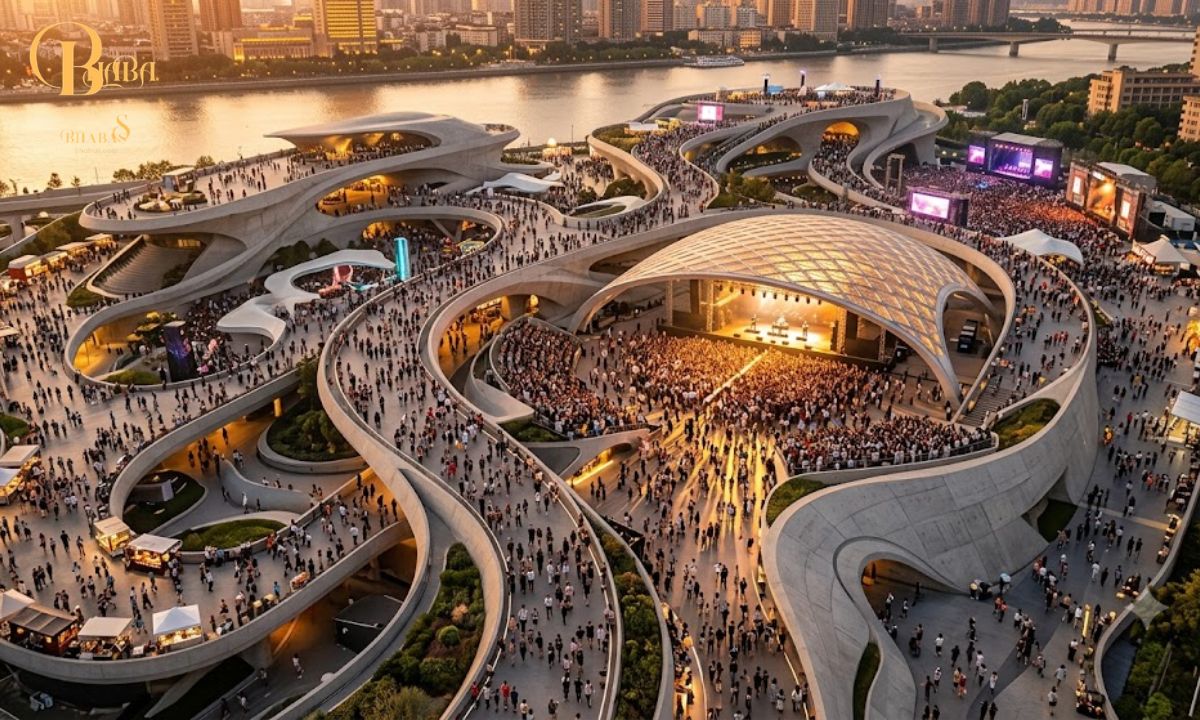
There is a specific, almost sacred silence that falls over a festival site the morning after the headliner has left the stage. The air is thick with dust kicked up by a hundred thousand feet, the grass is a memory, and the only sound is the mechanical sigh of hydraulic stages resetting. For most, this is the ghost of a party. But for a radical few, this is the raw canvas of a revolution.
Welcome to the Download Festival of Architecture.
Before you scroll past thinking this is a dry lecture about load-bearing walls delivered to people in muddy wellies, stop. Erase that image. This is not architecture as we have been taught to know it—the sterile scale model, the corporate glass tower, the condescending museum placard. This is architecture as a live wire. This is the art of space colliding with the science of chaos.
At its core, the Download Festival of Architecture is a radical provocation. It asks a question that most designers are too afraid to utter: What happens to the structure when the crowd takes command?
For three days (or four, if you count the hardcore campers), the hallowed grounds transform into a living laboratory. We are not just attendees here; we are the load. We are the variable that every architect fears and every great one worships. We are the human torrent that turns a field into a city, and then back into a memory.
The Invisible Blueprint: Designing for the Mosh Pit
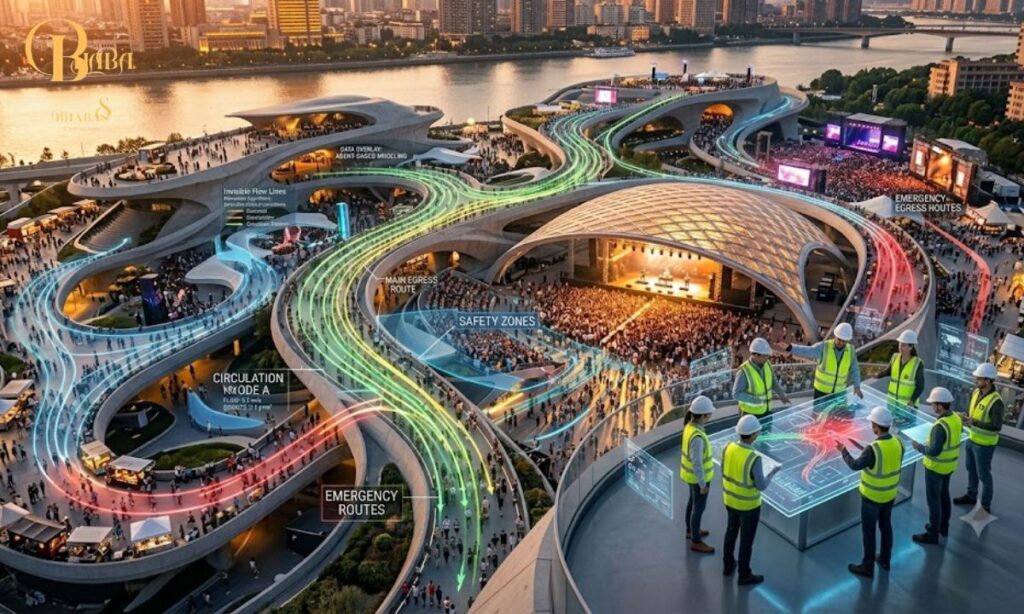
To understand this event, you must first deconstruct its physics. A traditional music festival is linear. You have a stage, a barrier, a crowd facing forward. It is a lecture hall with better bass. But Download, through its very architecture, rejects this passivity.
Look at the placement of the main stages. In typical design, you create sightlines. You elevate the performer to create a hierarchy. At Download, the architects—a rogue collective of structural engineers, acoustic physicists, and former roadies—have done something subversive. They have designed for the periphery.
The stages are not the focal point; the bowl is.
The natural topography of the site is the real hero. The gentle slopes are not just for drainage; they are amphitheaters carved by geology. When you stand in the middle of the crowd at the Opus stage during a headliner, you aren’t just watching a band. You are experiencing a compression wave. The hills behind you reflect the low-end frequencies back into the pit. The ground beneath your feet, reinforced by temporary honeycomb stabilization grids (a marvel of temporary geotech), vibrates like a speaker cone.
The architecture of Download understands that a mosh pit is not a failure of crowd control. It is a successful urban grid. Those flailing limbs and frantic circles are spontaneous urban planning. They are the creation of temporary zones: the high-density core, the low-energy periphery, the commercial spine of the merch tents, the residential quarters of the campsites. The festival doesn’t fight this chaos. It choreographs it.
The Liminal Spaces: Where the Magic Actually Lives
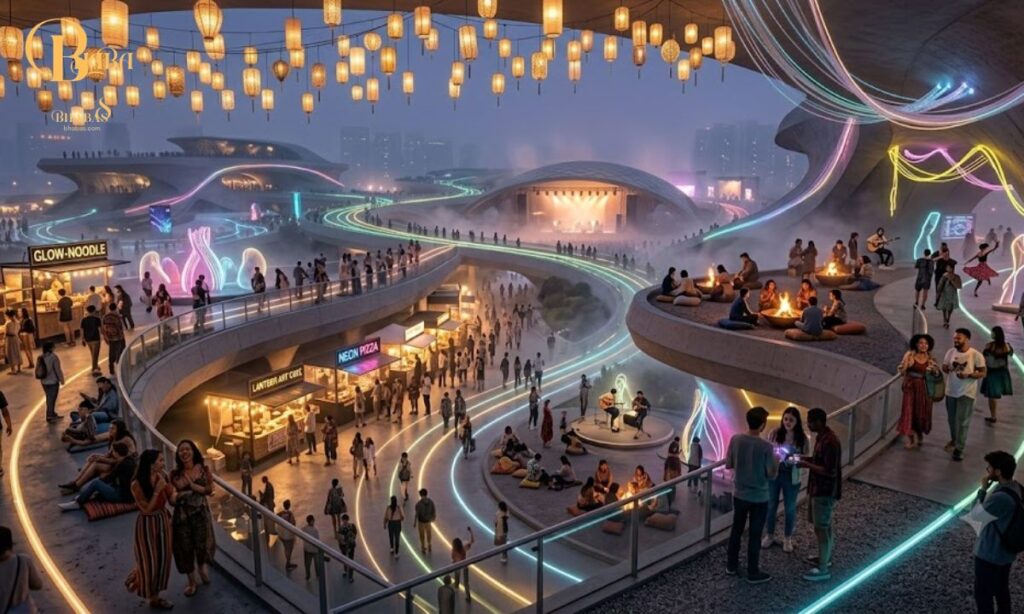
Here is the unique truth that the Download Festival of Architecture understands better than any museum: The architecture is not the tent. The architecture is the walk between the tents.
In the language of architecture criticism, we discuss “liminal space”—the threshold, the hallway, the transition. Download has weaponized this concept.
Consider the path from the Village (the 24-hour party zone) to the District X (the experimental, industrial wasteland). Most architects would pave it. They would install lighting. They would make it safe and predictable. Download has left it treacherous. The mud, the ruts left by heavy trucks, the awkward footing—this is intentional friction.
This friction slows you down. It forces eye contact with strangers as you help pull a boot out of the mire. It creates a physical negotiation that breeds camaraderie. The architecture of the “Dog-tooth” (the infamous muddy slope) is a social condenser. It is uncomfortable, yes. But discomfort is the prerequisite for authenticity. You do not remember the paved, easy paths of your life. You remember the slog.
Then there is the Silent Disco. From an acoustic architectural standpoint, this is the most innovative structure on site. It is a deconstructed amphitheater. By removing the giant speaker stacks (the physical source of sound), the architecture of the space is reduced to pure light and movement. You see three thousand people singing three different songs simultaneously. Visually, it is a cacophony. Structurally, it is a meditation on individualized experience. The tent becomes a shell for a million private concerts happening in the same square footage. This is postmodernism made flesh—or rather, made plastic and LED.
The Ephemeral City: Lifecycle of a Temporary Metropolis
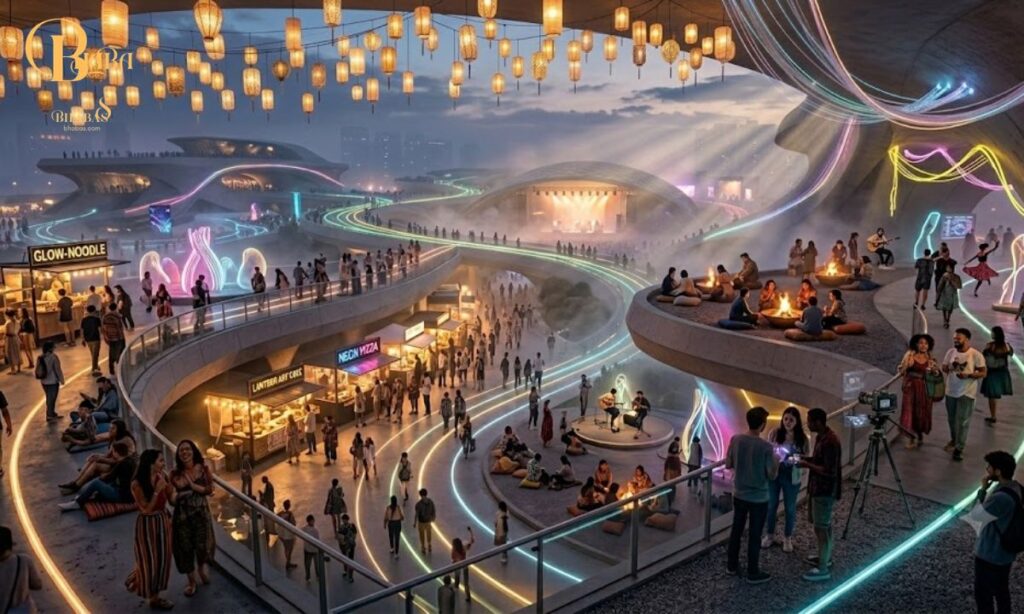
The most breathtaking aspect of this architectural event is its temporariness. We are obsessed with permanence in the built world. We pour concrete foundations meant to outlast empires. Download does the opposite. It builds a city for 100,000 residents that exists for exactly 96 hours.
On the Tuesday before the gates open, the site is an empty pasture. By Friday, it has a higher population density than Manhattan. It has a water grid (the standpipes), an energy grid (the diesel generators disguised as art installations), a sanitation system (a logistical nightmare of vacuum trucks), and a justice system (the yellow-shirted stewards).
This is “Instant Urbanism.”
Think about the Camping Zone. There are no HOA rules here. There are no plot lines. The architecture of the campsite is a pure expression of the occupant’s psyche. The pop-up geodesic domes next to the single-skin Argos tents. The flagpoles that act as territorial markers, claiming airspace as loudly as the music claims soundspace.
For an architectural purist, it is horrifying. For a humanist, it is glorious.
The festival culminates in the most violent architectural act: The Strike. Sunday night, midnight. The headliner ends. The exodus begins. By Monday afternoon, the city is gone. The tents are packed. The stages are dismantled and loaded into a convoy of artics. The field returns to sheep and silence.
There is a poetry in this demolition. It reminds us that architecture is not the object. The object is just a tool. The architecture is the event. The memory of the compression wave, the feel of the sticky floor of the Dog’s, the smell of smoke and fried dough—that is the real structure. And you cannot put a demolition ball through a memory.
The Sound Bath: When Physics Meets Poetry
We cannot discuss the architecture of Download without discussing the invisible architect: Acoustic Pressure.
The placement of the Avalanche stage (punk) relative to the Opus stage (metal) is a masterclass in frequency masking. The engineers have used the natural hills as baffles. They have calculated the decibel drop over distance to the centimeter. But the real genius is the leakage.
In a sterile concert hall, you want zero sound bleed. You want purity. At Download, a little bleed is desirable. When you are standing at the edge of the main field, you can hear the thump of the bass from the second stage mixing with the vocal line of the main stage. It creates a non-musical harmony—the sound of the festival itself. It is the white noise of a civilization having fun.
The architecture of the “sound camps” in The Village takes this further. These are not stages; they are wooden shacks built by the attendees. They are held together by spit, nails, and the desire to be heard. They vibrate at their own frequencies. They are folk architecture at its finest—unregulated, dangerous, and alive.
The Blueprint for the Future of Experience
So, what does the Download Festival of Architecture teach us about the future of our cities? Everything.
We are currently building smart cities. We are filling them with sensors and automation. We are trying to eliminate friction. We want smooth pavement, instant delivery, and silence. Download is a rebellion against that sterility.
Lesson 1: Comfort is a cage.
The best spaces have an edge. They are a little too loud, a little too muddy, a little too crowded. That edge forces interaction. It forces negotiation. It makes you present. When we design our workspaces and our public plazas, we should ask: Where is the mosh pit?
Lesson 2: Allow for the unknown.
No one designs the flag competition. No one architects the spontaneous conga line. The best structures are those that provide a stage but leave the script blank. The scaffolding is just the skeleton; the crowd writes the muscle.
Lesson 3: Embrace the ephemeral.
Permanence is a lie. We cling to buildings as if they will save us from time. Download shows us that a structure that lasts four days can have a greater emotional impact than a cathedral that lasts four centuries. We need more temporary interventions. We need more spaces that we know we will lose, because we treasure them more fiercely.
The Ritual of the Return
There is a ritual unique to the Download veteran. It is called “The Walk.” On Thursday afternoon, you trudge from the car park to the campsite. It is heavy. It is hot. It is exhausting. You pass the abandoned trolleys. You pass the security check.
And then, you crest the hill.
Below you is the City of Download. The tents stretch to the horizon. The distant roar of a soundcheck ripples through the air. The Ferris wheel turns against a grey English sky.
In that moment, you are experiencing the zenith of architectural design. It is not the beauty of the object you are seeing. It is the beauty of the potential. You are looking at a machine built to generate joy. You are looking at a grid that will hold your screams. You are looking at a map of the best weekend of your life.
The Download Festival of Architecture does not ask for your quiet contemplation. It does not ask for your reverence. It asks for your body. It asks for your sweat. It asks you to test the limits of the structure.
And if you listen closely, between the roar of the guitar and the crash of the drums, you can hear the ground humming back. It is the sound of a blueprint succeeding.
It is the sound of concrete becoming a chorus.

David is a passionate writer with four years of experience in blessings and prayers blogging. He currently works at Bhabas.com, crafting heartfelt messages that inspire hope, offer comfort, and help people express emotions in a meaningful and lasting way.