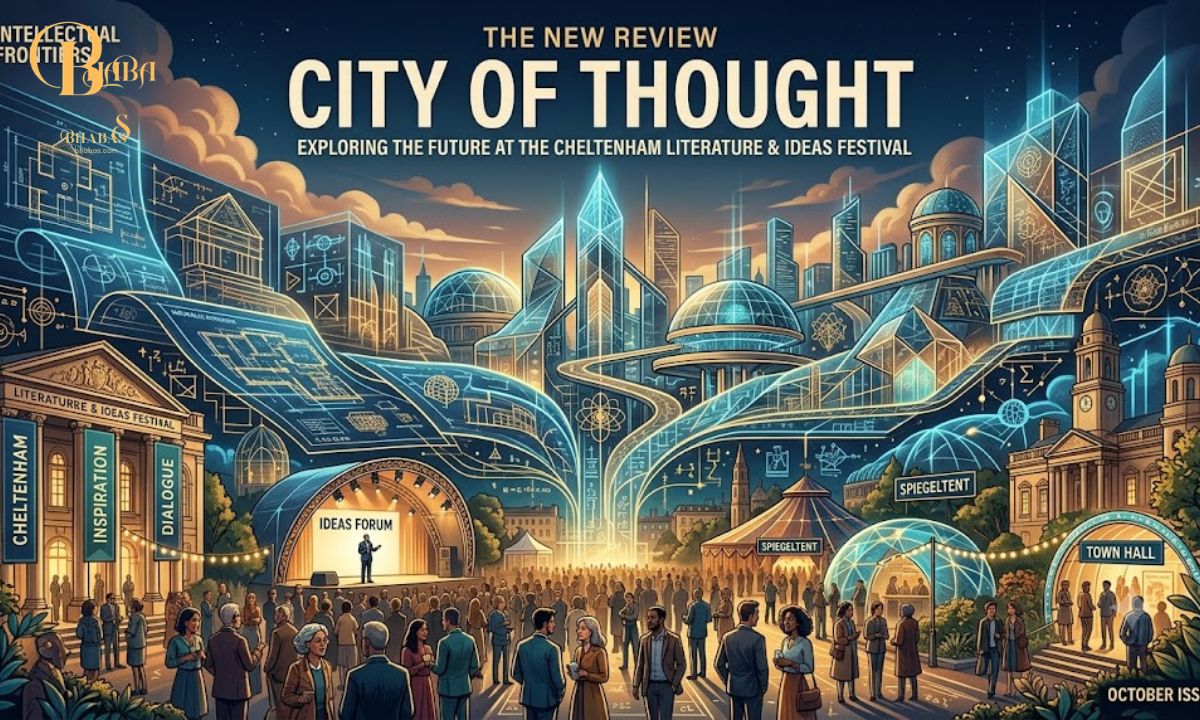
There is a specific kind of magic that happens when you step inside a marquee tent on a manicured lawn in Gloucestershire. It is the scent of rain hitting hot canvas mixed with the acrid tang of coffee and curiosity. But this year, the Cheltenham Science Festival traded its usual obsession with black holes and CRISPR genes for something far more grounding—and ironically, far more ethereal.
They brought in the architects.
Not just the ones who draw buildings, but the ones who design systems. The ones who choreograph silence, movement, light, and shadow. The 2024 (and recent iterations) focus on Architecture at the festival wasn’t about skyscrapers or urban planning in the traditional sense. It was about the operating system of reality.
If you missed it, you didn’t just miss a few lectures on cantilevers. You missed a revolution in how we perceive the scaffolding of human existence.
The Invisible Cage: Why We Needed This Conversation
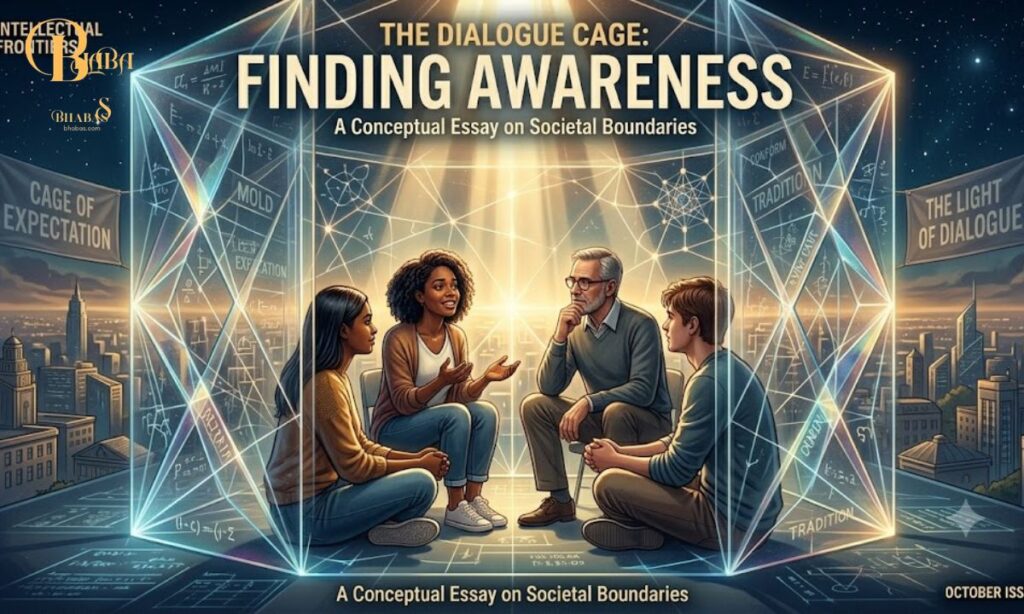
We live in a world that feels increasingly chaotic. The digital realm is flat, loud, and algorithmically claustrophobic. The physical realm is buckling under the weight of climate collapse and housing crises. We are, as a species, suffering from a severe lack of intentional structure.
The Cheltenham Science Festival recognized that “architecture” is the missing verb in the sentence of modern science.
For years, we separated the hard sciences (physics, biology, chemistry) from the spatial arts. We assumed that architects just made things look nice. But the panels and workshops at Cheltenham flipped that script violently. They proposed that architecture is the ultimate applied science. It is the discipline that takes the raw data of physics (gravity, thermodynamics, material properties) and translates it directly into human emotion.
One of the most arresting talks was titled “The Neurobiology of Corridors.” A neuroscientist and an architect shared the stage to explain how the width of a hallway literally changes the cortisol levels in your blood. A narrow, low-ceilinged corridor triggers the same threat response in the amygdala as seeing a predator—just muted, chronic, low-grade. Conversely, a transitional space with a view of the horizon triggers a dopamine reset.
Suddenly, the audience wasn’t looking at blueprints. We were looking at prescriptions. Medicine you walk through.
Deconstructing the “Hard Problem” of Space
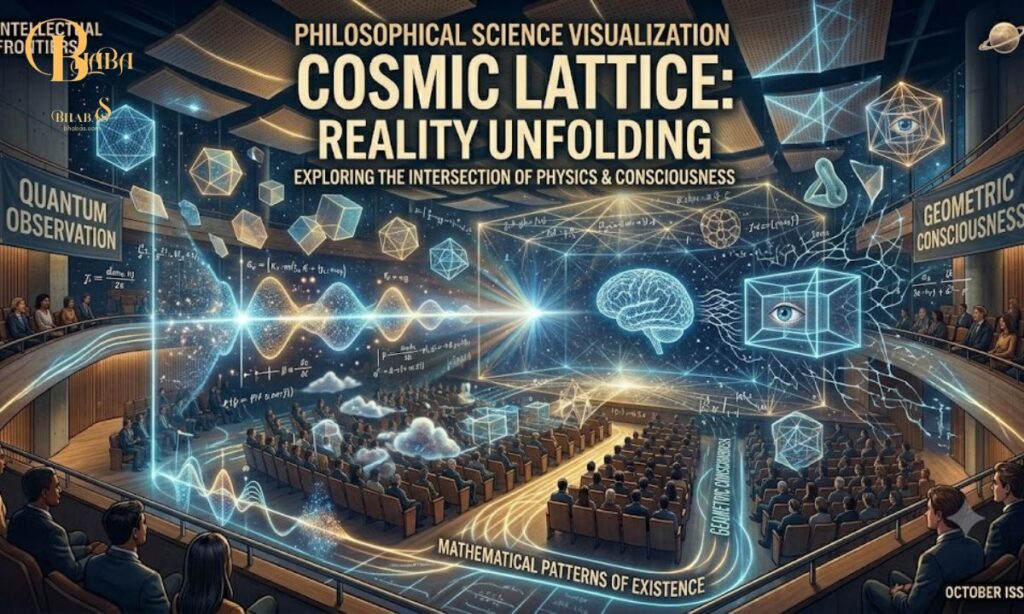
What made the Cheltenham approach uniquely fresh was the rejection of the “Starchitect.” You know the trope: the genius in black turtlenecks who imposes his ego on the skyline. The festival dismantled that patriarchal myth within the first hour.
Instead, the focus was on Biomimicry and Failure.
A breathtaking session featured a materials scientist who has stopped trying to make concrete stronger. Instead, she is growing bricks from mycelium and sand. The demonstration was visceral. She held up a brick that looked like a giant, pale sugar cube. She dropped it on the floor. It didn’t shatter; it bounced.
The audience gasped.
She explained that architecture for the next century isn’t about rigidity. It is about tensile resilience. A building that bends in a hurricane survives. A building that fights the wind explodes. This is a direct metaphor for the human psyche, though she didn’t need to say it out loud. We all felt it. The festival created a space where science allowed us to rethink our own personal architectures: Are we building our lives out of brittle concrete or forgiving mycelium?
The Silent Stage: Acoustics as Governance
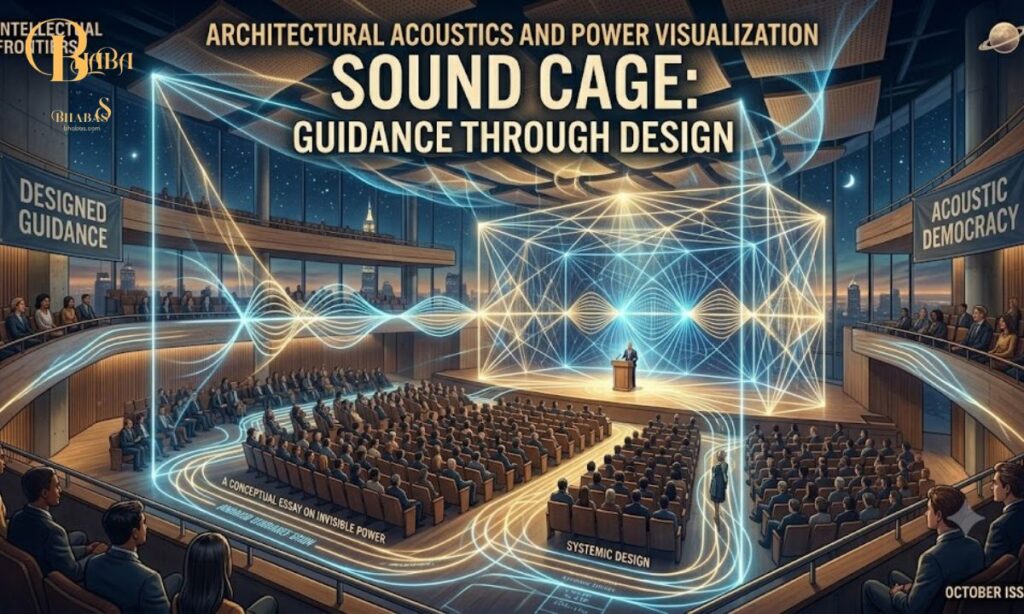
Perhaps the most powerful, unique aspect of the festival’s architecture track was the sensory deprivation workshop. It was listed dryly in the program as “Acoustic Ecology: Zero Decibels.”
Fifteen of us entered a soundproof chamber built inside the tent. It was dark. For ten minutes, we experienced the absence of designed sound. No HVAC hum. No traffic bleed. No fridge motor. No electric whine.
Coming out of that chamber, the moderator asked us one question: “Was it peaceful or violent?”
The split was 50/50. Half the room felt profound peace. The other half (including myself) felt a crushing, existential dread. The conversation that followed was the most honest science communication I have ever witnessed. We realized that silence is an architectural material, just like steel or glass. The absence of noise is a design choice.
In our modern offices, open-plan layouts are chosen for “collaboration,” but the architects at Cheltenham showed us the data: an open-plan office is not a social space; it is a battle royale for sensory dominance. The architecture of the workplace is silently governing our aggression, our intimacy, and our ability to lie.
They presented a study where courtrooms with high ceilings led to harsher sentences. Why? The psychological sensation of “insignificance” in a cavernous space makes the judge and jury perceive the defendant as “smaller” and more disposable. When the same trial was simulated in a low-ceilinged, domestic-scaled room (like a living room), sentences were reduced by 40% because the architecture prompted empathy.
This is not decoration. This is mind control, and we are the sleeping subjects.
Walking as a Radical Act
One of the festival’s “off-script” events was a guided walk called Desire Lines. A landscape architect led 200 of us through the streets of Cheltenham, but we were forbidden from using the sidewalks.
We walked across the grass. We cut through parking lots. We stepped over curbs.
The point was to reveal the “desire lines”—the paths that humans actually take versus the paths that planners draw. It was an act of rebellion. The architect pointed out a beautiful, expensive plaza in the town center. No one was sitting in it. Why? Because the benches faced a brick wall.
Two blocks away, there was a grubby set of stairs leading to a bank. Forty people were sitting there. Why? Because the stairs faced the sunset and the bustle of the crosswalk.
The lesson was devastatingly simple: Architecture cannot dictate behavior; it can only invite it. And if you get the invitation wrong, the user will always write their own.
For a blog like this—for a readership that craves the intersection of the intellectual and the practical—this is the gold mine. We spend so much time trying to fix human behavior with apps, laws, and to-do lists. Cheltenham proved that the solution is often just moving a bench three feet to the left, or widening a doorway by four inches.
The Digital Twin and the Ghost in the Machine
As a counterpoint to the physical, the festival dove headfirst into the unsettling world of Digital Twins.
We are moving toward a reality where every physical building has a “ghost” building in the cloud—a constantly updating simulation that monitors heat, movement, Wi-Fi pings, and water pressure.
One presenter showed a live feed of an office building in Singapore. The screen showed the physical building. Then, they overlaid the “twin.” The twin was glowing red in the northeast corner. That corner had a coffee machine. The data showed that people crowded there at 10:03 AM every day, causing congestion in the fire escape route.
The solution? In the simulation, they dragged the coffee machine ten feet to the south. Instantly, the congestion disappeared. The fire escape cleared.
The question the audience wrestled with wasn’t technical. It was ethical. If a building knows exactly where you stand, exactly how long you linger, and exactly when you walk to the bathroom—is it a shelter, or is it a panopticon?
The architect leading the talk didn’t have an answer. But she framed the question perfectly: “We must design the data as carefully as we design the door.”
Why This Matters More Than the Lab Coat
Reading about a science festival usually induces a kind of polite boredom. We imagine white coats, PowerPoint slides, and the smell of formaldehyde. But Cheltenham shattered that trope because architecture is the most democratic of the sciences.
You don’t need a PhD to understand a room. You have a body. You have a nervous system. You have instincts that have been honed over 300,000 years. When you walk into a hospital waiting room with fluorescent lighting and vinyl floors, you feel sicker before the doctor touches you. That isn’t subjective. That is physics.
When you walk into a library with high windows and the smell of old paper, your heart rate slows. That isn’t nostalgia. That is architecture acting as pharmacology.
The greatest takeaway from the Cheltenham Science Festival’s focus on architecture is the empowerment of the individual. We are not victims of our environment. We are the curators.
We can choose to place our desk facing the window rather than the wall. We can choose to put a rug on a hard floor to kill the echo that raises our anxiety. We can choose to knock down the wall of our own lives that separates the “living” from the “working.”
The Fresh Take: Architecture as Second Skin
Every blog post about architecture focuses on the visual. The look. The style. The Instagram.
Cheltenham refused that.
They focused on the haptic. The felt. The thermal.
One installation—a small wooden box in the middle of the festival green—was built to replicate a traditional Japanese okyaku (guest space). The wood was unfinished cedar. The floor was tatami. The light was diffused through rice paper.
Stepping inside felt like putting on a cashmere sweater after wearing sandpaper.
Next to it was a “modern” pod made of polished aluminum and LED strips. Stepping inside felt like being yelled at by a smartphone.
The festival didn’t tell you which was better. It just let you walk between them. And every single person who entered the cedar box exhaled. Every single person who entered the aluminum pod started checking their watch.
This is the unique power of this event. It doesn’t lecture. It demonstrates. It proves through the body what the mind is slow to accept: We are soft machines, and we need soft cages.
Where Do We Go From Here? (The Non-Linear Conclusion)
As the sun set over the last day of the festival, I sat on the grass—a “desire line” of my own making, avoiding the official plastic chairs that were facing the wrong way.
I realized that the Science Festival had done something remarkable. It had taken a discipline that we usually outsource to “experts” (architects, city planners, interior designers) and returned the agency to the citizen.
You do not need permission to change your corner of the world.
- Paint a ceiling a darker color to make it feel lower and cozier.
- Break up the straight lines in your bedroom to force your eye to rest.
- Introduce a “pinch point”—a narrow hallway—right before a large living area so that the living area feels explosively vast when you step into it.
These are not decorating tips. These are scientific instruments for altering consciousness.
The Cheltenham Science Festival of Architecture succeeded because it asked the most uncomfortable question of the 21st century: If we can design the skyscraper, why are we still designing the prison?
The answer is that we haven’t been paying attention. We have been asleep in the waiting room, assuming the walls are just walls. They are not. They are teachers. They are judges. They are pharmacists.
Wake up. Look at the ceiling. Feel the floor. Notice the silence.
Then, pick up a hammer. You are the architect now.

David is a passionate writer with four years of experience in blessings and prayers blogging. He currently works at Bhabas.com, crafting heartfelt messages that inspire hope, offer comfort, and help people express emotions in a meaningful and lasting way.