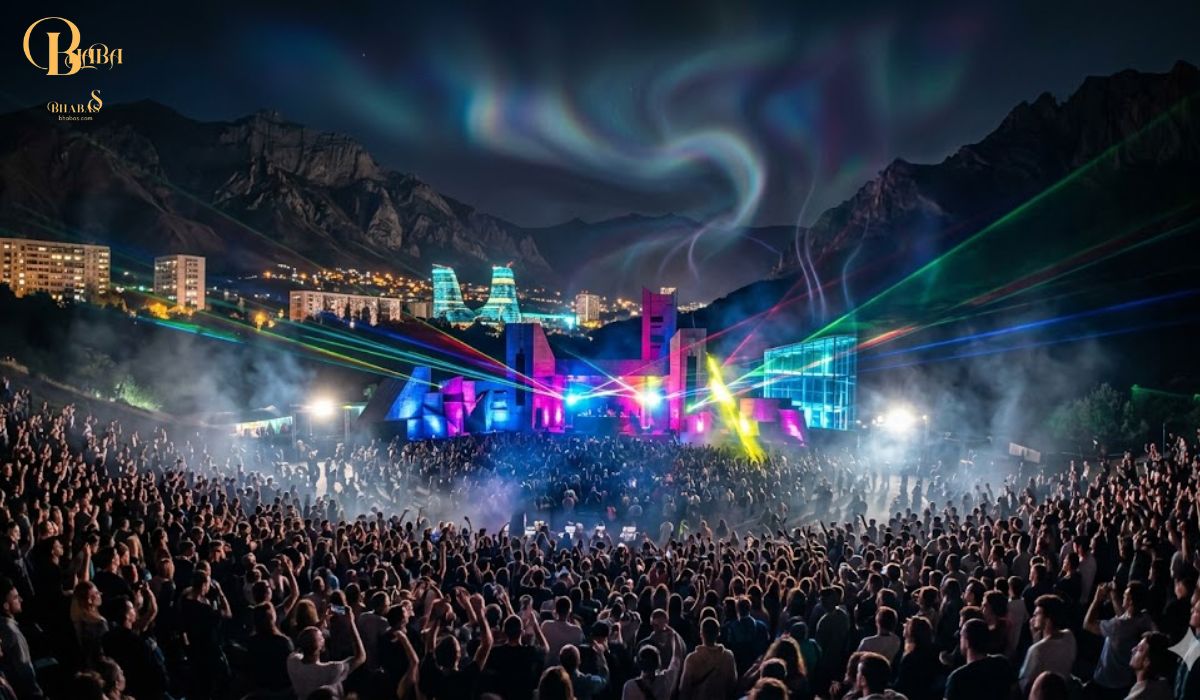
There is a place in the world where the air smells like sulfur, aged wine, and gasoline. Where the architecture is a chaotic collage of Art Nouveau balconies crumbling next to brutalist Soviet relics, all under the watchful eye of the Orthodox golden domes. That place is Tbilisi, Georgia.
And for three days every summer, the city commits a beautiful act of sonic rebellion.
We aren’t talking about Coachella. We aren’t talking about Glastonbury. We are talking about Tbilisi Open Air. If you look at the lineups, you’ll see international headliners. If you look at the photos, you’ll see stunning stages. But if you look at the soul of the event, you see something else entirely: The sound of a post-revolution generation dismantling the past and building the future with bass drops and synthesizers.
This isn’t a music festival. It is a cultural exorcism.
The Location: Where History Goes to Die (And Dance)
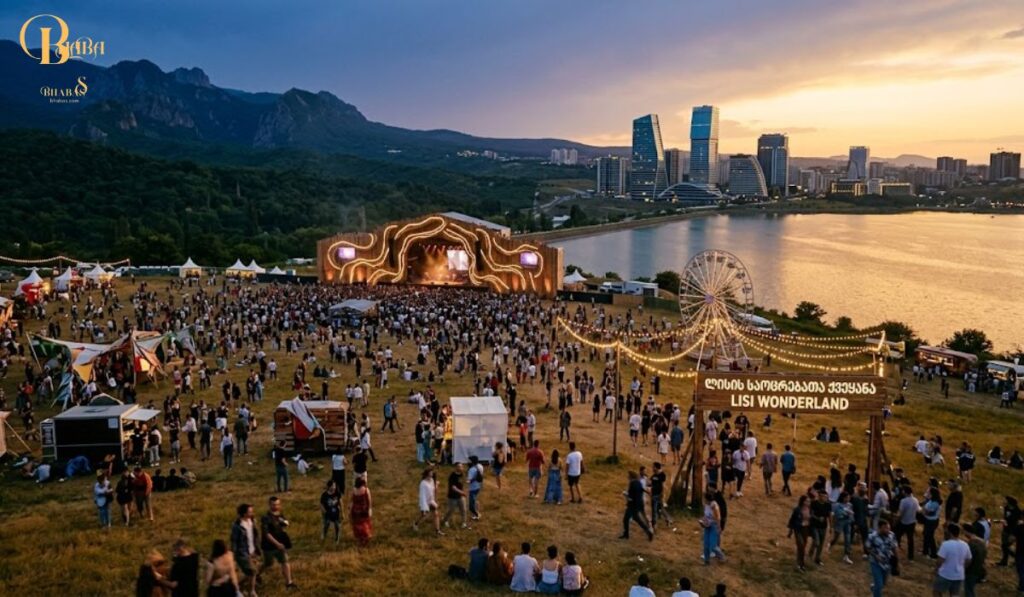
Most festivals boast about their “scenic views.” Tbilisi Open Air doesn’t need to boast. It is held in the Lisi Wonderland, a sprawling green area on the outskirts of the capital, nestled against the Tbilisi Sea (a massive reservoir that feels more like an ocean in the heat of June).
But the magic isn’t just the grass or the water. It is the juxtaposition.
To stand in the crowd at the main stage is to stand at the crossroads of empires. Look left: You see the modern glass bridges of a city trying to become the next Dubai of the Caucasus. Look right: You see the jagged, snow-capped peaks of the Greater Caucasus mountains, untouched for millennia.
The sound bleeds out over the water. The bass echoes off the hills. You feel incredibly small, yet infinitely powerful.
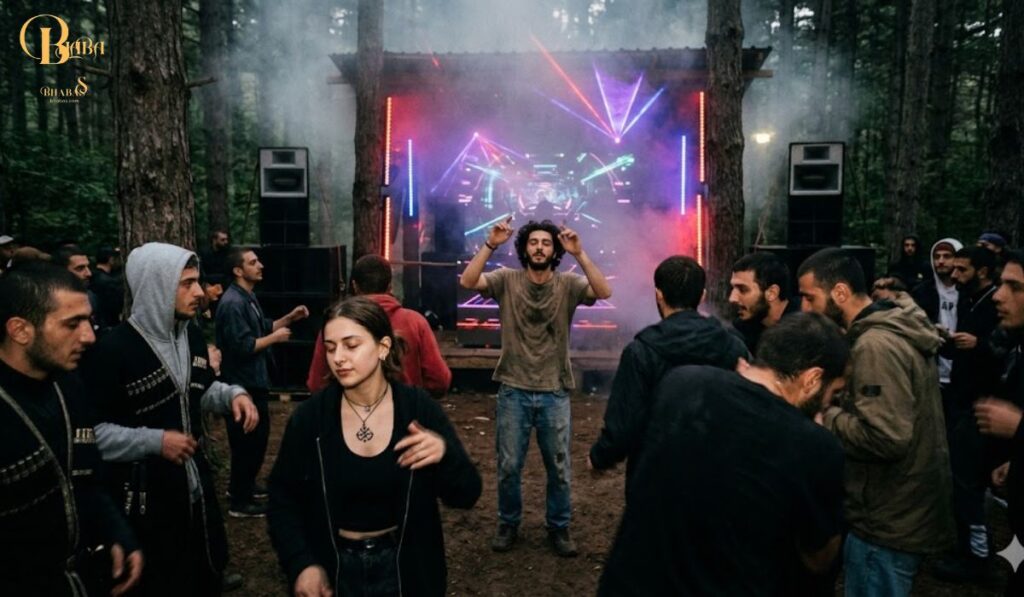
The organizers don’t just throw up a fence and a stage. They curate a spatial experience. The “Forest Stage” is hidden among the pines, requiring a pilgrimage through the woods. By the time you arrive, you’re sweaty, slightly lost, and ready to worship whatever techno deity is playing. The “Electronic Stage” is a brutalist dream—steel, smoke, and lasers cutting through the Georgian dusk.
This is not a passive experience. You do not just “attend” Tbilisi Open Air. You survive the terrain. You conquer the hill. You earn the music.
The Sound: Refusing to Be a Tourist Trap
Here is where the “fresh” factor kicks in. In 2024 (and looking ahead), the global festival circuit is drowning in nostalgia. Everyone wants to hear the same 2000s indie rock band reform and play the hits. Tbilisi Open Air refuses.
Yes, the lineup has historically featured massive names—acts like Röyksopp, Moderat, Die Antwoord, and Alt-J have graced the stage. But the curatorial magic is in the undercard.
Tbilisi Open Air is the primary export engine for Georgian underground music.
You haven’t heard of Gogol Bordello? Okay, you have. But have you heard of Bedford Falls? Moku Moku? Nina Kvita?
This festival gives a middle finger to the “Western Gaze.” You don’t come here to watch London or Berlin bands play for a foreign crowd. You come here to watch Tbilisi’s youth scream into the void in their native Kartvelian tongue. You watch experimental jazz fusion mixed with polyphonic folk singing—a sound so ancient and alien that it rearranges your DNA.
This is a festival that understands the assignment of the modern age: Globalization is boring. Localization is the new luxury.
The techno isn’t just techno; it carries the weight of a country that has been invaded, occupied, and torn apart for 200 years. The punk isn’t just anger; it is the fury of a generation that grew up during the Russo-Georgian War and the subsequent political hangovers.
When you dance here, you are dancing on the fault lines of history.
The Crowd: The “Tbilisi Tango”
Let’s talk about the people. Because if you close your eyes, the crowd is the real headline.
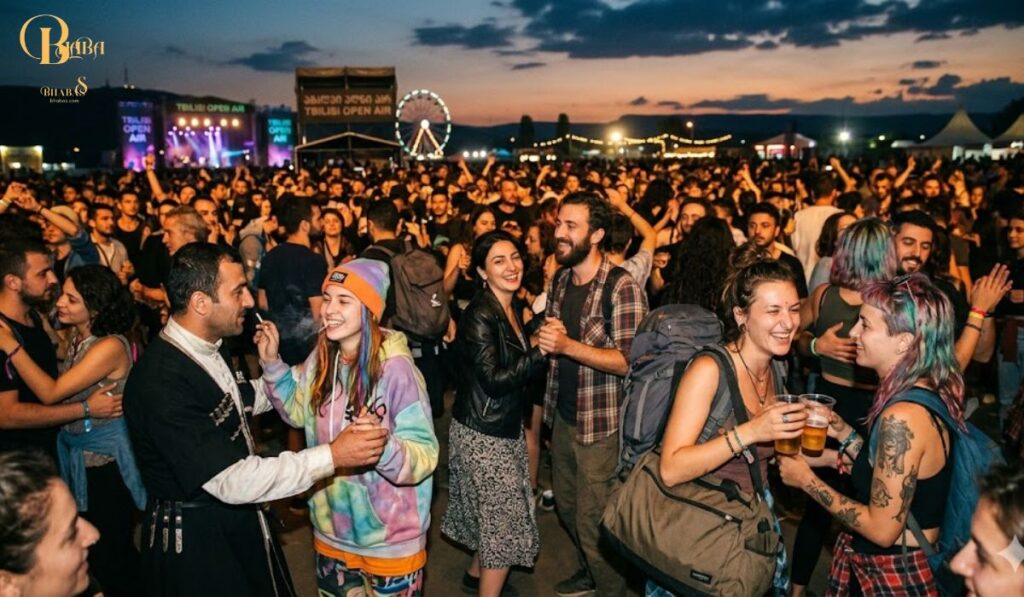
The demographic is electric. You have the old-guard intellectuals—Georgian poets and artists in their 50s, drinking dry red wine out of plastic cups (because Georgians drink wine like the rest of the world drinks water). You have the hedonistic backpackers from Europe who “stumbled” into Tbilisi and never left. You have the Russian emigrés who fled mobilization and are now trying to rebuild a creative life in exile. And you have the local youth—dressed in a mix of high-fashion Rick Owens and Soviet surplus boots.
There is no VIP “bottle service” culture here. There is no velvet rope energy. The festival is radically democratic.
One moment you are standing next to a tech CEO from Tel Aviv. The next, you are sharing a cigarette with a shepherd from the Adjara region who drove six hours to see the headliner. The vibe is “Aggressive Hospitality.” If you look lost, a stranger will grab your hand and pull you toward the bar. If you spill your drink, three people will offer you a sip of theirs.
This is the “Tbilisi Tango.” A delicate dance of chaos and warmth. It is unique to this post-Soviet space where scarcity taught people to share everything, and trauma taught people to live for the moment.
Beyond the Bass: The Culinary Counter-Revolution
Most festivals treat food as an afterthought—overpriced pizza and sad burgers. Tbilisi Open Air commits a war crime against festival food norms.
Because Georgia is the culinary capital of the former Soviet Union. And the festival brings the heat.
Forget the food court. This is a Khachapuri alley. Drunk at 2 AM? You need a Khachapuri Adjarian—a boat-shaped bread filled with molten cheese, butter, and a raw egg yolk stirred in at the last second. It is not food. It is survival gear.
You want Khinkali? These are giant soup dumplings filled with spiced meat or mushrooms. There is a technique to eating them (suck the juice, never bite the dough knot). Watching foreigners fail at this while sober is funny. Watching them fail at 1:00 AM while Svanuri (spiced salt) is flying everywhere is high art.
The craft beer movement has hit Georgia hard, and the festival curates local breweries like Shavi Lomi and Kazbeghi. You wash down the dumplings with a hazy IPA that tastes like the mountain air smells—pine and rebellion.
This focus on local flavor reinforces the festival’s thesis: Authenticity or nothing. They don’t import food trucks from Germany. They feed you the soil of Georgia. It changes how you hear the music. When you eat the land, you feel the rhythm of the land.
The “Chaos Factor” (Why You Must Go Now)
I need to be honest with you. Tbilisi Open Air is not a polished machine. It is not Japan’s Fuji Rock, where you can buy a gourmet bento box and use a pristine bathroom. It is rough.
The sound cuts out sometimes. The rain turns the Lisi Wonderland into a mud pit that rivals Woodstock ’99 (without the violence, thankfully). The taxis outside the venue are run by hustlers who will try to charge you a month’s rent for a 10-minute ride.
This is the point.
We have sterilized the festival experience. We have created “experiences” that are Instagram backdrops. Tbilisi Open Air is a wild animal. It is unpredictable.
In 2023, during a massive thunderstorm, the main stage power died. For twenty minutes, there was silence. The crowd didn’t boo. They didn’t leave. Spontaneously, a group of local drummers started a polyrhythm. The entire field of 15,000 people started singing a traditional Georgian folk song Chakrulo—the same song sent into space on the Voyager Golden Record.
It was not planned. It was not a marketing stunt. It was the ghost of the Caucasus reminding everyone that technology is a guest here; the spirit is the host.
You cannot buy that moment. You cannot replicate it. You can only be there.
The Aftermath: The “Tbilisi Hangover”
You will leave Tbilisi Open Air broken. Not just hungover—broken.
You will wake up at 4 PM in a hostel in the Old Town, your boots caked in mud, your ears ringing with the echo of a bass drop that rattled your sternum. You will go to a Supra (a traditional feast) and a table of strangers will pour you chacha (Georgian grappa, 60% alcohol, essentially jet fuel) until you forget your name.
And then you will walk out onto Rustaveli Avenue. You will see the protesters. You will see the political graffiti. You will realize that the music stopped, but the revolution didn’t.
This is the hidden truth of Tbilisi Open Air: It is a pressure valve for a society that is constantly on the verge of boiling over. Georgia is stuck between Russia and the West, between the past and the future. The youth are frustrated. The economy is volatile.
But for three days, the festival creates a temporary autonomous zone. A place where the weight is lifted. A place where “Eurasian” isn’t a political slur, but a musical genre.
Is It For You?
Let’s filter the audience. Do not come to Tbilisi Open Air if:
- You need perfect wi-fi.
- You are afraid of getting dirty.
- You only listen to Top 40 radio.
- You want to be a spectator.
Come to Tbilisi Open Air if:
- You want to feel the future of youth culture.
- You want to see a city that looks like a Blade Runner set but smells like grandma’s garden.
- You want to dance until sunrise under a Soviet-era statue.
- You understand that the best festivals are the ones that scare you a little.
The Logistics (The Practical Soul)
To make this powerful dream a reality, you need to move fast. The festival usually takes place in mid-to-late June. The sun sets late (around 9:00 PM), which means the headliners play under a deep blue sky, and the after-parties bleed into the dawn.
Fly into: Tbilisi International Airport (TBS).
Visa: Most Western nationals get a visa-free stay for up to one year (check your local laws, but Georgia is famously open).
Stay: Do not stay near the airport. Stay in Sololaki or Vera district. The vibe is gritty, walkable, and full of converted speakeasy bars.
Transport: Download Bolt (the local Uber). It is laughably cheap. A 30-minute ride across the city costs less than a coffee in London.
Pro Tip: Learn two phrases.
- “Gamarjoba” (Hello).
- “Gaumarjos” (Cheers/Victory).
Say Gaumarjos while looking someone in the eye, and you will be adopted into a Georgian family for the night. They will feed you. They will protect you. They might even get you backstage.
The Verdict: The Last Great Untamed Festival
The global festival market is dying. Over-commercialization, outrageous ticket prices, and dangerous crowds have ruined the magic. People are staying home.
But Tbilisi Open Air is the antidote. It is the last of a dying breed: The Geographically Essential Festival.
You cannot move this event to Dubai. You cannot replicate it in Las Vegas. It only works here, in this specific corner of the Caucasus, because the land, the history, and the people are the actual performers.
You will go for the music. You will stay for the chaos. And you will leave with a piece of your soul permanently etched with the image of the sun setting over the Tbilisi Sea, while a thousand voices sing a song older than the concept of “Europe.”
Don’t just watch the recap videos. Don’t save it to your “Travel” Pinterest board.
Book the flight. Buy the boots. Bring an empty stomach and an open heart.
Tbilisi Open Air is calling. The ghost of the Caucasus wants you to dance.

David is a passionate writer with four years of experience in blessings and prayers blogging. He currently works at Bhabas.com, crafting heartfelt messages that inspire hope, offer comfort, and help people express emotions in a meaningful and lasting way.