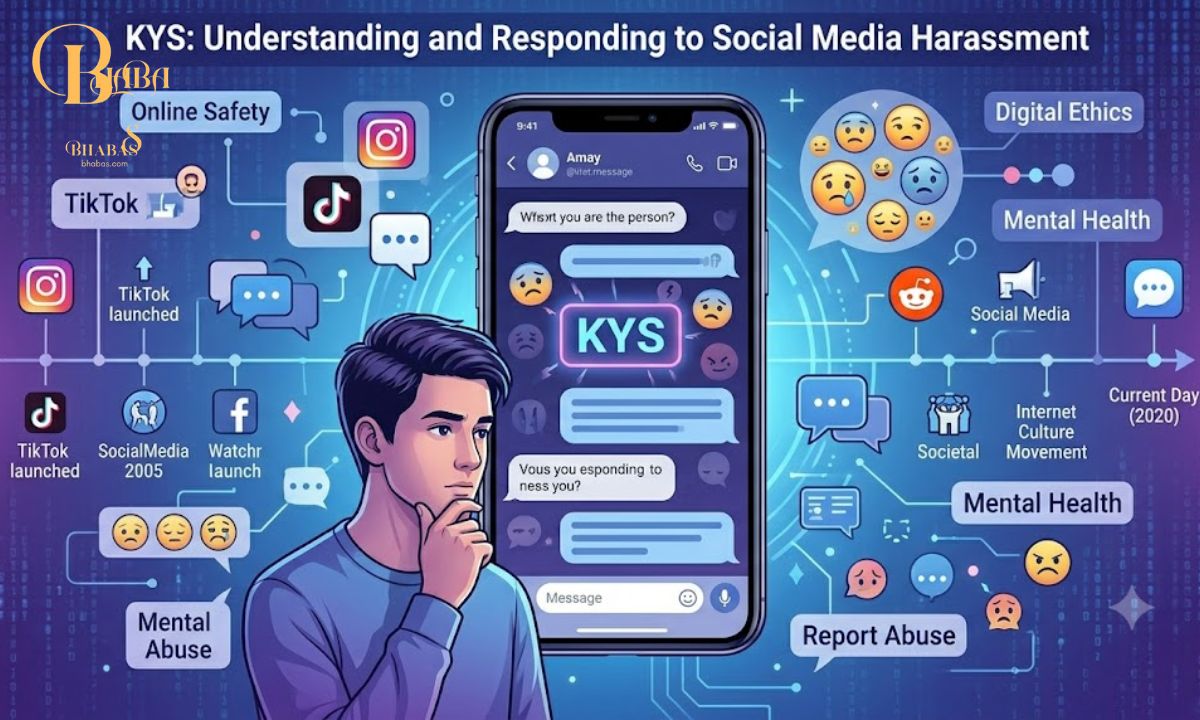
If you have seen the acronym “KYS” in a text message, gaming chat, or social media comment and had no idea what it meant, you are not alone. Internet slang moves fast, and some terms carry more weight than they first appear. KYS meaning in text is one of those phrases that parents, teens, and casual social media users need to understand clearly before reacting to it — or using it themselves. The acronym appears in TikTok comments, Discord servers, WhatsApp group chats, and dating apps, making knowing its real definition more relevant than ever.
This guide covers everything you need to know about KYS meaning in text: its definition, where it came from, how different people use it across different platforms, and what to do if someone sends it to you. Whether you are a parent trying to keep up with your child’s digital world, a teenager navigating online spaces, or just someone who wants to communicate responsibly, this article gives you a complete, honest picture of what this term actually means in 2026 and why context is everything.
Definition & Meaning
What Does KYS Stand For?
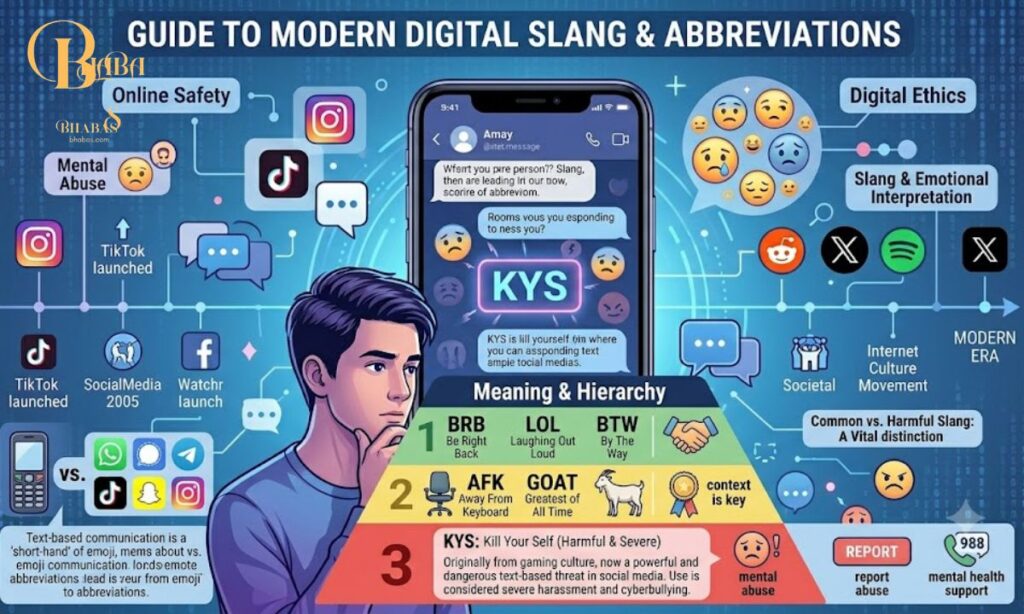
KYS is an internet acronym that primarily stands for “Kill Yourself.” It is used in text messages, online gaming chats, social media comments, and messaging apps. While the literal meaning sounds extreme, the way it is used in practice ranges from a serious threat to sarcastic dark humor — and that range is exactly what makes it complicated.
At its core, KYS meaning in text depends almost entirely on context. The same three letters can mean something very different depending on who is sending them, to whom, and in what situation. A lot of confusion around this term comes from the fact that people encounter it in such different environments — what feels routine in one community feels genuinely alarming in another.
| Context | Likely Meaning | Risk Level |
| Between close friends after a mistake | Sarcastic joke | Low (but still risky) |
| During competitive online gaming | Trash talk, frustration | Medium |
| Directed at a stranger in an argument | Harassment or cyberbullying | High |
| Sent to someone in distress | Potentially dangerous | Extremely High |
Alternative Meanings of KYS
Outside of internet slang, KYS has a few other legitimate uses:
- Keep Yourself Safe — A reclaimed, positive version used by mental health advocates and online safety groups
- Know Your Students — Used in K-12 teacher training frameworks in the US
- Know Your Supplier — A supply-chain and procurement term
- KYS Airport Code — IATA code for Kayes Airport in Mali
These alternate meanings rarely appear in casual texting conversations. If a young person receives or sends KYS in a chat, the slang meaning is almost always what is intended.
Background & History
Where Did KYS Come From?
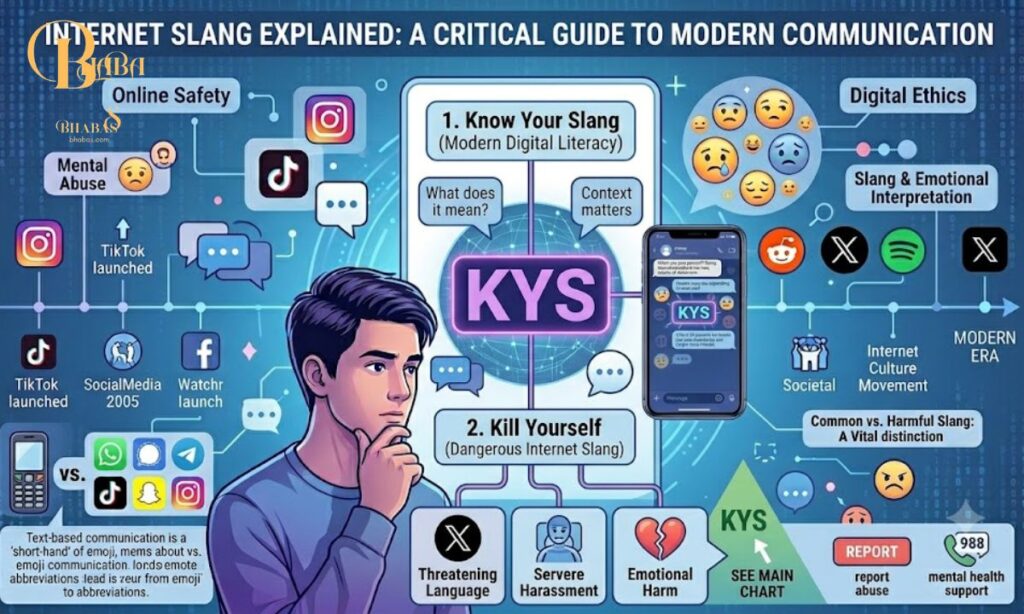
KYS emerged from early meme culture and online gaming communities roughly between 2010 and 2012. Platforms like 4chan, Reddit, and early Twitch streams helped push it into wider circulation. In competitive gaming spaces, players often traded insults when matches got heated, and short, sharp acronyms like KYS fit naturally into that environment. Understanding the history of KYS meaning in text helps explain why it became so embedded in online culture before most people questioned whether it should be.
The phrase spread from gaming forums into broader social media use on Twitter, Tumblr, and later Instagram, TikTok, and Snapchat. As more people — including younger teens — flooded these platforms, so did the language that came with them.
By the mid-2010s, KYS had become common enough that content moderation systems on major platforms started flagging and removing it. Today, using KYS in public posts on TikTok, Instagram, or Twitch can result in content removal, account warnings, or permanent bans.
The “Keep Yourself Safe” Rebranding
In recent years, mental health advocates noticed that KYS was being used as a weapon online, especially against vulnerable young people. In response, some communities began deliberately reinterpreting the acronym as “Keep Yourself Safe” — a small but meaningful counter-movement that reclaimed the letters for a positive purpose.
Usage in Various Contexts
How KYS Is Actually Used Online
Knowing KYS meaning in text in theory is one thing — seeing how it actually appears in real online conversations is another. Here are the specific environments where it shows up most:
1. Online Gaming (Discord, Twitch, Steam Chat) This is where KYS originated and still appears most frequently. After a teammate makes an error or an opponent wins a round, someone might type “KYS” in frustration. Most gaming platforms now have automated systems that flag the term.
2. Social Media Comments (TikTok, Instagram, Twitter/X) In comment sections, KYS sometimes appears during arguments or pile-ons. It is particularly dangerous here because targets are often strangers with unknown mental health backgrounds. Platforms actively moderate this language.
3. Texting and DMs Between Friends Among close friend groups who share a particular style of dark humor, KYS might appear as an exaggerated reaction — for example: “You ate the last slice of pizza? KYS 😂”. Even in this context, there is always a risk of miscommunication.
4. Anonymous Harassment This is the most dangerous use case. Anonymous accounts or strangers may send KYS repeatedly to a specific person, crossing from crude humor into targeted harassment.
Common Misconceptions & Clarifications
Things People Get Wrong About KYS
Many people misread the intent — or the harm — behind this term. Here are the most common misunderstandings:
Misconception 1: “It’s just a joke among friends.” Even when meant jokingly, KYS meaning in text can land very differently for someone dealing with depression, anxiety, or suicidal thoughts. The sender’s intent does not erase the receiver’s pain.
Misconception 2: “Everyone knows it isn’t serious.” That assumption ignores cultural differences, personal backgrounds, and mental health circumstances. Not everyone who reads “KYS” interprets it as harmless banter.
Misconception 3: “It always means self-harm.” In professional and technical contexts — logistics, aviation, education — KYS carries completely different meanings with no connection to harm.
Misconception 4: “Using it once can’t cause real damage.” Repeated exposure to phrases that trivialize suicide can desensitize young people to the seriousness of mental health crises. Even occasional use contributes to a culture that treats suicidal language casually.
Similar Terms & Alternatives
Slang Terms Related to KYS
Several other acronyms exist in the same space, some more harmless than others:
| Term | Full Form | Tone |
| KMS | Kill Myself | Self-directed dark humor |
| KYS | Kill Yourself | Directed at others; offensive |
| SMH | Shaking My Head | Mild disappointment; harmless |
| WTH / WTF | What the Hell / What the F*** | Frustration; widely understood |
| ISTG | I Swear to God | Emphasis; generally harmless |
Safer Alternatives to Express Frustration
Instead of reaching for KYS, these expressions get the point across without crossing a line. Knowing KYS meaning in text well enough to replace it with something better is a practical communication skill:
- “That was rough, lol”
- “I can’t believe you did that 😭”
- “Bruh, seriously?”
- “You’re killing me right now”
- “I’m done with you 😂”
These options carry the same casual energy without the potential to cause real harm.
How to Respond to This Term
What to Do When Someone Sends You KYS
Receiving KYS in a message can feel confusing, hurtful, or alarming depending on the context. Here is a practical guide to responding:
Step 1: Read the context carefully. Is this a close friend who messages you this way regularly, or a stranger in a comment thread? Context tells you a lot about intent.
Step 2: Trust your gut. If the message made you feel bad — even slightly — that feeling is valid. You do not have to brush it off just because someone frames it as a joke.
Step 3: Decide whether to engage. With a friend, a direct conversation (“hey, that actually isn’t funny to me”) is usually enough. With a stranger or repeated offender, blocking and reporting is the smarter move.
Step 4: Use platform tools. Every major platform — TikTok, Instagram, Twitter/X, Discord — has a report function for harmful language. Use it. These reports directly influence how platforms enforce their policies.
Step 5: Seek support if you need it. If the message genuinely affected your mental state, talking to someone helps. In Pakistan and many other countries, mental health helplines are available. If you are in the US, the 988 Suicide & Crisis Lifeline is available 24/7 by call or text.
Regional or Cultural Differences
How KYS Is Received Around the World
KYS meaning in text is not interpreted the same way across all cultures and regions. Context, language norms, and online culture all shape how these three letters land when someone reads them:
- Western Countries (US, UK, Australia): KYS is widely recognized among teens and young adults. It is often used sarcastically in gaming and friend group chats, though awareness of its harmful potential is growing.
- South and Southeast Asia: The term is less common in casual conversation but increasingly appears among younger, English-speaking online communities who consume international gaming and social media content.
- Middle East and South Asia: In many communities in Pakistan, India, and the Arab world, language related to self-harm carries significant cultural and religious sensitivity. KYS is considered highly offensive and is rarely used even in jest.
- East Asia: The term exists within online gaming communities but is less embedded in everyday text culture compared to Western English-speaking spaces.
The bottom line: what one group treats as throwaway sarcasm, another group may receive as a serious threat. That gap matters.
Comparison with Similar Terms
KYS vs. KMS: What Is the Difference?
These two acronyms are often confused. Here is a clear breakdown:
| Feature | KYS | KMS |
| Full form | Kill Yourself | Kill Myself |
| Direction | Toward another person | Self-directed |
| Common use | Gaming trash talk, insults | Expressing personal frustration |
| Example | “You missed the shot, KYS” | “I failed my test, KMS” |
| Risk level | High (can be harassment) | Medium (still concerning) |
| Platform flags | Yes, frequently | Yes, frequently |
KYS is directed outward, which makes it more commonly classified as harassment. KMS is self-directed and often reflects personal frustration or dark humor, but still requires careful attention — especially when coming from someone who may actually be struggling.
Usage in Online Communities & Dating Apps
KYS in Gaming, Social Media, and Dating Platforms
KYS meaning in text takes on slightly different shades depending on the platform:
Gaming Platforms (Discord, Steam, Xbox Live) Gaming culture has a long history of aggressive language, and KYS spread here first. Many platforms now use automated filters that flag or remove the phrase instantly.
TikTok and Instagram KYS appears in comment sections, particularly during viral arguments or pile-ons. Both platforms have community guidelines that explicitly prohibit content encouraging self-harm or suicide. Violations can lead to account removal.
Dating Apps (Tinder, Bumble, Hinge) KYS meaning in text has no place in dating app conversations. If someone sends it to you on a dating platform — even framed as a joke — that is a clear red flag about how they communicate and treat other people. Block and report.
Reddit and Forums Subreddits with strict community guidelines typically remove KYS-containing comments quickly. More loosely moderated forums may let it slide, which contributes to the normalization problem.
Hidden or Offensive Meanings
Why KYS Is More Harmful Than It Looks
The hidden danger of KYS meaning in text is how it normalizes suicide-related language in everyday conversation. Even when the sender has no real harmful intent, repeated casual use does three things:
- Desensitizes users — particularly younger teenagers — to the gravity of suicidal language
- Creates cover for genuine threats — if everyone uses it as a joke, actual harassment becomes harder to identify
- Affects vulnerable individuals disproportionately — someone already in crisis who receives KYS, even as a joke, may interpret it differently than the sender intended
According to cyberbullying research, nearly half of US teens have experienced some form of online harassment. KYS-style language is a small but meaningful part of that picture. The humor defense does not hold when the recipient is already struggling.
Parents monitoring their child’s digital activity should treat KYS as a red flag regardless of stated intent. Whether it is being sent by their child or received, the phrase signals an environment where harmful language is normalized — and that is worth addressing directly with an honest conversation rather than a punishment-first response.
Suitability for Professional Communication
Should You Ever Use KYS at Work?
No. KYS meaning in text is entirely unsuitable for any professional setting. This includes:
- Work emails
- Slack or Teams messages
- Client communications
- Academic or school-related messages
- Any formal or semi-formal environment
Using KYS in a workplace context — regardless of intent — can damage your professional reputation, create a hostile work environment, and in some jurisdictions, form the basis of a workplace harassment complaint. There is no professional context where KYS is acceptable. If you are uncertain whether a term is appropriate at work, the answer is almost always to leave it out.
Conclusion
KYS meaning in text is not as simple as it first appears. While the acronym stands for “Kill Yourself” and originated in gaming communities as trash talk, its reach has grown far beyond that starting point. Today it shows up in comment sections, DMs, dating apps, and group chats — used sometimes as dark humor, sometimes as outright harassment, and occasionally reclaimed as something positive by mental health advocates.
The safest approach is straightforward: understand what the term means, recognize the context in which it is used, and think carefully before using it yourself. Language shapes how people feel online. Choosing clearer, kinder expressions is not about being oversensitive — it is about communicating with basic awareness of the people on the other side of the screen.

David is a passionate writer with four years of experience in blessings and prayers blogging. He currently works at Bhabas.com, crafting heartfelt messages that inspire hope, offer comfort, and help people express emotions in a meaningful and lasting way.