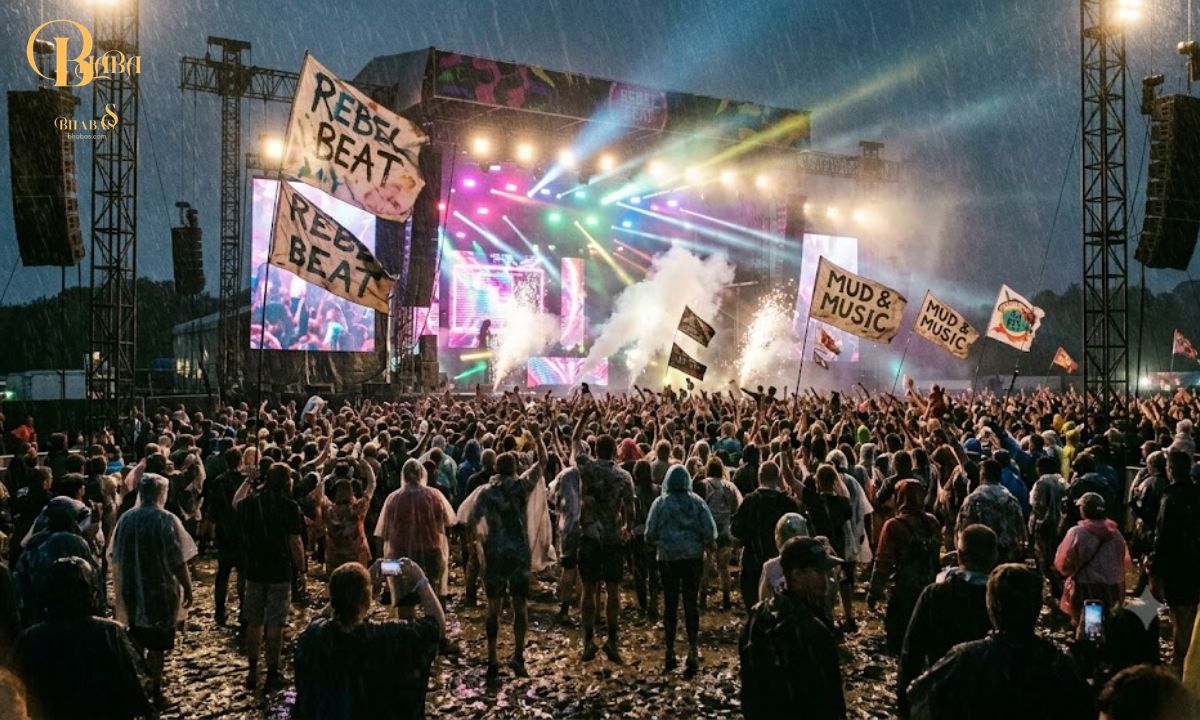
There is a specific smell that hits you the moment you step off the shuttle bus at the Eichenring in Scheeßel, Germany. It is not the pleasant scent of bratwurst or the faint, nostalgic aroma of campfire smoke. It is the smell of liberation.
It smells like wet grass being trampled by twenty thousand pairs of feet, the metallic tang of lager splashed on hot asphalt, and the distinct, ozone sharpness of a synthesizer feedback loop bleeding into a stormy sky.
Welcome to Hurricane Festival. Or, as the veterans call it, the Anti-Festival.
In a world where live music has become increasingly sanitized—where VIP zones cost a month’s rent and phone screens block the view of every stage—Hurricane remains gloriously, stubbornly, analog.
The Geography of Chaos (The Green Hill)
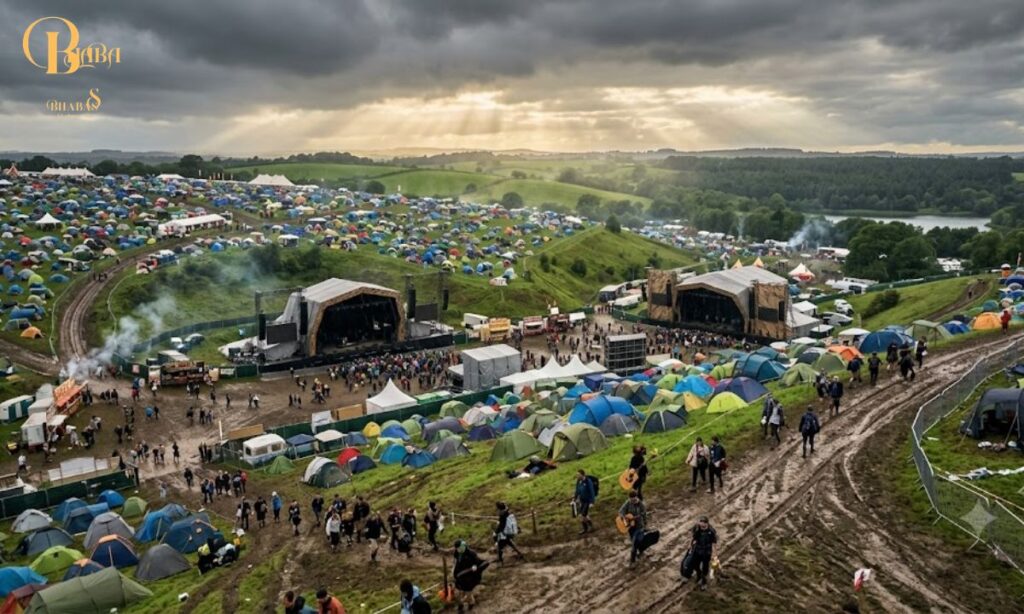
Before the bass drops, before the first singalong, Hurricane wins because of the land.
Unlike the flat, industrial wastelands of many European mega-festivals, Hurricane takes place on a race track surrounded by undulating green hills. This topography is not just aesthetic; it is tactical.
The infamous “Wiese” (the meadow) is a giant bowl of a hill that overlooks the main stage. By Sunday evening, this hill is a mud-slicked, beer-soaked amphitheater of humanity. You don’t just watch a headliner at Hurricane; you occupy the hill.
There is a unique physics to it. When you are halfway up that slope, fighting gravity with a plastic cup in each hand, the music hits you differently. The sound waves roll up the hill, compressing just enough to create a natural reverb that no audio engineer could ever replicate. It is the sound of a tribe shouting into the wind.
And then there is the ring. The Eichenring is a motorbike speedway. By night, the high concrete banks of the track turn into bleachers for the weary. You sit on the cold cement, feet dangling over the edge, watching the lights of the ferris wheel spin in slow motion while a post-punk band howls in the distance. It feels like the end of the world, but in the cozy way.
The Code of the Rain (Embrace the Mud)
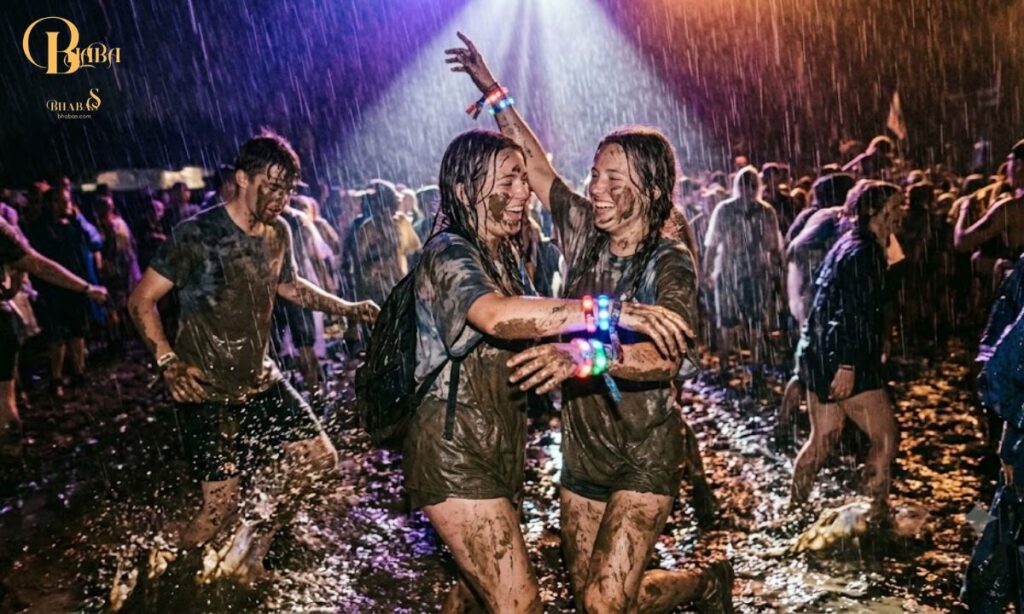
Let us address the elephant in the field: the German weather.
Hurricane has a reputation. It is not a sunny, Coachella-style desert mirage. It is often cold. It is often wet. And when it is wet, the grey, sandy soil of Lower Saxony transforms into a primordial soup that swallows your shoes whole.
Most festivals try to fight the weather. They lay down wood chips. They pump water. They apologize.
Hurricane uses the weather.
There is a psychological shift that happens on the first rainy day. The tourists leave. The fair-weather fans retreat to their overpriced rental RVs. What remains is the core: the people who drove eight hours in a 1998 VW Bus with no working heater, just to see a niche Norwegian shoegaze band at 2:00 PM.
In the rain, the barriers dissolve. You do not care if your hair is flat. You do not care if your white sneakers are now brown bricks. You are forced to look at the person next to you—not through a screen, but in the eye—and share a laugh about the sheer absurdity of it all.
The mud becomes a great equalizer. It does not discriminate between the guy in the €200 designer flannel and the girl in the thrifted leather jacket. Everyone is filthy. Everyone is equal. This is the secret sauce of Hurricane: Shared suffering breeds the strongest euphoria.
The Lineup: Where Indie Royalty Meets the Underground Gutter
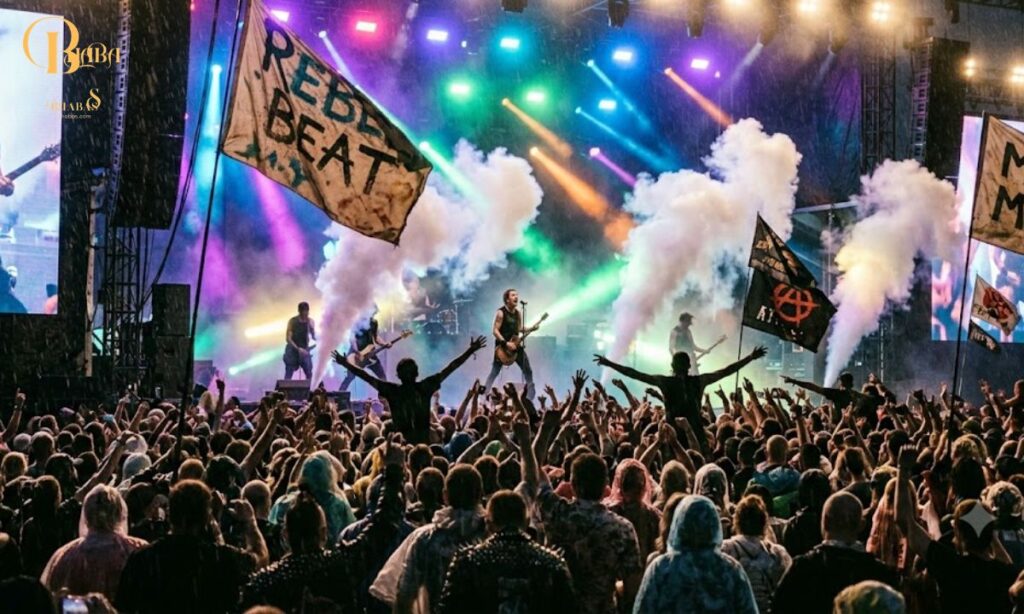
Booking for Hurricane is an art form. It is not a corporate radio playlist. It is a dissertation on cool.
You will get your headliners. The Strokes. The Prodigy. Florence + The Machine. The big names that move tickets. But that is just the bait. The real magic happens on the smaller stages.
The Blue Stage: The tent is always too small for the act playing it. You will be squished against the canvas walls, sweating next to a stranger, trying to catch a glimpse of a band that will sell out arenas next year. This is where you discover your new obsession. This is where legends are born in 30-minute sets at 11:00 AM.
The Ringberg Stage: Nestled in the trees, this stage feels like a secret. The sound is lower, the lights are dimmer, and the vibe is dangerously intimate. You might walk past a tent playing ambient techno and accidentally stumble into a life-changing set by a producer you have never heard of.
Hurricane does not chase Tik Tok trends. It chases taste. They book bands that look like they smell bad (in a good way). They book artists who break guitars. They book the weirdos. And because they book the weirdos, the crowd is equally weird. You will see punk kids next to middle-aged lawyers next to teenagers who just discovered Joy Division.
It is a lineage. Hurricane has been running since 1973 (originally as a different entity, but the spirit remains). Your parents might have seen U2 here in the 80s. You are seeing Fontaines D.C. now. The passing of the torch happens in the mosh pit.
The Camping Revolution (Territory and Tactics)
Forget the hotel. If you sleep in a bed with sheets, you did not go to Hurricane. You visited.
The camping grounds are a nation-state of their own. Over 70,000 people live in a temporary city for four days. There are no paved roads, only desire paths worn by footsteps. The currency is beer, cigarettes, and battery packs.
The Thursday Phenomenon: The festival music does not start until Friday. But Thursday night is the real opening ceremony. It is a night of pure, unadulterated chaos. Thousands of people, no schedule, no rules. Just sound systems rigged to car batteries, glow sticks thrown like grenades, and the construction of the great communal campfires (in fire pits, please—we aren’t animals).
Walking through the campsites is a journey through the human psyche.
- The Dutch Corner: They always bring a caravan, a massive awning, and a techno deck. They are friendly, but they party until 6 AM. Do not camp near the Dutch if you need sleep.
- The German Efficiency Camp: They arrived at 8 AM Thursday. Their tent is perfectly staked. They have a laminated meal plan. They are slightly terrifying but will help you hammer your tent pegs into the hard ground without being asked.
- The Lost Ones: The people wandering at 3 AM, shouting “Gregor!” because Gregor lost his phone, his shoes, and his concept of time. We have all been Gregor.
The rule of the camp is simple: Rücksichtnahme (consideration). It is a very German word, but it applies here. You can play your music loud, but not that loud. You can drink, but share. You can be wild, but do not break the tent of the person sleeping next to you. It is a social contract written in mud and firelight.
The Pilgrimage to the “Fressbuden”
You cannot survive on lager alone. Hurricane knows this.
The food at German festivals has no right to be as good as it is. We are not talking about sad, lukewarm hot dogs. We are talking about Flammkuchen (German pizza, essentially) pulled fresh from a wood-fired oven. We are talking about Currywurst with a dusting of curry powder that hits the spot at 1:00 PM after a night of rain.
But the true pilgrimage is to the Späti (the late-night shop). It is a logistical miracle. You wait in line for 20 minutes, freezing, listening to the distant thud of the “Mullum” stage. You finally reach the counter. You buy a cheese sandwich that is mostly plastic, a Red Bull, and a pack of Gummi Bears. You walk back to the hill, sit down, and consume this meal as if it is a five-star Michelin dinner.
It is the context that makes the flavor. You are tired. You are broke. You are alive. That synthetic cheese tastes like victory.
The Ghosts of the Aftershow
The music stops at the stages around midnight. But Hurricane is a 24-hour organism.
Deep in the woods, tucked away from the main drag, there are the Afters. They are not officially on the map. You find them by following the low-frequency rumble or the trail of exhausted ravers.
There is a tent called the “Mullum” (an ode to the Australian bush doof culture). It runs until the sun comes up. The music is drum and bass, or techno, or something unclassifiable. The lights are lasers cut through the vapor of a thousand breaths.
Around 4:00 AM, the vibe shifts. It is no longer a party. It becomes a meditative trance. The dancers stop jumping and start swaying. The talkers stop talking and start staring at the sky. The sun starts to rise over the race track, turning the sky a bruised purple.
You walk back to your tent. The birds are screaming. The grass is wet with dew. You see a few people already up, drinking coffee from thermoses, looking at the wreckage of the night before with peaceful eyes.
You crawl into your sleeping bag. You do not sleep. You just lie there, replaying the basslines in your head, and you realize—this is the good stuff. This is the raw material of life.
Why This Matters (The Digital Detox)
We are living in the era of the algorithm. Our music is recommended by a computer. Our friends are managed by a database. Our experiences are curated for Instagram.
Hurricane is the antidote.
You will have zero cell service. The moment you arrive, your phone becomes a brick. You cannot scroll. You cannot post. You cannot stalk the set times of the stage you are not at.
You are forced to be present.
You have to actually talk to the stranger next to you to find out what time the band starts. You have to look at the physical paper schedule (that is immediately ruined by rain) to plan your day. You have to use your memory, your instincts, and your empathy.
When you watch a band at Hurricane, you are not filming it for the people who stayed home. You are watching it because you are there. Your eyes are the lens. Your memory is the cloud storage.
This scarcity of digital connection creates an overflow of human connection. You will make friends at the water station that last longer than your phone contacts. You will hug a crying stranger during a sad song and never learn their name. You will share your last cigarette with someone who has nothing.
The Exodus: The Monday Morning Walk of Shame
Sunday is bittersweet. The headliner finishes. The fireworks (if they have them) explode over the trees. There is a collective sigh. You know it is ending.
Monday morning at Hurricane is a silent film. The sun is too bright. The field looks like a battlefield—trampled tents, abandoned chairs, piles of empty crates. Everyone moves slowly. Nobody wants to break down the camp. Nobody wants to zip up the tent for the last time.
You walk to the car. You are dirty. You are bruised. You have a weird rash on your leg. Your ears are ringing. You smell like a bonfire.
You drive away. The radio plays normal music. It sounds wrong. Flat. You pass a gas station and see a person in clean clothes. They look alien.
You look in the rearview mirror. The Eichenring shrinks to a dot. You are leaving the chaos behind, but you are taking the chaos with you.
For a few days, you have been a hurricane yourself. Uncontrollable. Loud. Wet. Free.
The Verdict
There are bigger festivals. There are more expensive festivals. There are festivals in nicer locations with better weather.
But there is only one Hurricane.
It is a right of passage for the European music lover. It is a test of endurance and a celebration of hedonism. It is where the indie kid, the metalhead, and the techno gremlin shake hands and agree that the mud is fine, actually.
If you are looking for luxury, look elsewhere. If you are looking for reality, look at the schedule.
The Hurricane is coming. Pack your boots. Leave your umbrella (it will break). Bring your grit. Bring your ears. And for the love of god, bring some wet wipes.
See you on the hill. Bring a lighter for the slow songs. 🌀

David is a passionate writer with four years of experience in blessings and prayers blogging. He currently works at Bhabas.com, crafting heartfelt messages that inspire hope, offer comfort, and help people express emotions in a meaningful and lasting way.