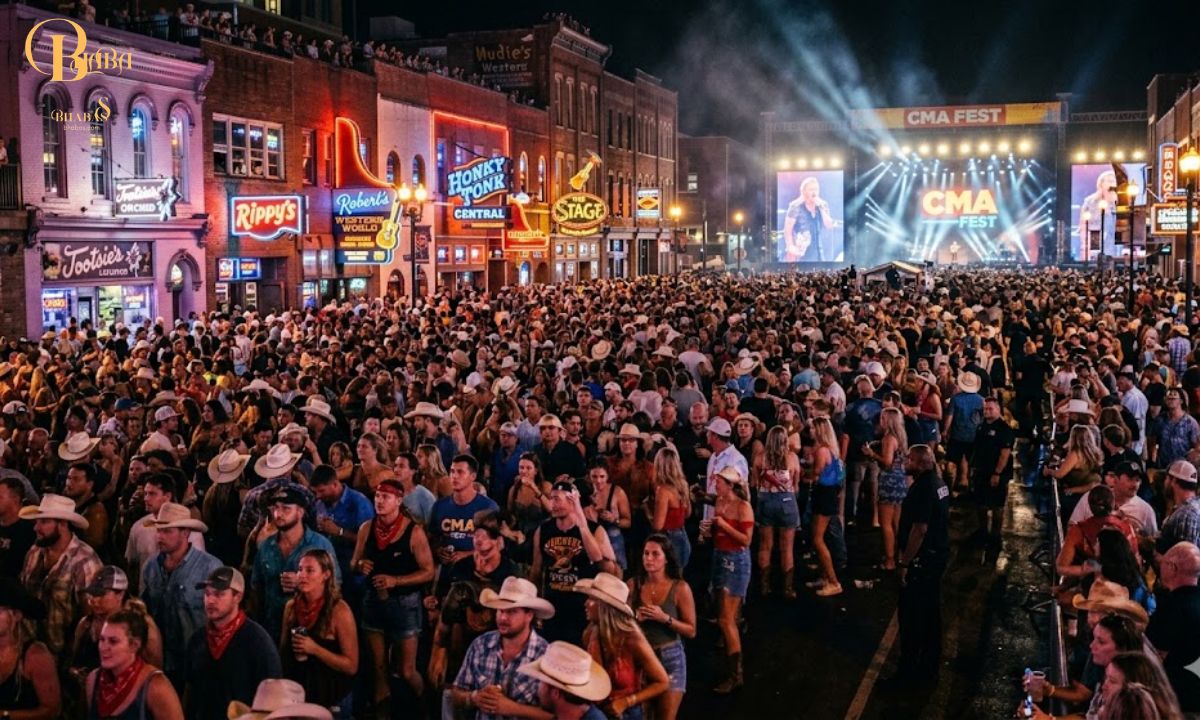
Nashville, Tennessee – The thermometer reads 94 degrees. The humidity is so thick you could bottle it and sell it as sweet tea. There are 80,000 people crammed into a football stadium, and another 50,000 spilling across the concrete riverbanks of Lower Broadway. On six different stages scattered across three miles of downtown real estate, a 72-year-old legend is trading guitar licks with a 19-year-old TikTok sensation who just moved to town last Tuesday.
This is not just a music festival. This is a pilgrimage.
Welcome to CMA Fest 2026. And if you think you know what to expect, stop reading now. Because the story of this four-day takeover isn’t just about the chart-toppers or the VIP tents. It’s about the fact that in an era of algorithm-driven playlists and digital isolation, Nashville has become the last physical battleground for the soul of country music.
The Great Unplugging (No, Really)
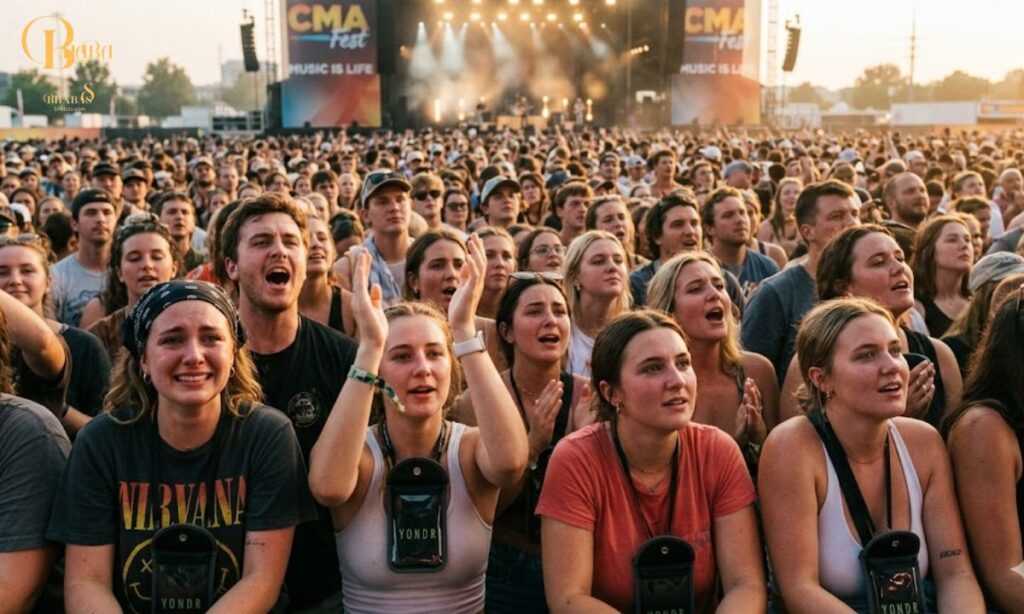
Here is the powerful truth that the highlight reels miss: CMA Fest is an analog miracle in a digital world.
Walk through the gates at any major festival today—Coachella, Lollapalooza, even Stagecoach. What do you see? A forest of smartphones held at eye level. Thousands of people watching a concert through a six-inch screen, documenting a life they aren’t actually living.
Now walk through the gates at CMA Fest.
Sure, there are phones. But look closer. Look at the 60-year-old grandma from Arkansas who is video-calling her husband who couldn’t make the trip, tears streaming down her face as Kelsea Ballerini sings a deep cut. Look at the group of college guys who have collectively decided to lock their devices in a rented locker for the entire day. Look at the kid on his father’s shoulders—no tablet, no earbuds—just wide eyes staring at a laser show that feels like it’s rewriting his DNA.
Because country music, at its core, is a tactile genre. It is the sound of a screen door slamming. It is the feel of red dirt under your boots. It is the smell of a grill firing up in a parking lot. CMA Fest forces you back into your body. You can’t download the humidity. You can’t stream the smell of the hot chicken truck. You can’t swipe right on the communal energy of 60,000 strangers screaming the same chorus about a pickup truck and a heartbreak.
This festival is the great unplugging. And it is desperately needed.
The Democracy of the Dirt
Let’s talk about power—specifically, who has it here.
At most festivals, power is a currency. It’s backstage. It’s the platinum wristband. It’s the elevated platform where the influencers watch from afar.
CMA Fest destroys that hierarchy.
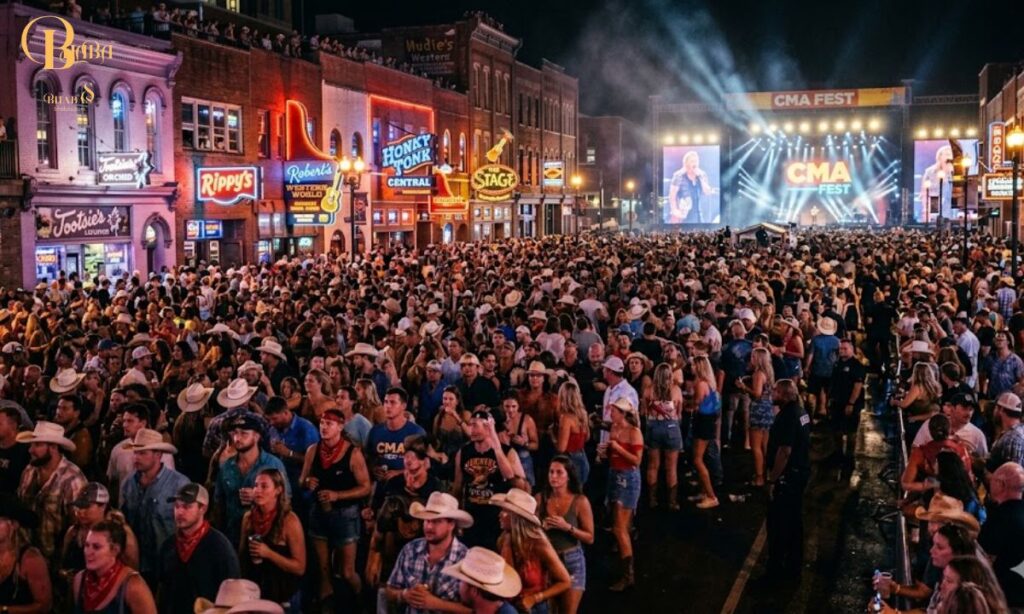
The most powerful real estate in Nashville for four days isn’t the VIP section at Nissan Stadium. It’s a strip of cracked asphalt on Broadway known as the Dr Pepper Stage. It’s free. It’s un-air-conditioned. And the legends play there.
Last night, as Lainey Wilson was preparing for her headlining stadium set three blocks away, a man named Marty Stuart played a blistering mandolin solo on that little free stage. There were only 300 people watching. He didn’t care. He played like he was at the Ryman.
That is the secret sauce. At CMA Fest, a brand-new artist playing to 50 people at the Chevrolet Riverfront Stage at 11:00 AM is often putting on a better show than the headliner at 10:00 PM. Because they have something to prove. Because they aren’t playing for the cameras yet. They are playing for the people who woke up early, who stood in line for two hours, who are sweating through their shirts.
This is the last meritocracy in music. You don’t get the crowd because of a PR push. You get the crowd because you moved them. You made them forget about the blisters on their heels.
The “Unofficial” Fest: Where the Ghosts Live
The official schedule is impressive. We’ve got Luke Combs, Morgan Wallen, Chris Stapleton, and the newly-crowned Entertainer of the Year. But any veteran will tell you: The real CMA Fest happens after midnight.
This is the part the tourist boards don’t advertise. The “Late Night” circuit.
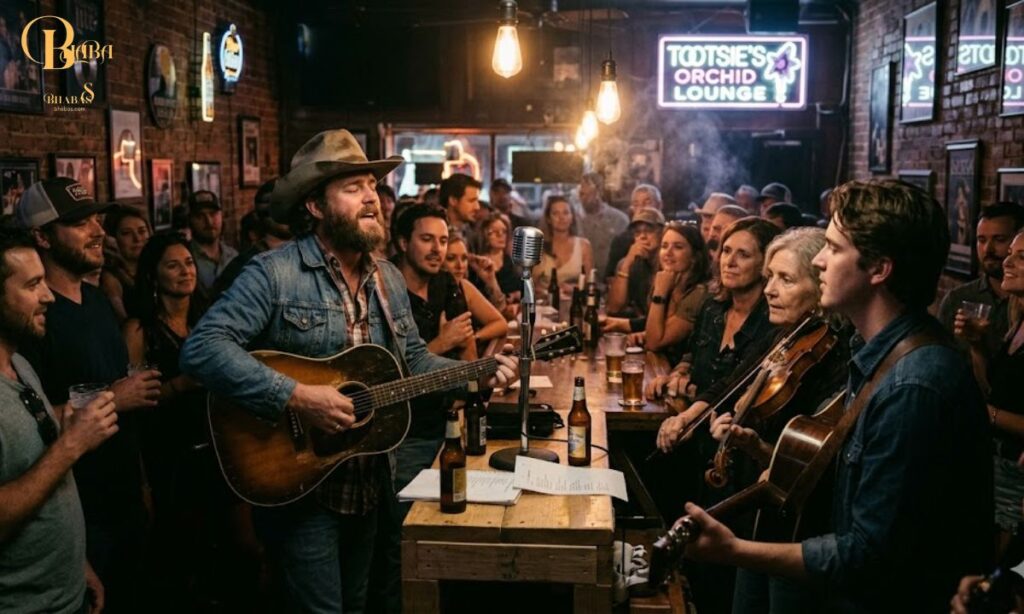
When the stadium lights go dark, the real musicians—the session players, the songwriters, the artists who just played their stadium set—they don’t go to bed. They go to the bars on Printers Alley, or the basement of a place called The Local, or to a songwriter’s round in a loft above a boot store.
You might pay $200 to see Luke Bryan in the stadium. But at 1:00 AM, if you know the right door to knock on, you might see Luke Bryan, Hardy, and Ernest sitting on three bar stools, passing a single microphone, laughing about a song they wrote three hours ago. There are no stage monitors. There is no light show. There is just truth.
This is where “CMA Fest” becomes something more than a festival. It becomes a homecoming. Because for 364 days a year, these artists are commodities. They are in busses. They are in planes. They are product. But for four days in June, they come back to the well. They come back to Nashville to remember why they started.
You can feel that energy bleeding into the streets. It’s in the way a fan at a bar recognizes a songwriter who wrote a hit for someone else, and buys them a shot of whiskey not because they want a selfie, but because they respect the craft. That doesn’t happen at EDC. That doesn’t happen at Lollapalooza.
The Heat Index and the Heart Index
Let’s be brutally honest about the logistics, because any powerful blog needs grit.
CMA Fest is physically punishing.
The “Real Feel” index hits 105 degrees. You walk 22,000 steps a day. You drink $9 waters. The porta-potties by the Ascend Amphitheater reach a level of biological warfare that the Geneva Conventions would like to discuss.
And yet, nobody complains.
In fact, the suffering is the bonding agent. When you see a stranger pass out from dehydration, you see ten people rush to help. When the afternoon thunderstorm rolls in (and it always does), you see 5,000 people huddle under the same tiny awning, sharing ponchos, singing “Stay” by Sugarland to pass the time.
This is not a “luxury” festival. This is a grit festival. And that grit is what country music is built on.
You come out of CMA Fest looking rough. Your voice is gone. Your face is sunburned in the shape of your sunglasses. Your credit card is smoking from all the merch and the brisket. But you feel like a veteran. You feel like you earned the memories.
The Quiet Revolution of 2026
There is a specific story brewing this year that is changing the narrative. For years, the criticism of CMA Fest (and country music at large) has been homogeneity. Too much sameness. Too many trucks, too many beer brands, too much of the same sound.
2026 is the year that criticism died.
Walk the grounds this year and you’ll hear something different. You’ll hear the banjo merging with a hip-hop drum machine in a way that doesn’t feel forced. You’ll hear a queer country artist named Brooke Eden draw a crowd that spills four blocks deep, and the crowd isn’t just “the usual suspects.” It’s everyone. It’s the bikers and the drag queens standing shoulder to shoulder.
You’ll hear the roots revival. The “Ay” sound. The underground movement of bluegrass punk. The steel guitar is back, but it’s distorted. The harmonies are tighter, but the lyrics are darker.
CMA Fest 2026 is the sound of a genre realizing that to survive, it doesn’t have to narrow its focus. It has to explode its borders. And the fans are hungry for it. They are tired of the radio singles. They want the weird stuff. They want the live arrangements that last ten minutes and have a fiddle solo that sounds like a knife fight.
The Strategy: How to Conquer the Concrete Jungle
If this blog has convinced you to buy a plane ticket for next June, or if you are currently reading this from a hotel room with a broken air conditioner, you need a strategy. Powerful experiences don’t happen by accident.
Forget the Headliners (Mostly). Yes, see Morgan Wallen if you can. But don’t camp at the stadium all day. The stadium is the exclamation point. The period at the end of the sentence. The real story is the “Fan Fair X” inside the Convention Center. It’s air-conditioned, yes, but it’s also where the artists do the weird things. They bowl. They cook. They sit at tables and look you in the eye without a plexiglass barrier. That is worth more than the 15-minute stadium set.
Bring the Paper. Not your phone. Bring a laminated map. Bring a sharpie. The cell service is a lie. It will not work. You are now operating on pioneer logic. Look at the sun. Feel the crowd flow. Write down set times on your arm. Going analog here isn’t cute; it’s survival.
The “Sunday Slowdown.” Everyone burns their gas on Thursday, Friday, and Saturday. Sunday is the secret weapon. Sunday at CMA Fest is a ghost town by comparison. The tourists leave early to beat the traffic. The locals come out. The gospel sets happen. The vibe is reflective, sad, and beautiful. It is the only day you can actually see the river. Don’t miss the Sunday Slowdown.
The Emotional Hangover (The Powerful Truth)
You need to know what happens on the Tuesday after CMA Fest.
It’s called the “Post-Festival Depression,” but for country fans, it’s deeper than that. For four days, you lived in a world where music was the only priority. You had no emails. You had no deadlines. You had only the next set time and the distance to the next bathroom.
When you go back to your quiet cubicle, or your silent living room, it hurts. Because CMA Fest proves that joy is scalable. It proves that 100,000 strangers can agree on a single beat, a single sentiment: We are broken. We are lonely. But we are here together.
That is the powerful truth that nobody puts on the poster.
The poster says “Lainey Wilson, Jelly Roll, Kane Brown.”
The truth is: CMA Fest is a church revival for the secular soul. It is a place where you go to remember that you are capable of feeling something unironically. In a cynical world where we are trained to dislike things, CMA Fest forces you to admit you love things. Loudly. Poorly. Off-key.
The Final Verse
You can watch the highlight reel on ABC. You will see the pyrotechnics, the perfect close-ups, the rehearsed banter. It will look shiny. It will look smooth.
But that is not the real CMA Fest.
The real CMA Fest is the middle-aged dad who hasn’t danced since his wedding, cutting a rug in the middle of Demonbreun Street because “Ain’t No Love in Oklahoma” came on and his daughter grabbed his hand.
The real CMA Fest is the 20-year-old aspiring songwriter, homeless for the weekend, sleeping in a rented car, passing out demos on burnt CDs because he believes one of them will end up in the hands of a producer who remembers what it felt like to be hungry.
The real CMA Fest is the sound of a city saying, “Yes, the world is on fire. But put your boots on anyway. Because the music is still playing.”
Don’t come to CMA Fest expecting perfection. Come expecting presence. Come expecting to sweat. Come expecting to cry during a song you’ve heard a thousand times but never felt until now.
Because in the neon-drenched chaos of downtown Nashville, in the sticky humidity of a Tennessee June, you will find something that has gone extinct in modern life: Authenticity.

David is a passionate writer with four years of experience in blessings and prayers blogging. He currently works at Bhabas.com, crafting heartfelt messages that inspire hope, offer comfort, and help people express emotions in a meaningful and lasting way.