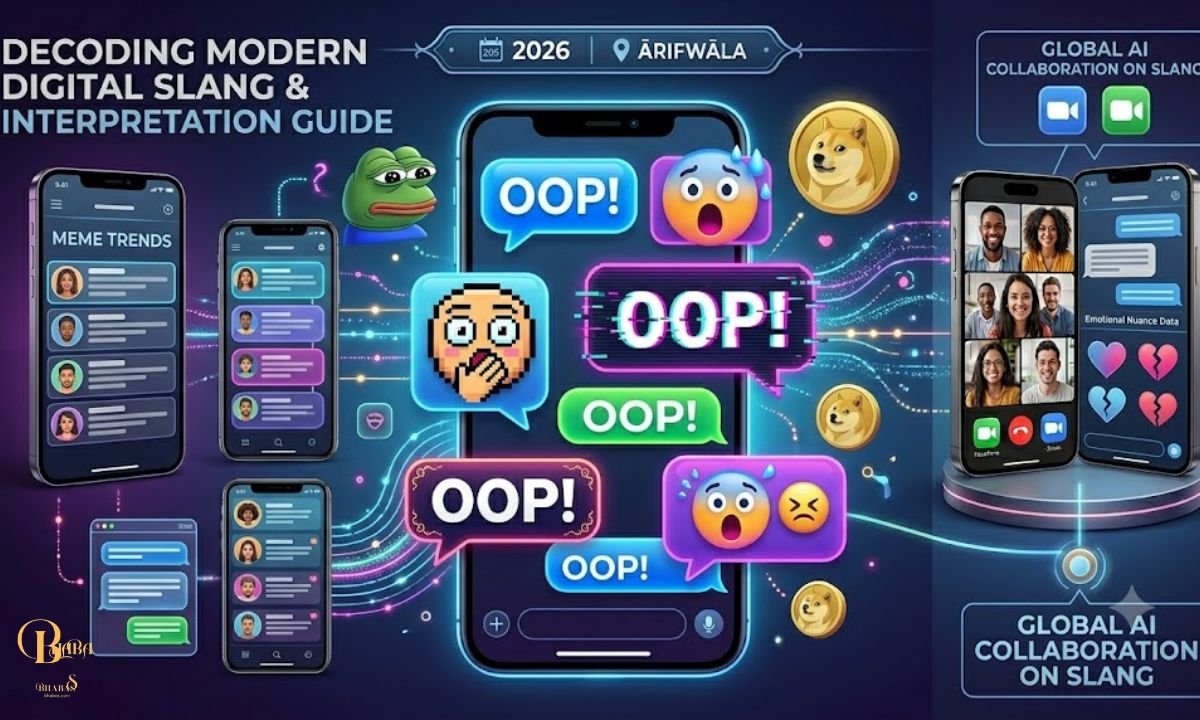
If you have spent any time scrolling through text messages, TikTok comments, or Instagram DMs, you have probably come across the word “oop” and paused for a second. It does not look like a standard word, and it is not a typo either. So what exactly does it mean? The OOP meaning in text is one of those things that seems small but shows up constantly in everyday digital conversations, and knowing it helps you keep up with how people communicate online today.
Whether someone drops it after sending a message to the wrong person, reacting to unexpected drama, or just catching themselves mid-sentence, “oop” carries a clear emotional signal. This article breaks down the OOP meaning in text from every angle, including its origin, how people use it across different platforms, what it is not, and how you should respond when you see it in a chat.
Definition & Meaning
At its core, OOP meaning in text works as a quick, informal reaction. It is the written version of a sudden verbal sound someone makes when they are caught off guard, realize a small mistake, or witness something awkward or surprising. Think of it as a shorter, more casual version of “oops,” but with a slightly more dramatic flair.
Here is a simple breakdown:
| Term | Meaning in Text | Tone |
| OOP / Oop | Surprise, mild embarrassment, realization | Playful, casual |
| Oops | Acknowledgment of a mistake | Neutral, sincere |
| Uh-oh | Warning of a problem | Slightly worried |
| Yikes | Shock or secondhand embarrassment | Sarcastic or alarmed |
| Whoops | Light apology for a small error | Friendly |
Unlike “oops,” which you use when you make a mistake, “oop” is often used when you notice something unexpected happening, even if it involves someone else. It is more of a reaction word than an apology, and that distinction matters a lot in texting culture.
In technical contexts, OOP stands for Object-Oriented Programming, a programming method that uses classes and objects to structure reusable code. This meaning is completely separate from the slang use and only applies in software development discussions.
One thing that confuses a lot of people is that “oop” looks like it should be an acronym, but in casual texting it is not. It is an onomatopoeia — a written word that imitates a real sound. When you say “oop” out loud, it sounds like a short, sharp vocal reaction, almost like something got interrupted before it could finish. That is exactly the feeling people want to communicate when they type it.
Background & History
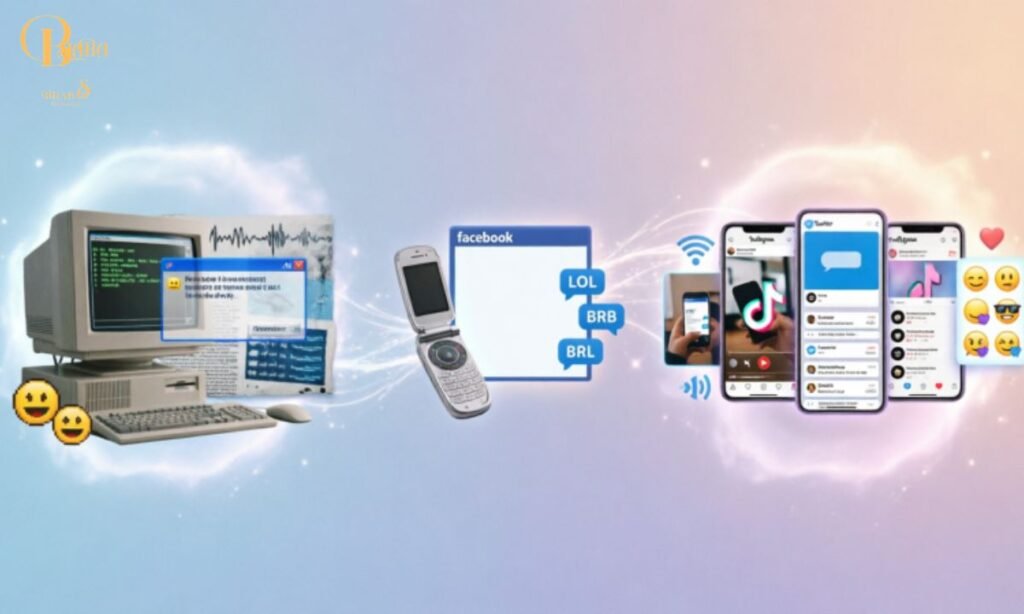
The slang version of “oop” has clear roots in African American Vernacular English (AAVE), where expressive interjections have always played a big role in everyday communication. However, its viral spread online can be traced to one specific moment.
In October 2015, drag queen and RuPaul’s Drag Race contestant Jasmine Masters was recording a YouTube video when she suddenly interrupted herself mid-sentence with the exclamation “And I oop!” The interruption happened because she accidentally hurt herself. The clip gained attention in LGBTQ+ Twitter circles soon after, and the phrase started spreading gradually.
The real explosion came in 2019, when VSCO girls and Gen Z users on TikTok and Instagram picked up “and I oop” as a reaction catchphrase. Memes, remixes, and comment threads spread the phrase to mainstream internet culture almost overnight. By 2020 and 2021, during the online communication boom of the pandemic, “oop” had become standard vocabulary in casual texting.
Today in 2026, the term has stabilized as a recognized piece of internet slang that most regular texters understand without needing an explanation.
It is also worth noting that the spread of “oop” follows a pattern common to many slang words that originated in Black and LGBTQ+ communities. The word moved from a specific cultural circle to niche internet spaces, then into mainstream Gen Z vocabulary, and finally into everyday use across age groups and platforms. Understanding that path helps explain why the word carries such an expressive, theatrical quality even in the most casual conversations.
Usage in Various Contexts
The OOP meaning in text does not stay the same across every platform or conversation type. Here is how it shows up in different settings:
Casual Text Conversations
In one-on-one texting, “oop” usually signals that something slightly awkward or unexpected just happened. People use it when they:
- Send a message to the wrong contact
- Realize mid-conversation they said something embarrassing
- Catch a typo they already sent
- Hear surprising news from a friend
Example:
“Oop, I just texted my boss instead of you 😅”
The tone is almost always light. It is not a serious apology. It is more of a “well, that happened” reaction that keeps the conversation moving without making things heavy.
Another reason people prefer “oop” over “oops” in texts is pacing. In quick back-and-forth messaging, shorter expressions keep the rhythm going. Typing a full explanation for every small slip slows things down, but a single “oop” communicates the same feeling in a fraction of the time. That efficiency is a big part of why short reaction words like this stick around in texting culture for years.
Social Media Comments
On platforms like TikTok, Instagram, and Twitter/X, “oop” is one of the most common one-word comment reactions. You will see it under posts that feature:
- Unexpected plot twists
- Someone revealing surprising information
- Bold statements that catch people off guard
- Moments of secondhand embarrassment
Example comment:
“Oop, she really said that on main 💀”
It works as a short signal that the commenter noticed something worth reacting to, without needing to write a full sentence.
Humor and Memes
“Oop” and the longer phrase “and I oop” are deeply embedded in meme culture. They are frequently paired with reaction GIFs, dramatic pauses, or funny video clips. In this context, the word signals exaggerated shock or comedic self-awareness. The humor comes from using a tiny three-letter word to represent a large, dramatic reaction.
Example meme caption:
“When you realize you agreed to plans you completely forgot about — oop 😬”
Group Chats
In group chats, “oop” often appears when one person says something that creates a momentary awkward pause, or when someone’s message changes the energy of the conversation unexpectedly.
Example:
Friend 1: “I told everyone you’d be there tonight” Friend 2: “oop” Friend 1: “WHAT” Friend 2: “I might have forgotten 😭”
Here it acts almost like a dramatic pause before a confession or unexpected announcement.
Common Misconceptions & Clarifications
Several misunderstandings come up when people first encounter “oop” online. Here are the most common ones cleared up:
- “It’s just a typo for oops.” Not exactly. It is a stylized slang expression with its own specific tone and cultural background.
- “OOP stands for something.” In casual texting, it does not function as an acronym. It is an onomatopoeia, a word that mimics a sound.
- “It is always used for mistakes.” Not always. Sometimes people use it to react to drama, surprising news, or someone else’s situation entirely.
- “It is a Gen Z word only.” While Gen Z popularized it, millennials and younger adults across different demographics use it regularly now.
- “It is offensive.” It is generally a clean, harmless expression. Context matters, but the word itself carries no offensive meaning.
Similar Terms & Alternatives
If you want to express a similar feeling without using “oop,” here are some alternatives that carry a comparable meaning:
- Yikes — for secondhand embarrassment or mild alarm
- Oops — a more formal acknowledgment of a personal mistake
- Uh-oh — a soft warning that something may go wrong
- Whoops — friendly and light, similar to oops
- Oh no — slightly more concerned tone
- Welp — resigned acceptance of an awkward or unavoidable situation
Each of these has a slightly different emotional weight. “Oop” sits closest to a dramatic but playful reaction, which is what makes it so popular in quick digital exchanges.
How to Respond to This Term
When someone sends “oop” in a conversation, your response depends on the situation. Here are some practical approaches:
- If they made a mistake: A simple “no worries” or “lol it’s fine” keeps things light.
- If they are reacting to drama or surprising news: Match their energy. You might say “right??” or “spill everything 😂”
- If it comes after an awkward moment: Laugh it off. A laughing emoji or a quick acknowledgment works well.
- If you are unsure what triggered it: Ask directly: “Wait, what happened?”
The key is not to overthink it. “Oop” is almost never a serious statement. It is meant to be read lightly and responded to in the same spirit.
One thing to keep in mind is timing. If someone sends “oop” and then goes quiet, give them a moment before piling on with questions. They might be about to follow up with context. On the other hand, if “oop” is the last thing in a long thread and nothing comes after it, a simple “lol what happened” usually gets things moving again without putting any pressure on the conversation.
Regional or Cultural Differences
The OOP meaning in text has spread globally, but its usage is not uniform everywhere. A few things worth noting:
- In the United States, it is extremely common among younger users and widely understood across demographics.
- In the UK, “oop” is less common as slang and can sometimes be confused with regional dialect phrases in northern England, where “oop” sometimes means “up.”
- In non-English-speaking countries, it often appears in English-language social media posts without a direct translation, though users understand the emotional tone from context.
- The word carries stronger AAVE and LGBTQ+ community roots, which some people are aware of and others are not. Most mainstream usage today is separated from those origins, though knowing the background adds cultural context.
Comparison with Similar Terms
| Term | When Used | Tone | Platform |
| Oop | Surprise, reaction, small mistakes | Playful | All platforms |
| Oops | Personal error acknowledgment | Sincere | Texts, emails |
| Yikes | Alarm, embarrassment | Sarcastic | Social media |
| Welp | Resigned acceptance | Dry humor | Texts, Reddit |
| Uh-oh | Warning | Slightly worried | All platforms |
| And I oop | Exaggerated shock | Dramatic/meme | TikTok, Twitter |
Usage in Online Communities & Dating Apps
The OOP meaning in text is especially common in dating apps like Tinder, Bumble, and Hinge, where casual, quick communication is the norm. In these spaces, “oop” helps lighten an accidentally awkward opening message or a double-text moment.
Example on a dating app:
“Oop, didn’t mean to send that twice 😅 — so anyway, how’s your week going?”
It signals self-awareness without turning a small mistake into a big deal. In online communities on Reddit, Discord, and gaming platforms, the word also appears frequently as a quick reaction in comment threads or live chats, especially when someone reveals unexpected information or makes a visible error during a game.
Note: On Reddit specifically, OOP sometimes stands for “Original Original Poster,” referring to the person who posted content that was later shared elsewhere. This is a context-dependent definition unique to Reddit threads.
Oop Meaning in Friends Chat
Among close friends, “oop” has a slightly different energy than in public comment sections. It tends to be warmer and more specific to inside jokes or shared experiences. When a friend sends “oop” to you in a private chat, they are almost always reacting to something that only the two of you would find meaningful or funny.
Common friend-chat scenarios:
- One friend accidentally screenshots the other’s story
- Someone sends a voice note that reveals too much
- A message goes to the wrong person in a shared group
- Someone realizes they already made plans and forgot
In friend group chats, “oop” also acts as a soft cue that something worth discussing just happened. It often invites follow-up conversation rather than closing one down.
There is also a layer of humor between close friends that you do not always get in public comment sections. When a friend replies with “oop” to your message, it can feel like a raised eyebrow across the table — a quiet signal that they noticed something without making it a big deal. That subtle, shared understanding is part of what makes the word feel so natural in close personal chats compared to more formal or public spaces.
Hidden or Offensive Meanings
For the most part, “oop” does not carry any hidden or offensive meaning. It is a surface-level reaction word with no coded intent in standard usage. However, a few edge cases are worth knowing:
- In very rare instances, “oop” can be used sarcastically to mock someone’s mistake rather than empathize with it. The tone and relationship context make this clear.
- Some people use it in a passive-aggressive way to react to something they disapprove of but do not want to address directly.
- Outside of the standard slang meaning, no widely recognized offensive or hidden definitions exist for this word in mainstream texting culture.
If you are unsure whether someone used it sincerely or sarcastically, the surrounding conversation usually makes it obvious.
Suitability for Professional Communication
The OOP meaning in text as slang is not appropriate for professional settings. Here is a quick guide:
| Context | Appropriate? | Better Alternative |
| Text with a close friend | Yes | — |
| Social media comment | Yes | — |
| Casual work Slack with a teammate | Maybe | “Oops” or “my bad” |
| Email to a client or manager | No | “My apologies” or “I made an error” |
| Job interview or formal writing | No | Avoid entirely |
| Technical programming discussion | OOP = OK | Refers to Object-Oriented Programming |
In technical and professional writing, OOP always refers to Object-Oriented Programming, a structured approach to software development used in languages like Java, Python, and C++. That usage is entirely appropriate in professional and academic contexts.
Conclusion
Understanding the OOP meaning in text helps you read digital conversations more accurately and respond in a way that fits the moment. Whether someone is reacting to an awkward slip-up, responding to surprising news, or just playing along with internet humor, this small word carries a clear emotional signal that most online users recognize instantly.
It is a casual, friendly, and mostly harmless part of modern texting language. As long as you stick to informal conversations and avoid using it in professional or formal communication, “oop” is a simple and effective way to connect with the tone and style of everyday digital chat in 2026.

David is a passionate writer with four years of experience in blessings and prayers blogging. He currently works at Bhabas.com, crafting heartfelt messages that inspire hope, offer comfort, and help people express emotions in a meaningful and lasting way.