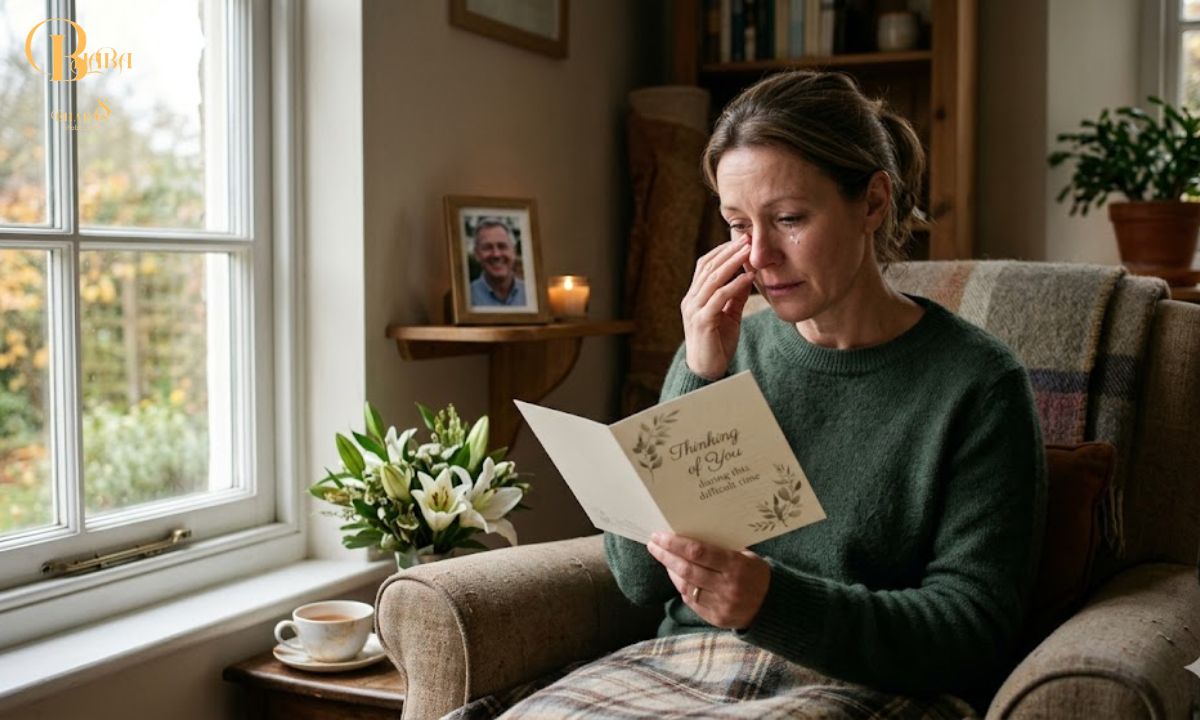
There are moments in life when language collapses under the weight of feeling. The death of a father is one of them. Whether he was the quiet type who showed love through actions, the storyteller who filled every room with laughter, or the steady hand that guided you through storms losing him leaves a silence that words can barely touch.
And yet, words are what we reach for.
When someone you know loses their father, the instinct is to say something anything that eases the pain, even for a moment. But many of us freeze. We stare at a blank message box, typing and deleting, afraid to say the wrong thing or to somehow make the grief worse. We default to “I’m so sorry for your loss” and hit send, feeling like we’ve failed the person we care about.
This guide exists to help you do better than that not because your intention isn’t good, but because grief deserves more than a template.
Why a Condolence Message Matters More Than You Think

When someone is deep in grief, they often describe feeling invisible surrounded by people who are awkward, distant, or who disappear entirely because they don’t know what to say. A thoughtful condolence message cuts through that loneliness. It says: I see you. I see what you’ve lost. You are not alone in this.
Research in psychology consistently shows that social support is one of the most powerful factors in how people process grief. That support doesn’t require grand gestures. A message sincere, personal, unhurried can be a lifeline on one of the hardest days of someone’s life.
The key word is sincere. People in grief have a finely tuned radar for hollow phrases. “He’s in a better place” lands differently than “I’m here for you.” “Everything happens for a reason” can feel dismissive. But “I loved watching how much your dad made you laugh” that lands. That stays.
What Makes a Condolence Message Truly Comforting
Before we look at examples, let’s understand what separates a meaningful message from a forgettable one.
1. Specificity
The more specific your message, the more it matters. Anyone can write “he was a great man.” But “I still remember how he always remembered everyone’s coffee order at those Sunday gatherings” that’s a memory. That’s proof that someone existed and mattered.
If you knew the father, include something real. If you didn’t know him personally but know the person grieving, focus on them: “Your love for your dad has always been so evident in the way you talk about him.”
2. Acknowledgment Without Minimizing
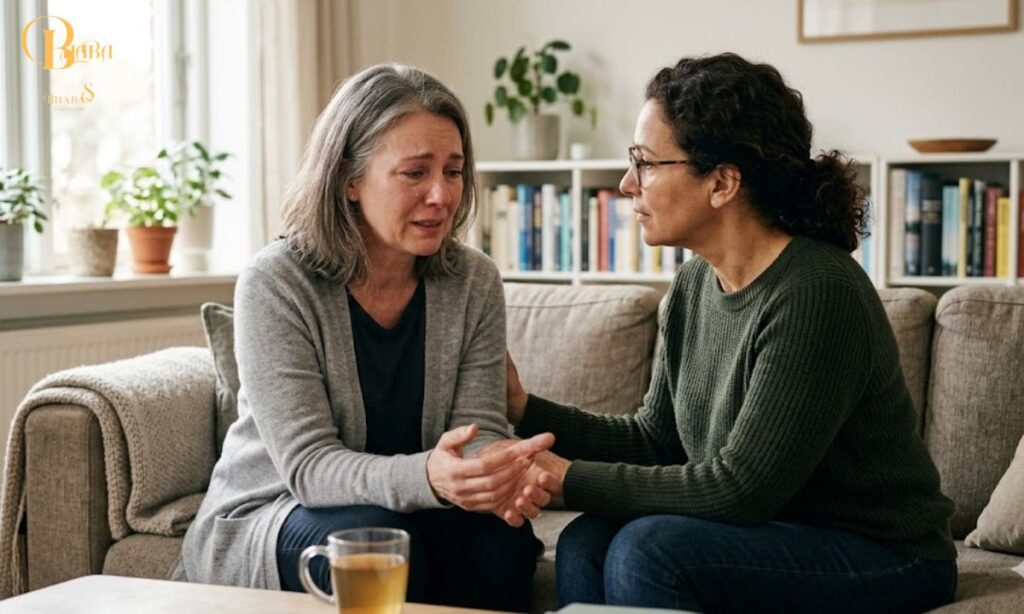
One of the most common mistakes in condolence messages is what grief counselors call comparative suffering or silver-lining syndrome rushing to the comfort before sitting in the pain. Phrases like “at least he lived a long life” or “at least he’s no longer suffering” may be well-intentioned, but they can feel like they’re telling the grieving person to wrap up their sadness.
Instead, simply acknowledge the weight of what happened. “This is such a profound loss” is more powerful than any silver lining. You don’t need to fix grief. You just need to witness it.
3. An Offer That’s Actually Usable
“Let me know if you need anything” is kind but puts the burden on the grieving person to figure out what they need and then ask for it two things that feel impossible when you’re in shock. Specific offers are far more useful: “I’m dropping off dinner on Thursday I’ll leave it at the door, no need to talk,” or “I’m free Saturday morning if you want company, or just need someone to sit quietly with.”
4. Warmth, Not Formality
Unless you’re in a strictly professional relationship, a condolence message should sound like you. Write the way you’d speak. Grief is not a board meeting. The person on the other end doesn’t need your most polished prose they need your most human voice.
Sample Condolence Message: Warm and Personal
Here’s a message that brings all these elements together:
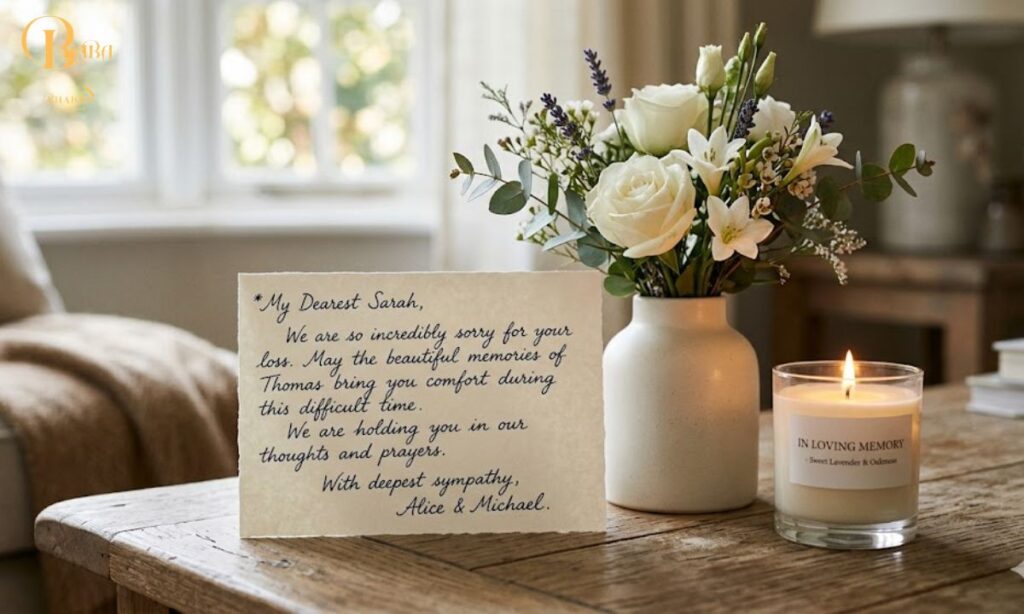
“I’m so deeply sorry for the loss of your father. He was such a wonderful presence, and the love and strength he gave you will always be a part of who you are. Please know I’m here for you today, and in the days ahead. Sending you all my love.”
Let’s break down why this message works.
The opening “I’m so deeply sorry” is direct and human. It doesn’t reach for metaphors or euphemisms. It speaks plainly, and that plainness carries weight.
“He was such a wonderful presence” acknowledges the father as a real person who existed in the world, not just a role. Even if you didn’t know him well, this honors who he was.
“The love and strength he gave you will always be a part of who you are” is a beautiful and true thing to say to someone who has lost a parent. It shifts the focus from what’s been taken to what remains not in a dismissive way, but in a way that honors legacy. A father’s influence doesn’t end at death. It lives in his children.
“Please know I’m here for you today, and in the days ahead” is quietly powerful. It covers time. Grief isn’t just a moment; it’s a long season. By saying “in the days ahead,” this message promises presence beyond the immediate shock.
And the close “Sending you all my love” is warm without being dramatic. It ends on a human note.
Adapting the Message to Your Relationship
No single message fits every situation. Here’s how to adapt your words depending on how well you know the person.
For a close friend: Go deeper. Share a specific memory. Tell them what their father meant to you, or what they’ve told you about him. Let the message be longer a long message says you matter enough for me to spend time here.
For a colleague or acquaintance: Keep it shorter and warmer than a formal card, but you don’t need to write paragraphs. Acknowledge the loss, express genuine sympathy, and offer support without overstepping.
For a message in a faith context: If the person is Muslim, a message invoking dua, Jannah, and sabr will resonate deeply. If they’re Christian, references to peace and eternal rest may comfort. Match your language to their beliefs, not your own.
For a message to someone you’ve never met the father of: Focus entirely on the grieving person. “Your love for your father has been so clear in everything you’ve shared about him” works even without personal knowledge of the deceased.
What Not to Say
Some phrases, despite being well-meaning, tend to fall flat or sting:
- “I know how you feel” You don’t. Even if you’ve lost your own father, grief is deeply personal.
- “He lived a full life” May be true, but can feel dismissive, especially to someone who wanted more time.
- “Be strong for your family” Places an unfair burden on someone who needs permission to grieve, not a new responsibility.
- “God needed him more” For some, this is comforting; for others, it feels like their need is being dismissed.
- “Time heals everything” Probably not what someone needs to hear at hour one of their grief.
The Timing of a Condolence Message
Send it soon, but don’t rush it carelessly. A message sent within the first 48 hours, even if imperfect, means far more than a polished message sent two weeks later. The early days of grief are when people feel most alone and most raw.
That said, don’t let the fear of timing stop you from reaching out later. A message a month after the loss “I’ve been thinking about you and wanted to check in” can be even more meaningful than the initial flood of condolences, because by then, most people have moved on and the griever is still quietly struggling.
A Final Thought: Your Presence Is the Message
No words will fix this. No condolence message, however beautifully written, will undo the loss of a father. But that’s not really the point.
The point is presence. The point is showing up in someone’s inbox, their voicemail, their doorstep and saying, with whatever imperfect words you have: I know you’re hurting. I haven’t forgotten. You matter to me.
That is, in the end, what grief asks of us. Not eloquence. Not answers. Just the willingness to stay.
So write the message. Send it. And if the words don’t feel perfect that’s okay. Imperfect love is still love. And right now, it’s exactly what they need.

David is a passionate writer with four years of experience in blessings and prayers blogging. He currently works at Bhabas.com, crafting heartfelt messages that inspire hope, offer comfort, and help people express emotions in a meaningful and lasting way.