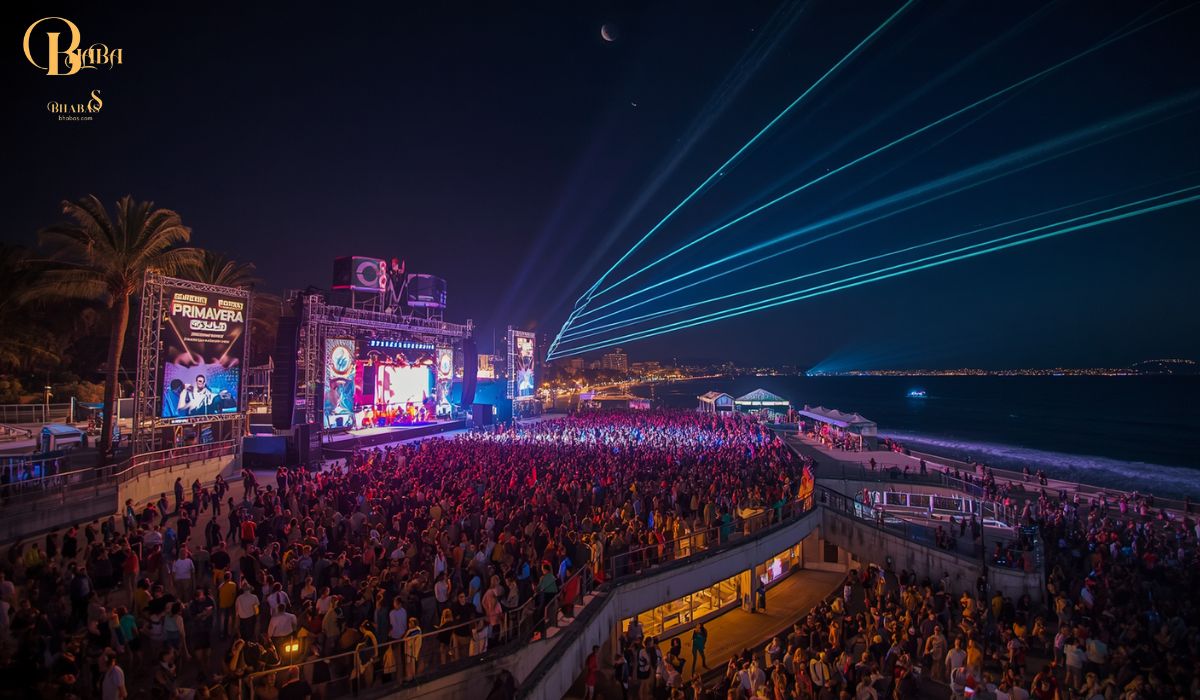
There is a specific kind of vertigo that hits you when you are standing on the concrete apron of the Parc del Fòrum at 3:47 AM. The Mediterranean wind, which smells faintly of salt and spilled Estrella Damm, cuts through the industrial scaffolding. On one stage, a Swedish drone-metal band is playing a single chord that seems to be holding the earth’s rotation in check. One hundred yards away, a legendary British trip-hop act is whispering melancholies into a microphone. And behind you, a Japanese experimental composer is sampling the sound of ice melting.
This is not a fever dream. This is Tuesday. Or rather, it is technically Thursday morning, but time has lost all meaning.
You have arrived at Primavera Sound.
In the bloated carnival of the modern music festival—where corporate sponsorship often feels like the headliner and the crowd is more interested in their own social media stories than the act on stage—Primavera Sound remains the last, best argument for the religious power of live music. It is not just a festival; it is a pilgrimage for the discerning, the curious, and the sleepless.
If Coachella is a beauty pageant and Glastonbury is a mud-soaked bacchanal, Primavera Sound is a curated museum of the future that is also a non-stop dance party. It is the festival that refuses to grow old, even as it venerates the old gods. It is sharp. It is cerebral. And it is unapologetically hedonistic.
The Architecture of the Concrete Jungle
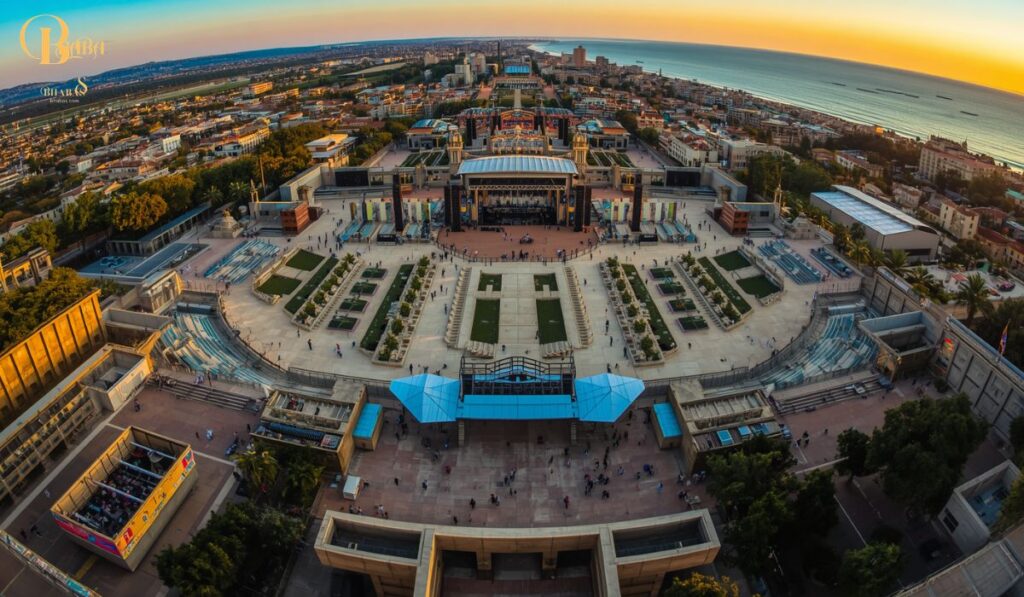
Let us dispense with the pastoral fantasy of rolling green hills and daisy crowns. The Parc del Fòrum is a masterpiece of brutalist functionality. Situated on the northeastern edge of Barcelona, it is a sprawling campus of smooth concrete, angular walkways, and massive industrial warehouses converted into sound caves.
There is something profoundly honest about this setting. There is no fake rustic charm here. You are not pretending to camp in the wilderness. You are in a portside industrial park in one of the most electric cities in Europe, and the music is so loud that the glass facades of the surrounding skyscrapers vibrate like speaker cones.
Walking from the main stages (Mordor, as veterans affectionately call the sprawling Cupra and Pull&Bear stages) to the hidden gems in the Dice or Plenitude stages requires a ten-minute power walk. This is a feature, not a bug. That walk serves as a palette cleanser. You shed the sonic weight of the previous act and take a deep breath of that salty air before plunging back into the abyss.
The architecture forces a rhythm. You cannot simply camp at the main stage all day; you would miss the soul of the festival. Primavera is designed for the explorer. It is for the person who is willing to take a chance on a Danish punk band at 1:00 PM just because the name looks cool on the printout schedule (because yes, the smart ones still print the schedule).
The Algorithm of the Gods
The secret sauce of Primavera Sound is the curation. In an era where algorithms dictate our listening habits—feeding us safe, similar sounds until our taste atrophies—Primavera acts as a human, sentient algorithm. It is the smartest friend you have, the one who makes you mix tapes that change your life.
Look at any recent lineup. It is not a collection of Spotify Top 50 playlists. It is a conversation between generations. Where else can you watch a transcendent performance by a canonical artist like Sparks or Pet Shop Boys, knowing that in twenty minutes, you can sprint to the Auditori Rockdelux (an indoor, seated, acoustically perfect auditorium, which is a luxury unheard of at major festivals) to watch an avant-garde cellist deconstruct minimalism?
Primavera respects your intelligence. It assumes you have heard the hits. It assumes you want the deep cuts, the rare live collaborations, and the artists who are pushing the medium forward rather than just selling nostalgia.
And yet, the nostalgia is there, treated with dignity. When a band from 1995 reunites to play their seminal album in full at Primavera, it is not a cash grab. It is an archaeological event. The sound is mixed perfectly. The visuals are state-of-the-art. You are not watching ghosts; you are watching legends reminded why they were legends in the first place.
The Night Shift
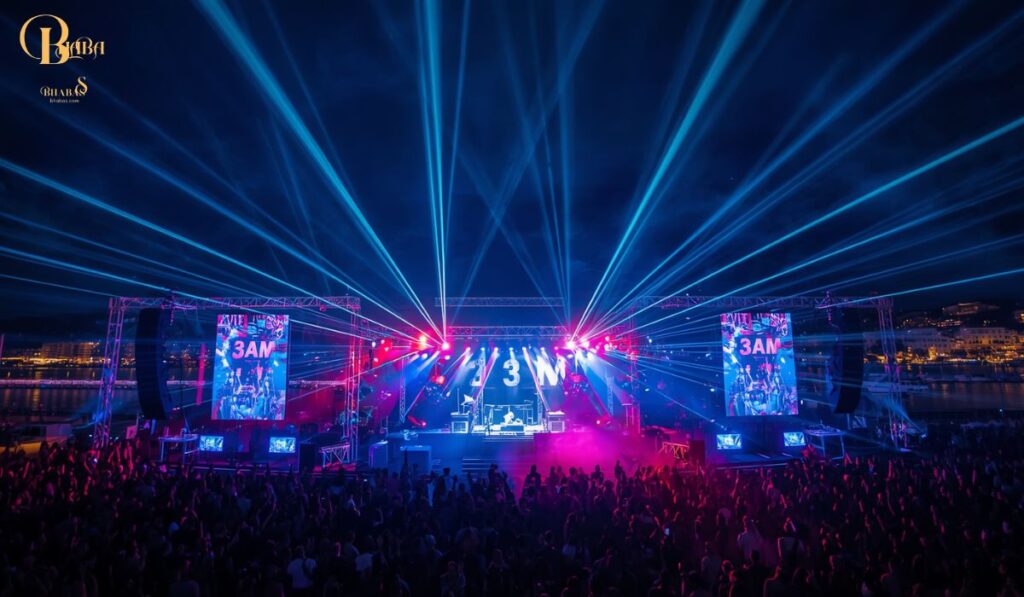
To speak of Primavera is to speak of the night.
Most festivals panic as midnight approaches. The noise curfews kick in, the lights flicker, and the masses shuffle toward the exits. Primavera mocks curfews. The music starts late. The headliners usually hit the main stages around 10:00 PM or 11:00 PM. The real magic, however, begins at 2:00 AM.
The Llum (Light) stage becomes a techno cathedral. The Boiler Room or Desperados stages pulse with a bass that rearranges your internal organs. This is the “normal” world sleeping, and the Primavera faithful coming alive.
There is a specific type of fatigue that sets in at 4:00 AM. It is no longer physical; it is transcendental. Your feet are screaming. Your ears are ringing. You have lost your friends seven hours ago. But you are locked in. A DJ you have never heard of is playing a track you will never be able to Shazam, and for four minutes, you are the most alive you have ever been.
Then, the sun starts to rise over the Mediterranean. The sky turns a bruised orange and purple. You stumble out of the venue, grab a slice of questionable pizza from a stall outside, and board the shuttle bus back to Plaça de Catalunya. The commuters, dressed in suits and carrying briefcases, look at you with a mixture of disgust and envy. You are feral. You are holy.
Beyond the Vibe: The Sonic Perfection
Let us talk about the technicals, because vibe is nothing without execution. Primavera Sound sounds better than any major outdoor festival on earth.
The sound engineering is meticulous. There is no bleed from adjacent stages, a miracle of physics given how close the stages are in the Fòrum. The bass is tight, not muddy. The vocals cut through the mix like a knife. For a true music obsessive, a bad mix is a dealbreaker. It ruins the immersion. It reminds you that you are at a “show.”
Primavera never lets you forget the music. The silence between songs is actually silent. The transitions are clean. The French touch of the organization—the attention to detail that is distinctly un-Spanish in its efficiency but delivered with Catalan warmth—is flawless.
Water refill stations are abundant (a necessity for survival). The bathrooms, while industrial, are cleaned with a frequency that puts American festivals to shame. You are not fighting for survival here; you are fighting for the optimal viewing spot, which is the only fight worth having.
The City as the Afterparty
Here is the ace up the sleeve that no other festival can match: Barcelona.
Primavera is not just the weekend in the Fòrum. It is the week-long “Primavera a la Ciutat” (Primavera to the City). The festival spills out of the gates and infects the entire urban landscape.
On Wednesday night, before the main gates even open, you can see a secret show in a tiny club in El Raval. On Monday morning, after the headliners have packed up, you are drinking vermouth at a sidewalk bar in Gràcia, and you overhear the guitarist from your favorite band ordering patatas bravas at the table next to you.
The official after-parties are legendary. The Boiler Room takes over a parking garage. A hidden disco pops up on the beach. The city becomes a labyrinth of sound. You find yourself following the bass down a dark alley, ending up in a courtyard where 200 people are dancing around a fountain.
This integration is vital. It erases the “festival bubble.” You are not sealed off from the real world; you are enhancing it. You spend your mornings recovering on the beach, your afternoons eating cheap tapas, and your nights having your mind blown. It is a holistic cultural onslaught.
The Crowd: The Discerning Congregation
We must speak of the attendees. The Primavera crowd is, by and large, the best crowd in the world.
This is a festival for adults. Yes, there are young people, but the median age skews higher than your average pop festival. These are people who have jobs, who saved up for this, who genuinely love music. They are not here to get “wasted” (though many do) or to be seen. They are here to witness.
There is a respect in the crowd. You can walk through the front section of the main stage without being crushed by a mosh pit. People chat quietly between songs. You can actually stand on the rail for a band you love without having to camp there for six hours because the previous act was just as good.
It is a queer-friendly, inclusive, and open-minded environment. There is no toxic masculinity. There is no aggressive shoving. There is just the shared, silent understanding: We are lucky to be here. Shut up and listen.
The Bumps in the Concrete
To paint it as utopia would be dishonest. Primavera is not for the fragile.
The concrete is punishing. Your knees will ache. Your lower back will revolt around 2:00 AM. By the third day, the walk from the entry gate to the main stages feels like crossing the Sahara.
The food, while better than most, is festival food. You will overpay for a sad veggie burger at 4:00 AM because your blood sugar has crashed. You will regret it thirty minutes later.
And in recent years, the specter of the sellout looms. As the festival has grown, they have flirted with more mainstream pop acts. The purists grumble. “It was better when it was smaller,” they say. “Too many influencers now.”
They are not entirely wrong. You see more phone screens raised in the air than you used to. You hear more conversations about “content” than about “chords.” But this is the nature of the beast. Primavera fights this trend better than most. The mainstream acts they book—like Rosalía, or Charli XCX, or Lana Del Rey—are usually the weird, experimental versions of pop. They are the gateways. They are the Trojan horses.
Why It Still Matters
We live in an era of isolation. Streaming has atomized our listening. We sit alone with our AirPods, curating our own silence. We lose the shared experience of the drop, the crescendo, the false start, the singalong.
Primavera Sound is the antidote to the algorithm.
It is the friction of real life. It is the sweat of the stranger next to you. It is the shared groan when the DJ plays one more “last song” that lasts twenty minutes. It is the look of awe you exchange with someone when the lighting rig for The Cure finally reveals the full extent of its majestic, gothic glory at 1:30 AM.
It is the tired, salty, euphoric walk to the metro as the sun rises.
The Final Set
As I write this, packing away the wristband that is now frayed and ripped, I realize the true genius of this event. It is not just a festival. It is a mirror.
It shows you who you are. Are you the person who sits on the curb, too tired to move during the headliner? Or are you the person who pushes to the front for the unknown opener? Are you there for the nostalgia of the past, or the terror of the future?
Primavera demands you make a choice. And whichever you choose, it rewards you with sound.
So, to the first-timer reading this: Ignore the fear of missing out. You will miss amazing sets. That is part of the design. You cannot see everything. Do not try. Pick three “must-sees” a day. Let the rest be chaos. Let the rest be magic.
Buy the comfortable shoes. Hydrate. Nap in the afternoon. Do not talk during the quiet songs. And when 6:00 AM hits, and the last DJ is winding down, and you are sitting on the concrete looking out at the sea, do not check your phone. Just listen.
That silence after the storm? That is the best track of the weekend.
Primavera Sound is not just alive and well. It is essential. It is the beating heart of the European summer. Book the flight. Pack the earplugs. And get ready to stay up all night. The crown is heavy, but it fits just right.

David is a passionate writer with four years of experience in blessings and prayers blogging. He currently works at Bhabas.com, crafting heartfelt messages that inspire hope, offer comfort, and help people express emotions in a meaningful and lasting way.