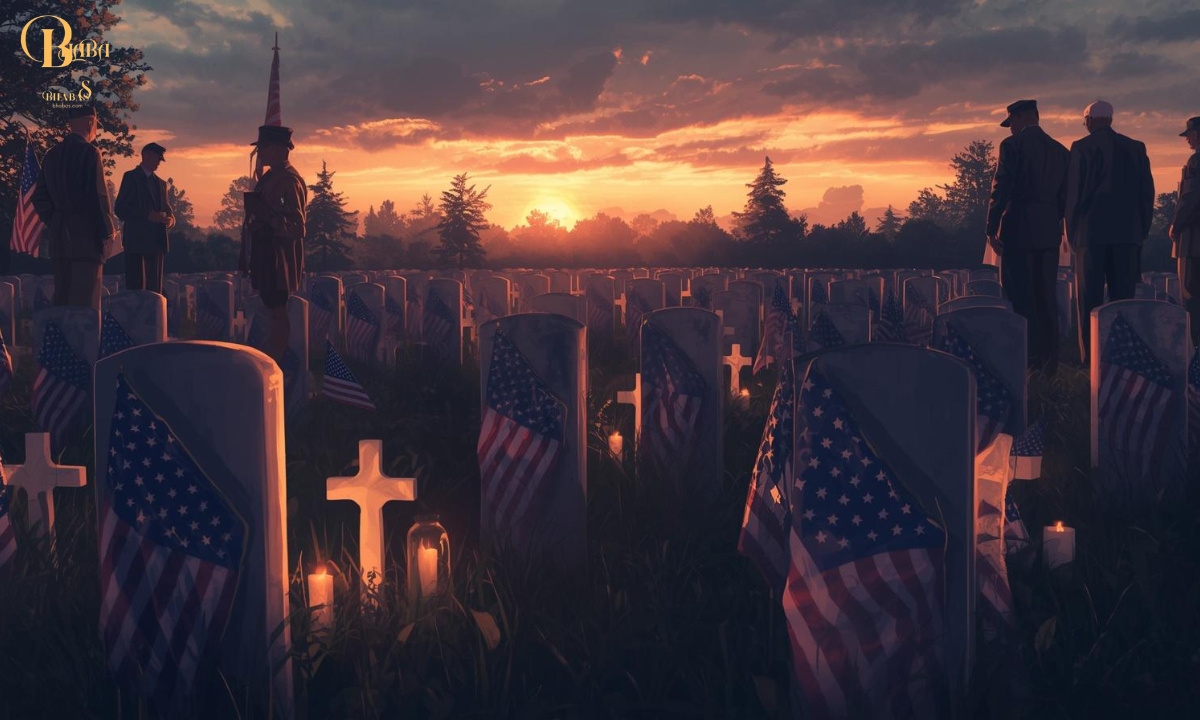
By the time the flags are folded and the bugles go quiet, there is a silence that settles over America — not an empty silence, but a full one. A silence heavy with names, faces, stories, and sacrifice.
More Than a Long Weekend
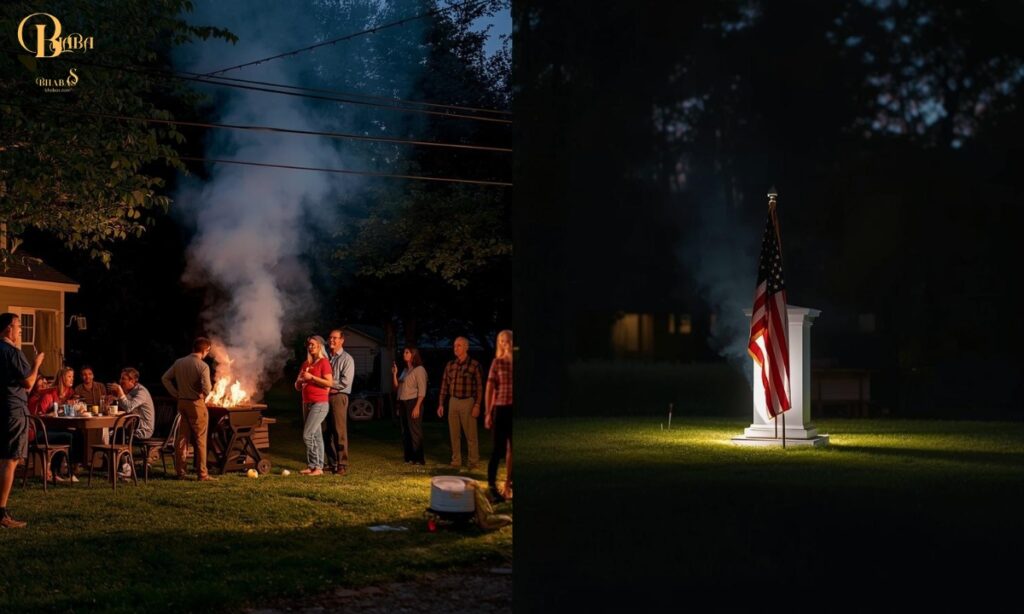
Let us be honest with ourselves this Memorial Day. For millions of people, the last Monday of May arrives wrapped in the smell of charcoal, the sound of laughter in backyards, and the promise of a sale at the nearest mall. There is nothing wrong with rest. There is nothing wrong with joy. But somewhere between the burger and the bargain, we owe a debt that no discount can cover.
Memorial Day is not Veterans Day. It is not Armed Forces Day. It is something more specific, more solemn, and more personal than either. It is the day America sits with its grief — the grief of mothers who sent their children to wars they did not fully understand, the grief of children who grew up with a photograph instead of a father, the grief of a nation that has asked its best and bravest to stand between safety and chaos, and has sometimes asked too much.
This year, let us carry that grief with intention.
The Forgotten Arithmetic of War
There is an arithmetic to war that we rarely teach in schools. We remember the battles. We remember the dates. We remember the generals with their brass buttons and their biographies. But we rarely pause long enough to do the human math.
As of today, the United States has lost more than 1.3 million service members in wars from the Revolution to the modern conflicts in the Middle East. That number — 1.3 million — sits on a page and looks manageable. It looks like a statistic.
But consider this: if you spent just one minute thinking about each of those people, you would need more than two years — two years without sleeping, without eating, without stopping — just to give each fallen soldier sixty seconds of your attention.
They are not a number. They are a collection of individual infinities, each one a universe of dreams, fears, jokes, habits, loves, and futures that never arrived.
Letters Never Sent
Private Daniel Crawford from rural Ohio wrote a letter to his mother in 1944, the night before the Normandy invasion. He described the moonlight on the English Channel. He talked about how he missed her cornbread. He said he was not afraid — and you can tell, reading between the lines, that he was terrified.
He never came home.
His letter was never sent. It was found in his breast pocket.
Corporal Maria Santos from South Texas deployed to Iraq in 2005. She kept a journal. On the last page she wrote a list of things she wanted to do when she returned: learn to drive a stick shift, visit her grandmother in Monterrey, adopt a dog, and watch the sun rise over the Gulf of Mexico.
She never came home either.
These are invented names, but they are not invented lives. Lives exactly like these were lived, and lost, and laid down on our behalf. Every name on every wall and every stone in every military cemetery is a letter never sent, a list never completed, a sunrise never watched.
This Memorial Day, find one name — just one — and learn their story. Go to a local cemetery. Look at the headstones. Read the dates and do the math. Notice how young they were. Let it land.
The People Left Behind
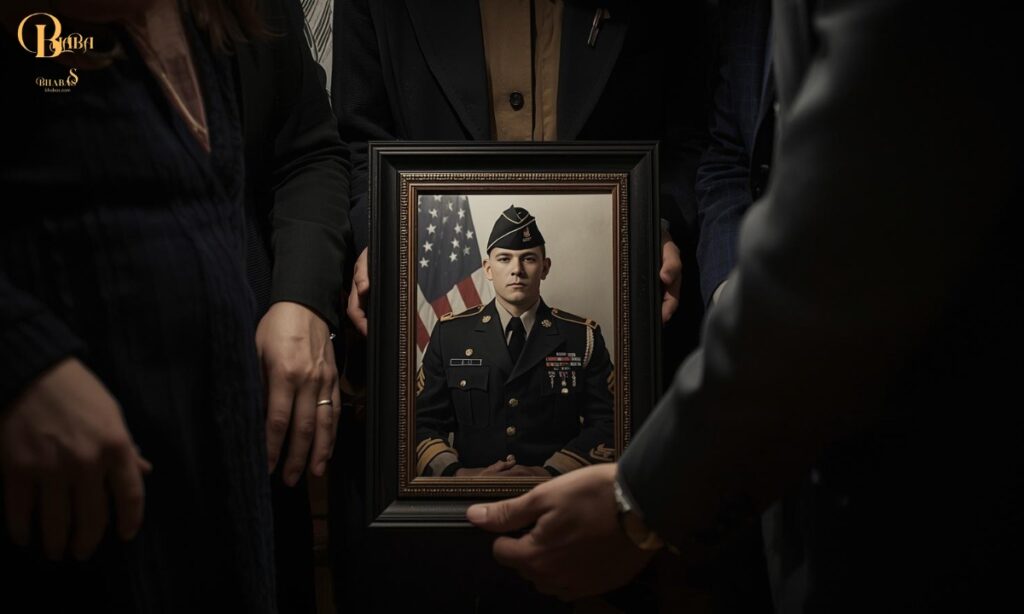
We speak often of those who died. We speak less often of those who survived the dying — the ones who came home carrying the war inside them, and the ones who never went to war at all but lost everything anyway.
The widow who has slept on one side of the bed for forty years because the other side still belongs to someone.
The father who taught his son to fish, and then watched his son ship out, and then got the knock on the door, and has not been fishing since.
The combat veteran who made it back physically but still wakes at 3 a.m. to the sound of something that is not there, shaped by experiences that cannot be explained at a dinner table.
Memorial Day belongs to all of them. It belongs to the gold star families who have built entire lives around absence. It belongs to the communities that sent their young people away and received folded flags in return.
When you see a veteran this Memorial Day — not just in May, but any day — remember that behind them may be a story of survival so heavy it would buckle most of us. Honor them not with pity, but with presence.
What Courage Actually Looks Like
We have romanticized war to the point where we sometimes forget what it actually demands of a human being. War is not cinematic. It does not have a soundtrack. It does not pause for dramatic effect.
Courage on a battlefield is not the absence of fear. Every military psychologist, every combat veteran who has spoken honestly will tell you the same thing: fear is always present. The shaking hands, the dry mouth, the thunderous heartbeat — these do not disappear because a uniform is worn.
Courage is what happens despite the fear. It is the decision, made in a fraction of a second, to move forward anyway. To shield a fellow soldier. To complete a mission. To do the job.
The men and women we honor this Memorial Day were not superheroes. They were people — people with bad days and petty arguments and moments of doubt — who were called to do something extraordinary and answered that call.
That is what makes their sacrifice so profound. They were not so different from us. That is precisely why what they did matters so much.
The Geography of Memory
Memory, like geography, has landmarks. Every country that has ever sent its people to war has built landmarks to hold the memory in place — so that it does not drift, so that it does not dissolve into abstraction.
The Vietnam Veterans Memorial in Washington D.C. is one of the most powerful pieces of public architecture in the world. It does not celebrate. It does not glorify. It simply lists — 58,281 names, cut into black granite, arranged chronologically by the date of casualty.
Visitors go there and find names. They trace the letters with their fingers. They leave photographs and flowers and dog tags and notes. They see their own reflection in the polished stone, overlaid with the names of the dead, and for a moment, the living and the lost occupy the same surface.
That is what memory is supposed to feel like. Not comfortable. Not distant. Close. Personal. Uncomfortably, necessarily close.
Find your landmark this Memorial Day. It might be a national monument. It might be a small-town cemetery with a modest plaque. It might be a photograph on your own wall. Go there. Stand there. Let the weight of it be real.
Freedom Is Not a Background Condition
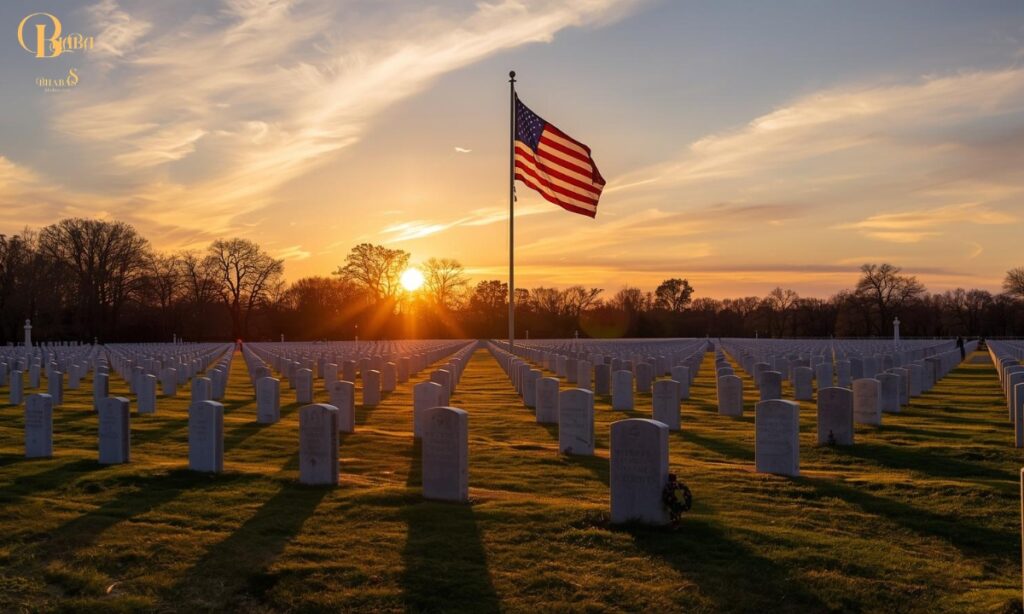
Here is something worth sitting with this Memorial Day: freedom is not a background condition of life. It is not like gravity — automatic, invisible, requiring nothing. Freedom is an achievement, and every generation must recommit to it, and some generations must pay for it in the most permanent currency there is.
The freedom to disagree with your government. The freedom to practice your faith — or no faith at all. The freedom to speak, to gather, to pursue the life you choose. These freedoms exist because people decided they were worth fighting for, and some of those people did not come back from the fight.
This does not mean every war was just. History is complicated, and the causes that sent soldiers into battle have ranged from genuinely noble to deeply flawed. But the individuals who served — who followed their orders, who answered their country’s call, who believed in something larger than themselves — deserve to be honored regardless of the politics that surrounded them.
We can hold complexity. We can wrestle with the difficult history of American wars and still bow our heads in genuine gratitude for the men and women who gave their lives believing they were protecting something precious.
Small Acts of Remembrance
You do not need a ceremony to observe Memorial Day with meaning. You do not need a speech or a wreath or a uniform. You need only intention.
Here are some small, genuine ways to honor the day:
Visit a national or local veterans cemetery. Bring flowers. Walk slowly. Read the names.
Write a letter. If you have a family member who served and is no longer living, write them a letter. Tell them what you wish you had said. Fold it, keep it, or leave it somewhere meaningful.
Learn one story. Use the time you might spend scrolling to look up the story of a fallen soldier — any soldier, from any war. Read their biography on a site like the Congressional Medal of Honor Society. Let them become a person, not a statistic.
Sit in the silence. At 3:00 p.m. on Memorial Day, there is a National Moment of Remembrance — one minute of silence observed across the country. Stop what you are doing. Put down your phone. Close your eyes. Give that minute fully and freely.
Thank someone who is carrying grief. If you know a gold star family — a family that has lost someone in service — reach out. Not with hollow words, but with presence. Sometimes the most honoring thing we can do is simply say: I remember. I have not forgotten.
The Promise We Make
Every Memorial Day is, at its core, a renewal of a promise.
The promise is this: We will not forget.
It sounds simple. It is, in practice, the hardest thing. Because forgetting is the natural drift of human memory. Because life moves forward and the grief of others is heavy to carry indefinitely. Because it is easier to let the day be a day off than to let it be what it is meant to be.
But the promise matters. It matters to the families who are still grieving. It matters to the veterans who watched their friends fall and came home asking: Was it worth something? Will anyone remember?
And it matters to us — because a people who forget what was sacrificed for them are a people in danger of losing what was won.
So this Memorial Day, make the promise. Make it quietly, sincerely, without fanfare. Make it in whatever way feels true to you.
And then keep it — not just today, but every day that you wake up in a country still standing, still free, still imperfect and still worth the effort of becoming better.
In Closing: A Nation That Grieves Together
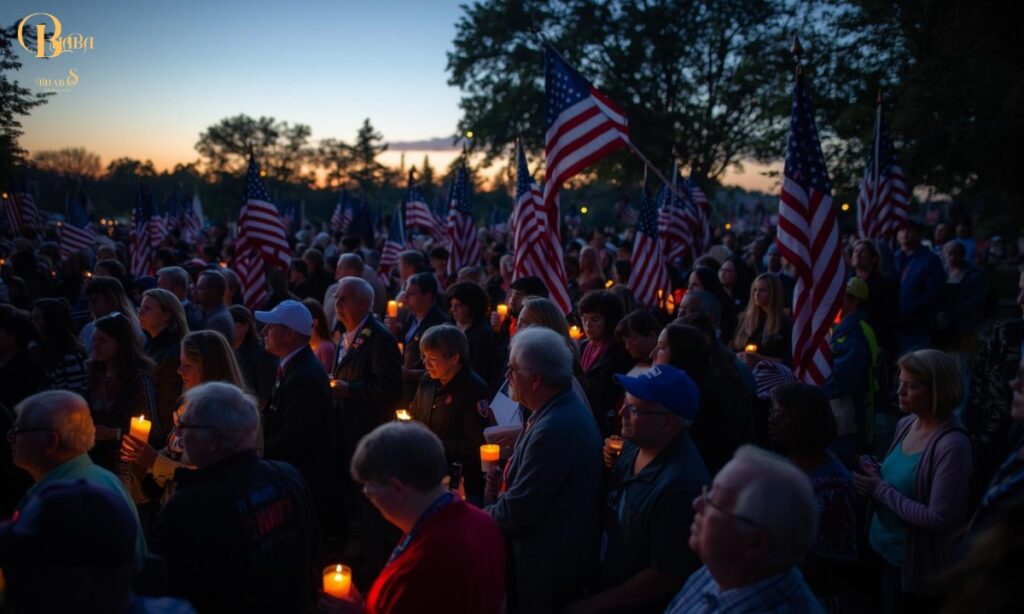
There is something quietly extraordinary about a nation that sets aside a day to grieve together. In a world of relentless motion, of 24-hour news cycles and five-second attention spans, Memorial Day insists that we pause.
It insists that the dead are not gone simply because they are no longer here. It insists that sacrifice has weight, that names have meaning, that the lives laid down on our behalf deserve more than a footnote.
America is many things — complicated, contradictory, always becoming. But on this day, at its best, it is a nation that remembers. A nation that gathers at the graves of its soldiers and says, with flowers and flags and silence and tears:
You mattered. You are not forgotten. We are still here because you were there.
That is what Memorial Day is.
Let it be that, this year, for all of us.

David is a passionate writer with four years of experience in blessings and prayers blogging. He currently works at Bhabas.com, crafting heartfelt messages that inspire hope, offer comfort, and help people express emotions in a meaningful and lasting way.