If you have seen the word “elowns” in a comment section, a gaming chat, or as someone’s username in 2026 and had no idea what it meant, you are not alone. The word does not appear in any standard dictionary, and its meaning shifts depending on where and how it is used. That gap between how often it appears online and how little is officially documented about it is exactly why search interest in the term has grown steadily this year.
This guide breaks down the elephant’s meaning in plain terms. You will find its slang definition, how to pronounce it, where it most likely came from, real examples of how it is used, and what mistakes people make when they first encounter it. By the end, you will know exactly what to make of it the next time it shows up.
What Does Elowns Mean? (Slang Definition)
Elowns is an internet slang term with no single fixed definition. In its most widely recognized informal use, it describes someone who behaves in a foolish, embarrassing, or ridiculous way. Think of it as a stylized, internet-native version of calling someone a clown.
According to Urban Dictionary, elowns is defined as a noun referring to someone who acts like an embarrassing fool — specifically, a person whose behavior invites public mockery or ridicule online. The full entry describes it as “an impressively basic clown” and “the great world embarrassment” of someone caught in a publicly humiliating situation.
Outside of that insult-based use, the word also shows up as a username or brand handle across gaming platforms and social media, where it carries no negative meaning at all.
| Context | Meaning |
| Slang / Insult | A foolish or embarrassing person online |
| Username / Gamertag | A creative digital identity with no fixed meaning |
| Meme captions | Used to call out cringe-worthy or embarrassing behavior |
| Branding | A modern-sounding, memorable identity label |
Elowns Pronunciation
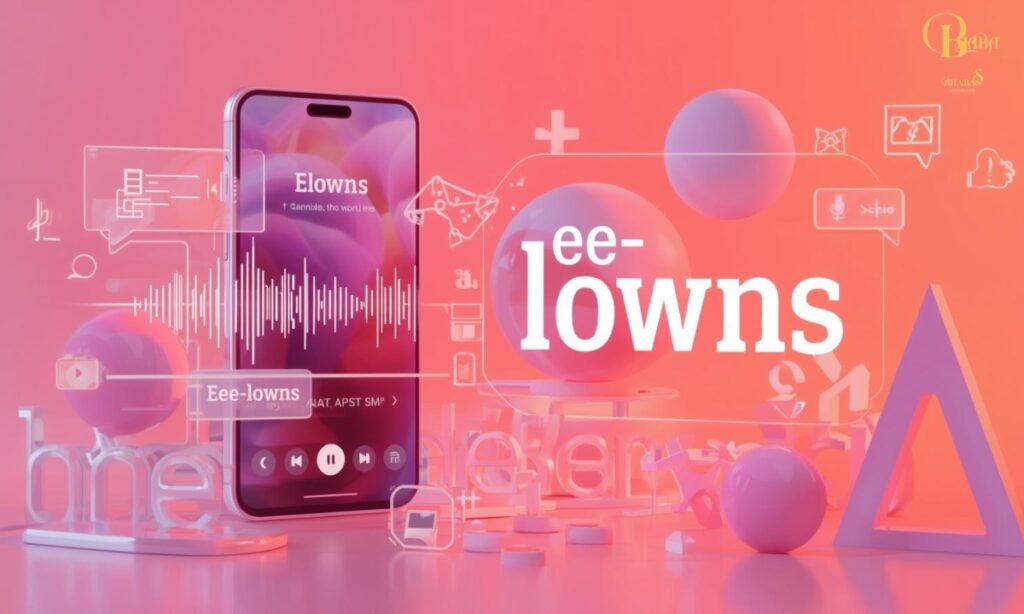
Since elowns is not a standard English word, no official pronunciation guide exists. Based on how the letters are structured and how it tends to be said in video content and audio clips, the most agreed-upon version is:
How to Pronounce:
- Phonetic spelling: /ɪ-loʊnz/
- Simple guide: ee-LOHNZ
- Rhymes with: zones, phones, clones
Breaking it down further:
- “E” — sounds like ee, as in see
- “lowns” — sounds like lohnz, rhyming with loans
- Stress falls on the second syllable: ee-LOHNZ
Because elowns is a user-generated internet word, you will hear slight variations. Some people stress the first syllable; others the second. The version above is the most commonly encountered one.
Elowns Word Meaning
Because elowns sits outside formal vocabulary, its meaning is shaped entirely by context. Here are the three main ways people interpret and use it.
1. As a Username or Online Name
This is arguably the most common usage in practice. Across TikTok, Instagram, YouTube, Twitch, and gaming platforms, “Elowns” functions as a unique digital handle. It sounds current, is easy to remember, and is unlikely to already be taken on most platforms.
- Competitive gamers use it as a leaderboard tag
- Content creators use it as a channel or profile name
- Designers and artists adopt it as a creative alias
In this context, the word carries no hidden meaning whatsoever. It is purely a name someone liked the sound of.
2. Possible Derived Meaning
Looking closely at the word, a few familiar terms emerge that may have shaped it:
- “Owns” — in internet slang, “to own” someone means to defeat or embarrass them decisively
- “Clowns” — a phonetic and visual relative already used widely online to mock someone for foolish behavior
- “Lone” — some users read it as a nod to being a lone or independent presence online
Put together, elowns could carry a layered implication: someone who “owns” in the manner of a clown — either ironically dominant or comically embarrassing, depending on the intent of whoever is using it.
3. Creative / Made-Up Word
Like many internet terms, elowns may simply be a phonetically pleasing invented word. Online communities constantly generate new terms that sound fresh and distinct without needing a long linguistic backstory. Words spread in these spaces because they feel original and are easy to remember — not because they carry deep meaning.
Where Does Elowns Come From?
There is no single documented origin for elowns. The word appears to have emerged organically through internet communities, most likely in the early-to-mid 2020s, before picking up search traction in 2026.
Phonetic Connection to “Clowns”
The most likely linguistic ancestor of elowns is the word clowns, which has been embedded in internet culture for years as a way to mock someone. Phrases like “these clowns,” “clown behavior,” and “stop clowning” were already common in meme spaces well before elowns appeared.
Elowns appears to be a phonetic variation — the hard “cl” sound gets replaced with a softer “el,” producing something that feels newer and less worn out.
Username Creation Culture
Gamers and online creators routinely modify real words to produce unique handles, especially when their preferred username is already taken. Adding or swapping letters is a standard technique. Elowns likely emerged from this habit — someone tweaked “clowns” or “owns,” liked the result, and used it. Others picked it up from there.
Spread Through Meme and Forum Communities
Once a niche term appears in a viral meme or a high-traffic comment thread, it moves quickly to other communities. Elowns likely followed this path — starting in a specific forum or Discord server before reaching wider audiences through social media and meme culture.
How Elowns Is Used Online
In practice, you will run into elowns in a few distinct settings. Each one carries a slightly different tone, so recognizing the context is half the battle.
In Meme Culture
Elowns appears in reaction memes, typically as a caption paired with an image of someone doing something embarrassing or foolish. The tone here is almost always humorous rather than genuinely hostile. It fits the same role as “clown behavior” or “ratio” — a quick, punchy way to call something out without writing a paragraph.
In Gaming Chats
Gaming communities are natural breeding grounds for this kind of slang. Players drop it in lobbies, Discord servers, and Twitch streams to roast opponents or tease teammates after a bad play. In competitive spaces, short and cutting words like elowns land well because they are quick to type and easy to understand in context.
On Social Media
On TikTok, Twitter/X, and Instagram, elowns turns up in comment sections responding to cringe content, as caption text on reaction videos, and occasionally in profile bios or display names. Its appearance as a handle on these platforms is one of the main reasons people search for its meaning.
In Casual Online Conversation
Some users drop it the way they might say “clowns” — as a mild put-down with no serious hostility behind it. It works in Discord DMs, Reddit threads, and group chats where internet slang is already part of the shared vocabulary.
Elowns vs. Clowns: Key Differences
| Feature | Clowns | Elowns |
| Dictionary status | Standard English | Internet slang only |
| Mainstream recognition | High | Low to moderate |
| Common as a username | Rare | Very common |
| Tone | Broadly understood as mockery | Niche; tone depends on context |
| Origin | Traditional English | User-generated, internet culture |
The core meaning overlaps — both label someone as foolish or ridiculous. Elowns simply feels fresher and more internet-native, while clowns is a well-worn term almost everyone recognizes, regardless of their online habits.
Elowns in Gaming Culture
Gaming communities have played an outsized role in spreading words like elowns. In competitive gaming, trash talk is a fixture, and players are constantly looking for new ways to call out opponents without reaching for the same tired phrases.
Why Gamers Reach for Words Like Elowns
- Standard insults feel overused in fast-paced gaming spaces
- Short, punchy terms work better in live chat windows than long ones
- Unique words signal that you are part of the community
- Creative language earns reactions from other players
Elowns checks all of those boxes — it is short, recognizable enough to land, and different enough to feel fresh compared to something like “noobs” or “clowns.”
Where It Shows Up in Gaming
You will most commonly see elowns in:
- Twitch chat during live streams
- Post-game lobby chat after a loss or a bad play
- Discord servers tied to specific games or content creators
- Gaming subreddits and community forums
Examples of Elowns in a Sentence
Seeing a word used in real sentences is one of the fastest ways to understand both its meaning and its tone. Here are examples across different uses:
Used as Mockery
- “These elowns actually thought they were going to win.”
- “I don’t waste my time on elowns.”
- “The whole comment section is full of elowns.”
Used Neutrally as a Name
- “Follow me @Elowns for daily clips.”
- “Elowns just dropped a new video — worth watching.”
Used Playfully or Self-Deprecatingly
- “Yeah, I was being an elown for that one, my bad.”
- “We were all elowns for believing that rumor.”
The same word can land as sharp mockery, a neutral identity label, or a self-aware joke. Context decides everything.
No — elowns does not appear in Merriam-Webster, Oxford, or any other formal dictionary. It is not part of standard English grammar.
That said, “real” is a complicated idea in internet linguistics. Words like selfie, spam, and troll all started the same way: informal, user-generated terms that gained meaning purely through repeated use. Elowns is at an earlier stage of that same process.
It is real in the sense that people use it, search for it, and understand it in context. But it has no standardized definition that all users agree on, and its meaning shifts based on who is saying it and why.
Common Misunderstandings About Elowns Meaning
Mistake 1: Thinking It Has a Single Official Definition
Most people searching for “elowns meaning” expect a clean, dictionary-style answer. The reality is that this word means different things in different settings. Treating it as having one fixed meaning will confuse.
Mistake 2: Using It Without Understanding Tone
Because elowns can function as an insult or as a completely neutral username, using it without reading the room first can backfire. Saying “you’re such an elown” in a gaming chat might land as playful banter in one context and come across as genuinely hostile in another. Relationship and setting matter.
Mistake 3: Assuming It’s Widely Understood
Unlike terms like “lol” or “cap,” elowns is not universally recognized. Use it outside gaming or meme communities and there is a real chance the other person will have no idea what you mean. Always read your audience before dropping niche internet slang.
How to Use or Respond to Elowns in Conversation
If Someone Uses It as Mockery
- Read the tone first — is it playful or pointed?
- In casual settings, responding with humor works well: “Yeah, that was a total elown moment.”
- If it feels mean-spirited, asking for clarification or simply ignoring it is a fair call.
If You Want to Use It Yourself
- Keep it to casual, online contexts with people already familiar with internet slang.
- Avoid it in professional, formal, or emotionally sensitive settings.
- If there is any chance the other person will not understand it, either explain it briefly or skip it entirely.
In Written or Published Content
- Define the term upfront for general audiences. Do not assume everyone reading your content knows what it means.
Why Elowns Is Trending (2026)
Search interest in “elowns meaning” has grown noticeably in 2026 for several overlapping reasons:
- Internet slang awareness — more users now actively look up unfamiliar online terms rather than scrolling past them
- Username curiosity — people encounter elowns as a social media or gaming handle and want to know if it means something
- Meme culture spread — when a niche term appears in a viral post or popular content, search volume spikes quickly
- TikTok and Reddit influence — both platforms have fueled broader interest in tracking where internet words come from and what they actually mean
- Niche-to-mainstream pipeline — terms starting in small communities often reach wider audiences within one to two years, and elowns appears to be on that path
Conclusion
The word elowns does not carry one official meaning, and that is exactly what makes it a useful example of how internet language works in 2026. It can be a slang label for someone acting foolishly, a creative username with no deeper meaning, or simply a made-up word that sounds right in online spaces. Context is everything when it comes to understanding or using it correctly.
Internet slang like elowns grows from the bottom up from users, not dictionaries. That means meaning is always tied to usage, community, and tone. Now that you know its definition, pronunciation, likely origins, and the most common mistakes people make with it, you are fully equipped to recognize it the next time it appears and read it correctly.

David is a passionate writer with four years of experience in blessings and prayers blogging. He currently works at Bhabas.com, crafting heartfelt messages that inspire hope, offer comfort, and help people express emotions in a meaningful and lasting way.