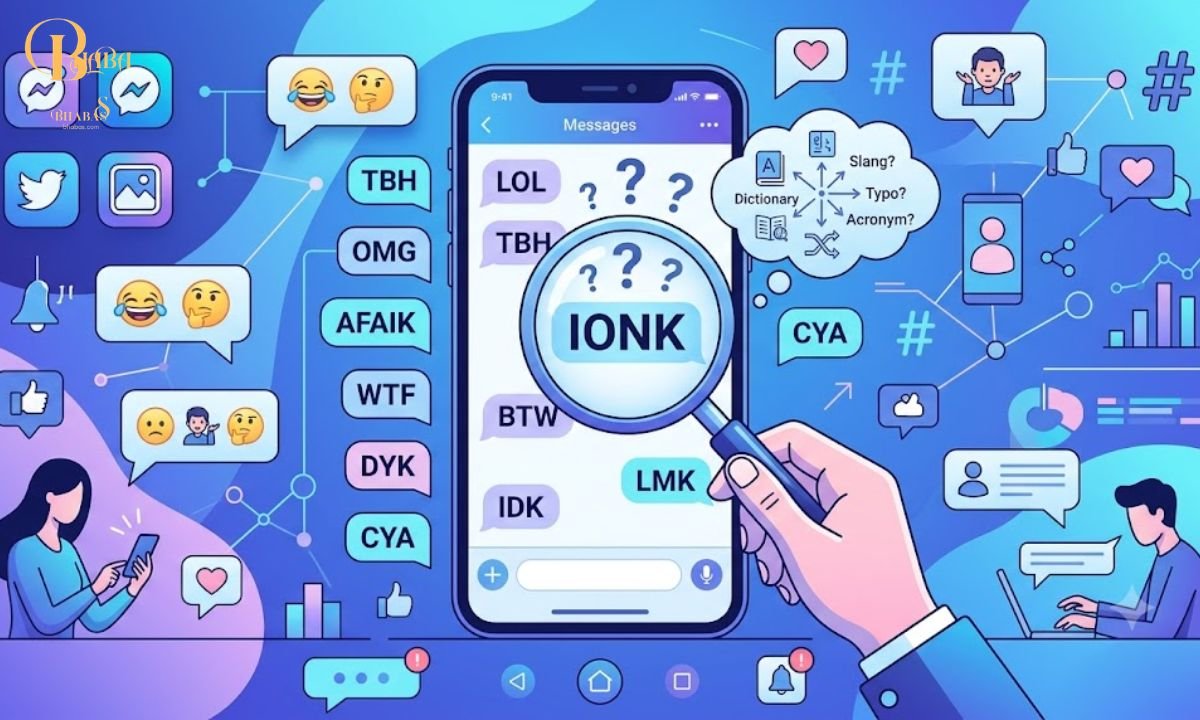
If you’ve come across the term “IONK” while scrolling through social media or chatting with someone online, you’re not the first to stop and wonder what it means. Internet slang moves fast, and abbreviations like this one pop up without warning, leaving a lot of people confused. Understanding the IONK meaning in text helps you keep up with digital conversations without missing a beat.
Knowing what slang like IONK means also helps you respond in the right way and avoid awkward misunderstandings. Whether you spotted it in a TikTok comment, a Snapchat message, or a group chat, this guide covers everything its definition, where it came from, how it’s used across platforms, and when you should avoid using it altogether.
Definition & Meaning
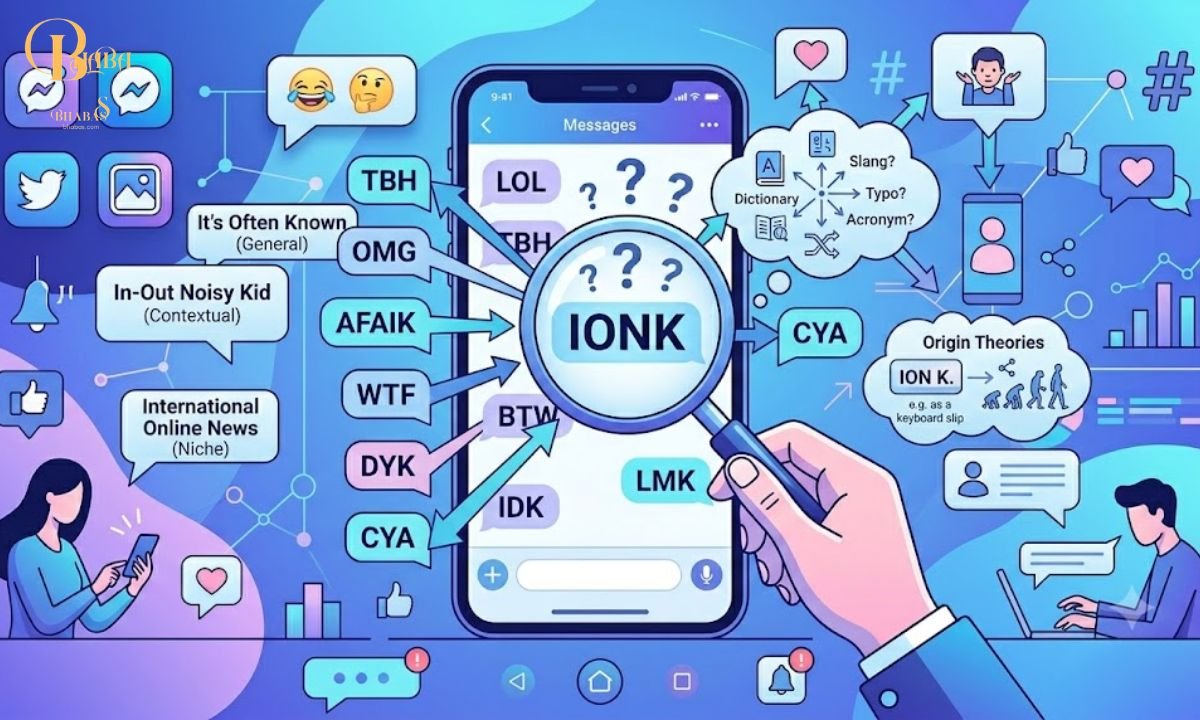
IONK meaning in text is simple: it stands for “I don’t know.” It’s an informal acronym used in texting and online chats to express uncertainty, a lack of information, or just a casual “not sure” in response to a question.
Think of it as a slightly more stylized version of “IDK.” The term carries the same meaning but tends to come across as more playful or expressive, especially among younger users.
Quick definition table:
| Term | Full Form | Meaning |
| IONK | I don’t know (stylized) | Expressing uncertainty informally |
| IDK | I Don’t Know | Same meaning, more widely recognized |
| Dunno | Don’t Know | Casual spoken/written form |
| NFS | Not For Sure | Similar uncertainty, less common |
Some sources suggest an alternate interpretation “I Only Know” to express partial knowledge. For example, “IONK a few people coming tonight” would mean “I only know a few people who are coming.” However, the dominant and most widely accepted IONK meaning in text is simply “I don’t know.”
Background & History
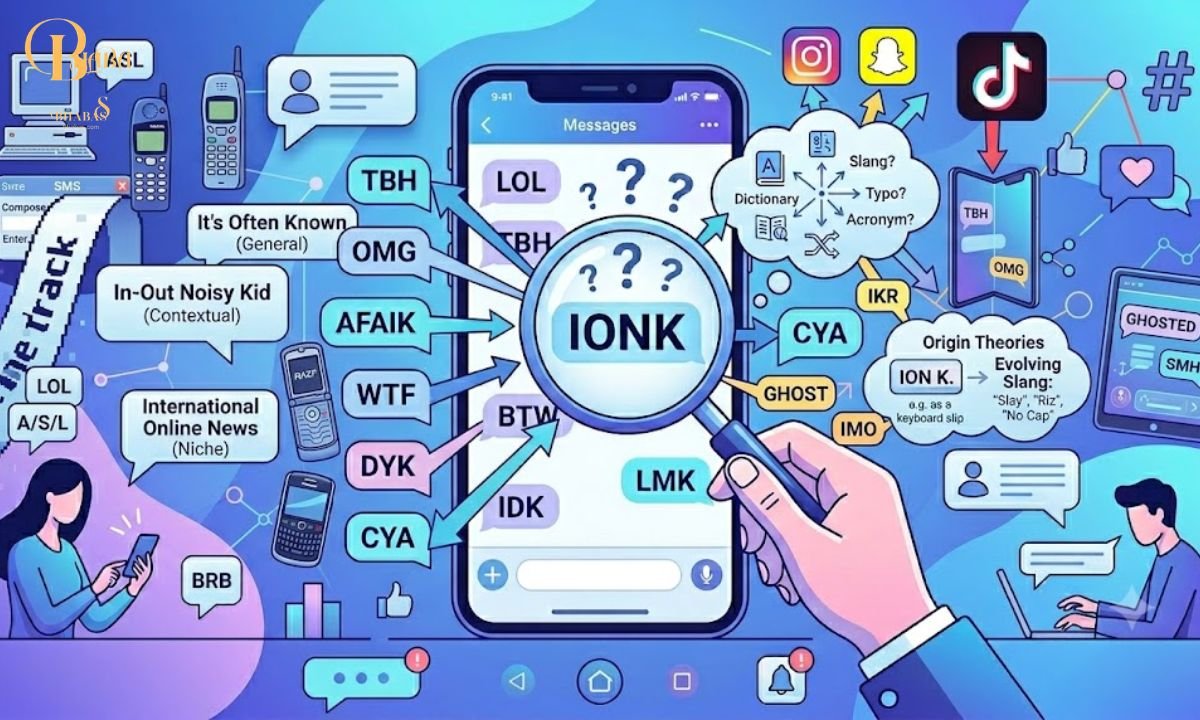
IONK doesn’t have a single documented origin like older internet slang such as “LOL” or “BRB.” Instead, it grew organically out of how people actually speak and type in casual settings.
The most likely explanation traces back to phonetics. When someone says “I don’t know” quickly in everyday speech, it often sounds more like “I-on-know.” Over time, this pronunciation became a written shorthand first as “ion know,” then compressed further into “IONK.” This kind of phonetic spelling is common in digital slang, especially in African American Vernacular English (AAVE), where “ion” as a contraction for “I don’t” has been used for years.
As texting and social media grew through the 2010s, abbreviations like this spread quickly. Platforms like TikTok, Snapchat, and Instagram created the perfect environment for casual language to evolve and spread at scale. By the early 2020s, IONK had become recognizable enough that many users across different communities were using it regularly.
Usage in Various Contexts
The IONK meaning in text stays consistent across contexts, but the situations where people use it vary quite a bit.
Common usage scenarios:
- Replying to a question you genuinely don’t have an answer to: “What time does the movie start?” → “IONK, check the app.”
- Expressing casual indifference: “What do you want for dinner?” → “IONK, surprise me.”
- Reacting to confusing news or trends: “Why is everyone doing this challenge?” → “IONK but it’s funny.”
- Gaming chats when someone is stuck: “How do you beat this level?” → “IONK bro, I’m stuck too.”
It fits naturally in quick exchanges where speed matters more than formality. You’ll also see it paired with emojis like 🤷, 😭, or 🤔 to add tone or humor to the message.
IONK Meaning on Social Platforms
The IONK meaning in text carries over to social media with a few platform-specific nuances worth knowing.
What Does IONK Mean on Snapchat
On Snapchat, conversations tend to be fast and short. IONK fits perfectly in quick snap replies or chat messages where someone asks a question and the other person simply doesn’t have an answer. It’s casual, punchy, and doesn’t require explanation between friends. You’ll often see it in response to story replies or direct questions in chat threads.
IONK Meaning on TikTok
TikTok is one of the main platforms where this term gained wider visibility. In comment sections, IONK is used to react to confusing videos, weird trends, or questions that no one seems able to answer. Creators sometimes use it in captions too for example, posting a strange clip with the caption “why did I do this IONK 😭.” Because TikTok is heavily driven by Gen Z culture and AAVE-influenced language, terms like this spread quickly through the platform’s comment culture.
IONK Meaning in Text on Instagram
On Instagram, IONK shows up in DMs and comment replies. It’s often used humorously someone might comment “IONK what’s happening here 💀” under a chaotic reel. In DMs, it works the same way it does in regular texting, as a relaxed way to say you’re unsure about something without sounding dismissive.
Common Misconceptions & Clarifications
There are a few misunderstandings about the IONK meaning in text worth clearing up:
- It’s not a typo. Many people assume IONK is an accidental keystroke. It’s not it’s a deliberate slang abbreviation.
- It doesn’t mean something offensive. IONK is harmless. It simply expresses uncertainty.
- It’s not the same as ION. “ION” typically means “I don’t” or is used as “in other news.” IONK is distinct it adds the “K” to complete the phrase “I don’t know.”
- It’s not a technical acronym. In professional, medical, or scientific fields, IONK has no established meaning. Using it there would cause confusion.
- Not everyone will know it. Older users or people outside youth-driven online spaces may not recognize it. Context matters.
Similar Terms & Alternatives
If IONK doesn’t feel right for a situation, there are plenty of alternatives that express the same idea with different tones:
| Term | Tone | Best Used In |
| IDK | Neutral | Any informal setting |
| IONK | Playful/casual | Gen Z chats, social media |
| Dunno | Relaxed, spoken feel | Texts, casual replies |
| NGL IDK | Honest + uncertain | Sharing genuine opinions |
| Not sure | Polite, semi-formal | Friendly but slightly formal chats |
| IDEK | Emphasizes total confusion | When completely lost |
| Beats me | Light-hearted | Texts, spoken conversation |
The main difference between IDK vs IONK is tone. IDK is the universally understood standard. IONK adds a bit more personality and is more closely tied to current slang trends, particularly in younger online communities.
How to Respond to This Term
When someone sends you “IONK,” the right response depends on what you asked and the mood of the conversation.
Possible ways to reply:
- Keep it casual: “Lol fair enough” or “Same honestly 😭”
- Move on: “Ok I’ll check Google then”
- Ask someone else: “IONK either, maybe ask [name]”
- Match the energy: Reply with “IONK either 🤷”
The key is to not overthink it. IONK is meant to keep things light. If the question was important, the person is usually signaling they genuinely don’t have the answer so it’s better to follow up elsewhere rather than push for a response they don’t have.
Regional or Cultural Differences
The IONK meaning in text is most common in American digital spaces, particularly within communities that use AAVE-influenced internet language. The phonetic roots of the term “I-on-know” come from spoken vernacular that’s widespread in Black American communities, and that language has heavily shaped internet slang over the past decade.
Outside the United States, IONK is less commonly used, though it may appear on globally popular platforms like TikTok and Instagram, where American slang spreads quickly. In the UK, Australia, or other English-speaking regions, IDK or “dunno” would be more natural choices.
There’s no meaningful difference in how the term is used across genders or age groups within digital spaces where it’s common, though it skews heavily toward Gen Z and younger millennials.
Comparison with Similar Terms
Here’s a side-by-side look at IONK against terms it’s often confused or grouped with:
| Term | Meaning | Formality Level | Common Platform |
| IONK | I don’t know | Very informal | TikTok, Snapchat, texts |
| IDK | I don’t know | Informal | All platforms |
| ION | I don’t / In other news | Informal | Twitter/X, texts |
| IDEK | I don’t even know | Very informal | Social media |
| NFS | Not for sure | Informal | Texts |
| IK | I know | Informal | All platforms |
IONK sits at the casual end of the spectrum. It’s not something you’d use in a tweet meant for a wide audience it’s most natural in one-on-one chats or comment replies within communities where current slang is already part of the conversation.
Usage in Online Communities & Dating Apps
In online communities like Discord servers and Reddit threads, IONK appears when someone asks a question no one has a clear answer to. It keeps the tone light and lets the person know the reply is genuine rather than evasive.
On dating apps like Tinder or Hinge, using IONK in a message can work in early casual conversation for example, “IONK what I’m in the mood for, you pick.” It reads as relaxed and effortless. However, using it too early or too often might come across as low-effort, so context matters. If you’re trying to make a good first impression, it’s usually better to write out full responses and save the slang for once the conversation feels natural.
Hidden or Offensive Meanings
The IONK meaning in text does not have any hidden or offensive interpretation in mainstream usage. It’s straightforward slang for “I don’t know” and carries no harmful intent.
That said, tone matters. If someone uses IONK in response to something serious or emotionally significant, it can come across as dismissive or careless not because the word itself is rude, but because casual slang in the wrong moment can feel like the person isn’t taking the conversation seriously. Use it in the right context and it’s completely fine.
Suitability for Professional Communication
IONK is not appropriate in professional settings. This includes work emails, formal messages, client communication, or academic writing.
In those contexts, use alternatives such as:
- “I’m not certain, but I’ll look into it.”
- “I don’t have that information at the moment.”
- “I’m not sure I’ll follow up once I check.”
These options communicate the same uncertainty while maintaining a professional tone. Even in semi-casual workplace chats like Slack or Teams, it’s generally better to avoid heavy slang unless you know your team culture well and it’s clearly acceptable.
Conclusion
The IONK meaning in text is simply “I don’t know” a casual, phonetic shorthand that grew from everyday speech into a recognizable piece of internet slang. It’s most at home in texts, social media comments, and informal digital chats, especially among Gen Z and younger millennial users who are fluent in current online language trends.
Understanding the IONK meaning in text helps you follow conversations, respond appropriately, and avoid misreading what someone is saying. Like all slang, it works best when used in the right place with the right audience. Stick to clear, full phrases in formal or professional settings, and save IONK for the casual chats where it actually fits.

David is a passionate writer with four years of experience in blessings and prayers blogging. He currently works at Bhabas.com, crafting heartfelt messages that inspire hope, offer comfort, and help people express emotions in a meaningful and lasting way.