
Every digital conversation has its own shorthand, and few single letters cause as much confusion as ‘k.’ If you have ever received this reply and wondered what it really signals, you are not alone. Understanding what k mean in text goes beyond the literal definition. Context, tone, platform, and relationship all shape what this tiny letter actually communicates to the person reading it.
This guide covers the full picture: where ‘k’ came from, how people use it across different situations, what it says when it comes from a guy or a girl, and whether it belongs in professional settings. By the end, you will know exactly how to interpret and respond to ‘k’ without overthinking it.
Definition & Meaning
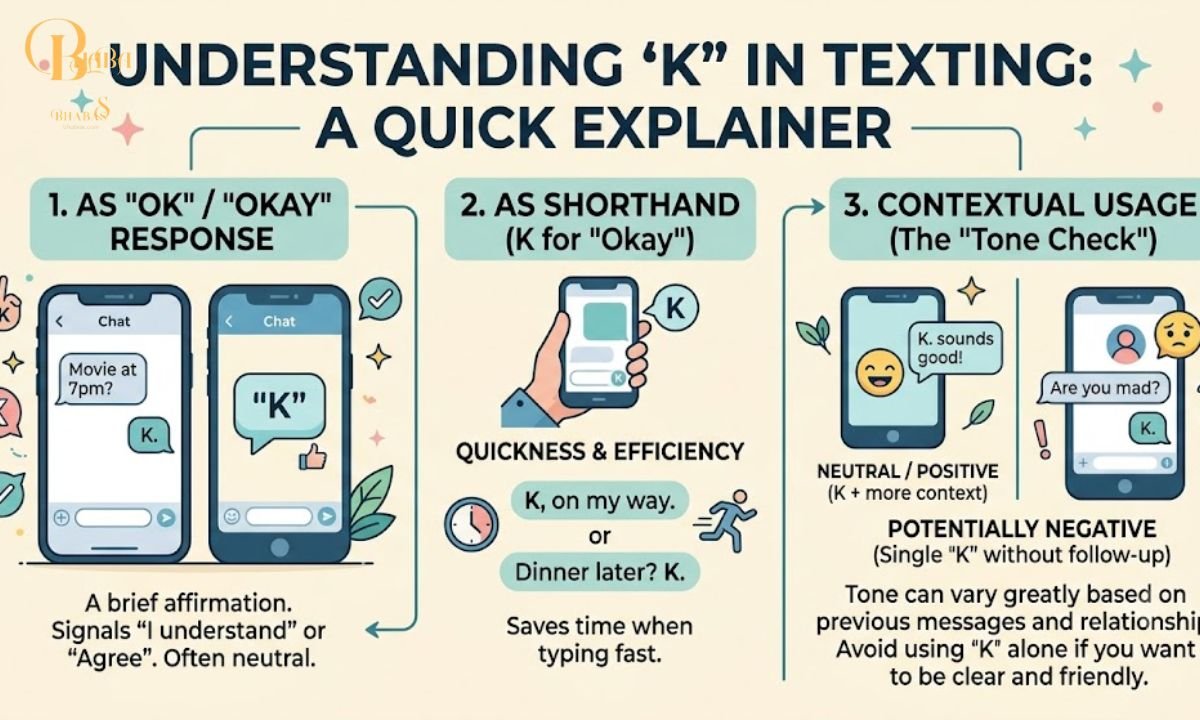
At its most basic level, what k mean in text is a shortened form of ‘OK‘ or ‘okay.’ It signals acknowledgment or agreement. The person sending it is letting you know they saw your message and accept what was said.
However, the meaning rarely stays that simple. A plain ‘k’ with no emoji, no punctuation, and no follow-up can read as cold, dismissive, or even passive-aggressive. The same letter with a thumbs-up emoji next to it reads as warm and casual. This gap between the literal definition and the perceived meaning is what makes ‘k’ one of the most discussed internet slang terms today.
| ‘K’ Form | What It Usually Means | Tone |
| k | Okay / Acknowledged | Neutral to cold |
| k. | Okay (with period) | Irritated or dismissive |
| kk | Got it / Sure thing | Friendly and warm |
| K (uppercase) | Okay / Can be sarcastic | Depends on context |
| k 🙂 | Okay / All good | Lighthearted and positive |
Background & History
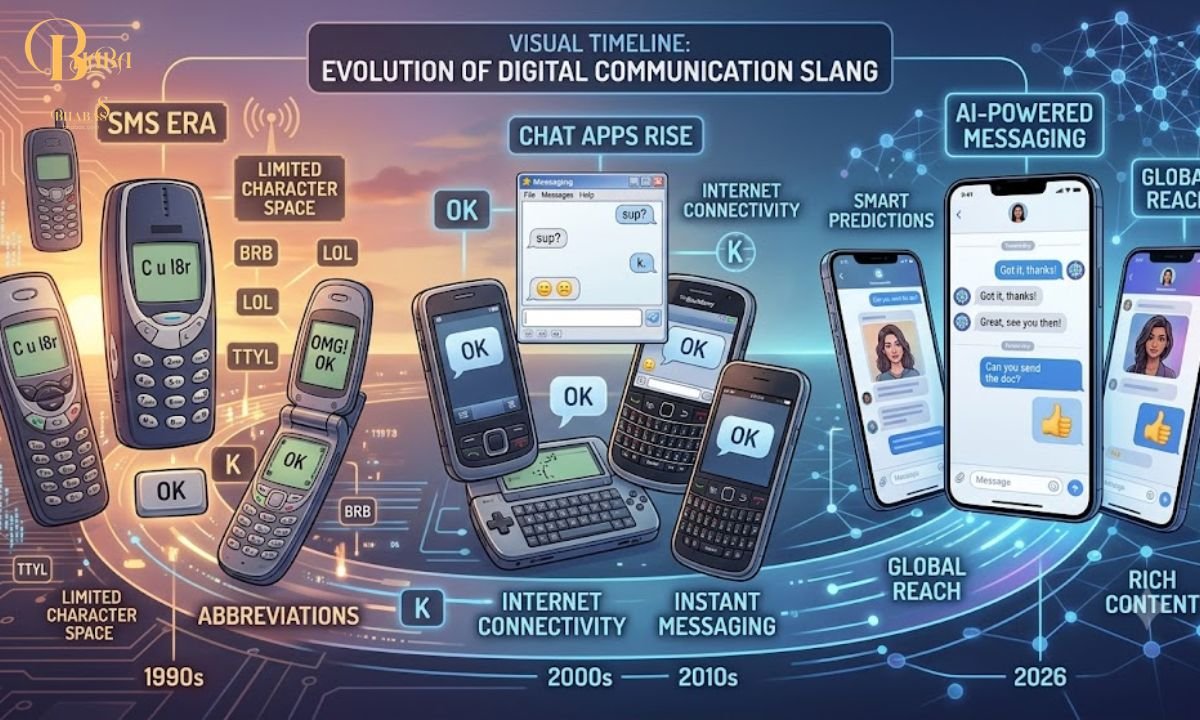
The letter ‘k’ as a text abbreviation grew out of early mobile phone culture in the late 1990s and early 2000s. Back then, typing on a numeric keypad was slow. People cut words to their shortest recognizable form. ‘Okay’ became ‘ok,’ and ‘ok’ eventually became just ‘k’ as instant messaging platforms like AIM, MSN Messenger, and early SMS texting gained ground.
Over time, social media culture added emotional weight to the abbreviation. Memes and online discussions began treating a lone ‘k’ as a passive-aggressive reply, especially after platforms like Facebook and Tumblr turned the phenomenon into a running joke. By the mid-2010s, what k mean in text had shifted from simple shorthand to a loaded signal with real emotional implications.
Usage in Various Contexts
The way ‘k’ lands depends heavily on where and how it is used. Here are the most common situations:
• Casual texting between close friends: Usually fine and harmless. Both parties understand the shorthand.
• Responding to plans or logistics: ‘I will pick you up at 6.’ Reply: ‘k’ – reads as agreement without issue.
• Emotional or serious conversations: Using ‘k’ here can feel dismissive even if no offense is intended.
• Group chats: Often used as a quick acknowledgment so the chat does not get flooded with longer replies.
• Social media comments: Sometimes neutral, sometimes sarcastic depending on the surrounding tone.
Common Misconceptions & Clarifications
One of the biggest myths about ‘k’ is that it always means the sender is angry or upset. That is not true. Many people type ‘k’ simply because they are busy, multitasking, or prefer short replies by habit. Context and the broader conversation history matter far more than the single letter itself.
Another misconception is that ‘k’ and ‘kk’ mean the same thing. They do not. What k mean in text is a neutral-to-cold acknowledgment, while ‘kk’ reads as friendly and engaged. That one extra letter changes the entire emotional register of the reply.
Similar Terms & Alternatives
If you want to avoid sending the wrong signal, here are friendlier alternatives to a plain ‘k’:
| Term | Meaning | Tone |
| kk | Got it / Okay | Warm and friendly |
| ok | Okay | Neutral and polite |
| okay | Okay (full word) | Clear and professional |
| got it | Understood | Engaged and attentive |
| sounds good | Agreement | Positive and warm |
| sure | Agreement | Casual and light |
| noted | Acknowledged | Professional |
How to Respond to This Term
If someone sends you ‘k,’ the best approach is to not assume the worst. Here is how to handle different scenarios:
• If the conversation was casual: No need to read into it. Continue normally.
• If it followed an emotional message: You can gently check in by asking ‘Are you good?’ or ‘Everything okay?’
• If it came after a disagreement: Give it a moment before responding. The person may just need space.
• If you are unsure: Look at the overall conversation pattern. One ‘k’ is rarely a definitive signal.
Avoid over-analyzing a single reply. People send ‘k’ for dozens of different reasons, and most of them have nothing to do with being rude.
Regional or Cultural Differences
What k mean in text can vary by region and cultural background. In many Western countries, particularly the US and UK, ‘k’ carries the passive-aggressive reputation described above. But this is not universal.
In South Korea, the character ‘ㄱㄱ’ (a doubled Korean consonant with the ‘k’ sound) is commonly used to indicate laughter, similar to ‘lol’ in English. So someone from a Korean-speaking background might type ‘kk’ to express amusement, not acknowledgment. In Sweden and parts of Northern Europe, ‘k’ is often used with no negative connotation at all. It is simply a quick, efficient reply. Knowing your audience matters when interpreting this abbreviation.
Comparison with Similar Terms
| Term | Warmth Level | Common Platform | Risk of Misreading |
| k | Low | SMS, WhatsApp, iMessage | High |
| kk | High | Gaming chats, casual texting | Low |
| ok | Medium | All platforms | Low |
| okay | Medium-High | All platforms | Very Low |
| K (uppercase) | Very Low | iMessage, Instagram DMs | Very High |
| noted | Neutral-Professional | Work chats, email | Very Low |
Usage in Online Communities & Dating Apps
In online communities, forums, and gaming chats, ‘k’ often functions as a simple acknowledgment without any emotional weight. Players use it to confirm they received a message during fast-paced games where typing anything longer would take too long.
Dating apps are a different story. On platforms like Tinder, Hinge, or Bumble, receiving a ‘k’ in response to a message can feel like a conversation-ender. Dating coaches and relationship writers consistently flag single-letter replies as a sign of low engagement or interest. That said, some people just text that way by default, so one ‘k’ is not a dealbreaker on its own.
K Meaning in Love
In romantic contexts, what k mean in text carries extra weight. Sending ‘k’ to a partner after they share something meaningful can feel cold or dismissive, even if that was never the intent. Couples who communicate frequently through text often develop their own shared shorthand, so a ‘k’ between two people who text that way all the time may not signal anything negative.
However, if someone who normally sends longer, warmer replies suddenly shifts to ‘k,’ it can indicate frustration, distraction, or emotional withdrawal. In new relationships especially, it is worth paying attention to shifts in texting patterns rather than any one individual reply.
Hidden or Offensive Meanings
In most everyday texting, ‘k’ does not carry hidden or offensive meanings. However, in certain online spaces and hood slang contexts, the letter ‘K’ does appear in more loaded phrases. In some online communities, ‘K’ as a standalone post can be used to end or dismiss a conversation entirely, signaling strong disinterest.
Additionally, in some coded online language, ‘K’ has been associated with specific extremist groups who use it as shorthand. This usage is rare and context-specific, and the average person typing ‘k’ in a normal conversation is almost certainly not referencing anything beyond ‘okay.’
Suitability for Professional Communication
The short answer: do not use ‘k’ in a professional context. What k mean in text in a workplace setting is that you did not take the time to write a proper response. Even ‘ok’ reads as borderline unprofessional in formal workplace communication. Better options include:
• Okay, thank you.
• Understood. I will get to it.
• Noted, I will follow up shortly.
• Got it, thanks.
Emails, Slack messages to clients, or communications with senior colleagues all warrant a bit more effort than a single letter. Reserve ‘k’ for truly casual conversations with coworkers you know well.
What Does K Mean in Hood Slang
In hood slang or street language, ‘K’ primarily still means ‘okay’ or acknowledgment. It is used the same way as in mainstream texting, just within a more casual, urban vernacular setting.
In some specific slang circles, ‘K’ can appear as part of broader phrases or references. For example, in baseball, ‘K’ means a strikeout, and this usage has crossed into casual slang where someone might say a situation ‘got K’d’ to mean it ended badly or someone struck out. The numeric meaning of ‘k’ as 1,000 (from the Greek word ‘kilo’) also shows up in hood slang when talking about money: ’50K’ means $50,000.
K Meaning in Text From a Girl
When a girl sends ‘k’ in a text, the meaning depends heavily on how the conversation was going before that reply. Here is a general breakdown:
• After a plan is confirmed: Likely just a quick acknowledgment. No hidden meaning.
• After an argument: The ‘k’ often signals she is done discussing it and may be upset.
• After a heartfelt message: This can feel dismissive and may mean she is processing or pulling back.
• In a normal back-and-forth chat: She might just be busy or prefer short replies.
What k mean in text from a girl is rarely a mystery if you look at the full conversation. One ‘k’ does not define the relationship. A pattern of short, disengaged replies might be worth a gentle check-in.
What Does K Mean in Text From a Guy
From a guy, ‘k’ often signals one of two things: he is either genuinely busy and just confirming receipt of the message, or he is not in the mood to talk. Guys who text minimally by habit will send ‘k’ without any emotional intention behind it.
If a guy suddenly shifts to one-word replies after more engaged texting, that pattern shift is more meaningful than the ‘k’ itself. Context and history are your best guides. A guy who texts ‘k’ to everything is different from one who sends detailed replies most of the time and then drops to ‘k’ after a specific topic or disagreement.
Conclusion
Understanding what k mean in text helps you read digital conversations more clearly without jumping to conclusions. At its core, ‘k’ means okay or acknowledged. Its emotional weight depends on context, tone, platform, and the relationship between the people chatting. One letter can carry different meanings for different people, so always look at the bigger picture before reacting.
If you want to avoid misunderstandings in your own messaging, lean toward warmer alternatives like ‘kk,’ ‘ok,’ or ‘sounds good’ when the situation calls for it. Save ‘k’ for truly casual moments where brevity is expected and the other person already knows your texting style.

David is a passionate writer with four years of experience in blessings and prayers blogging. He currently works at Bhabas.com, crafting heartfelt messages that inspire hope, offer comfort, and help people express emotions in a meaningful and lasting way.