If you have ever come across the abbreviation DTTM in a text message, Instagram comment, or group chat, you are not alone. Millions of people search for DTTM meaning in text every month because this short acronym shows up across platforms, from casual WhatsApp conversations to TikTok captions — and its meaning is not always obvious at first glance. Whether someone sent it to you or you spotted it in a comment section, understanding what DTTM means in texting can save you from unnecessary confusion or even a misread emotional situation.
The most common DTTM meaning in slang is “Don’t Talk To Me.” It is a direct, emotionally loaded phrase that people use when they want space, feel annoyed, or simply do not feel like chatting. But like most internet slang, context changes everything. Sometimes it is completely serious. Other times it is playful, dramatic, or even funny. This guide covers the full picture — what DTTM means, where it came from, how it is used across different platforms, how to respond to it, and when it is (and is not) appropriate to use.
Definition & Meaning
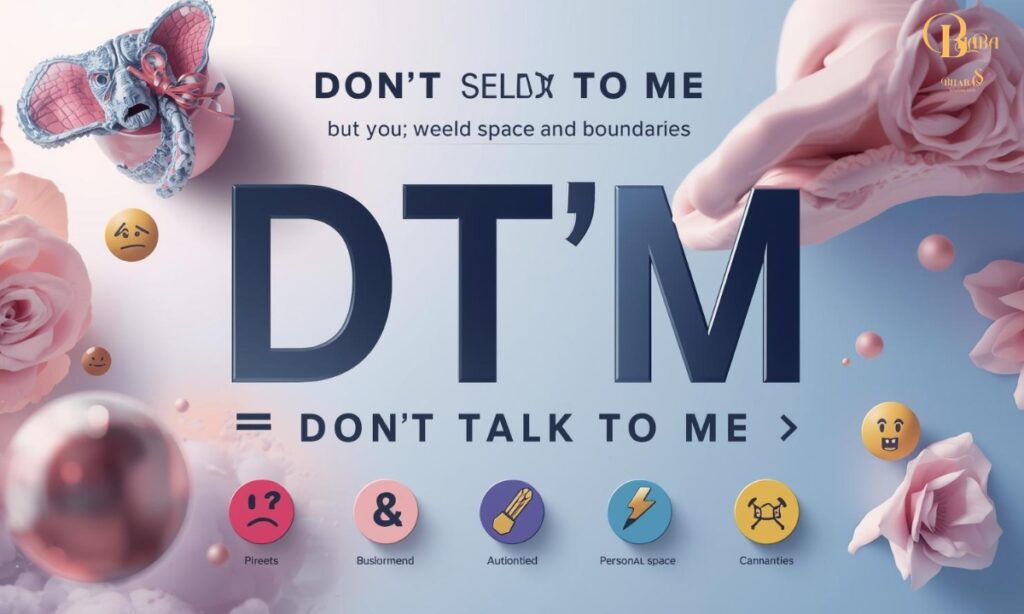
DTTM stands for “Don’t Talk To Me.” It is an informal text abbreviation used to signal that someone wants to be left alone, is feeling frustrated, or is not in the mood for conversation at that moment.
| Abbreviation | Full Form | Type |
| DTTM | Don’t Talk To Me | Text slang/internet acronym |
| DTTM | Date-Time | Technical / database field |
| DTTM | Don’t Text The Mobile | Rare, informal usage |
In the vast majority of everyday texting scenarios, when someone asks what DTTM means in text, the answer is “Don’t Talk To Me.” However, in professional or technical environments such as databases, aviation logs, and medical records, DTTM often refers to a Date-Time stamp — a field used to record the exact date and time of an event. If you are seeing it in a chat or social media post, it almost always means the slang version.
Quick Answer Box:
DTTM meaning in text = “Don’t Talk To Me.” Used to express frustration, emotional overload, or a temporary need for space. Can be serious or playful depending on context.
Background & History
Text abbreviations did not appear overnight. They grew out of practical necessity. In the late 1990s and early 2000s, SMS messages had strict character limits, and typing on keypad phones was slow. Users started shortening common phrases — LOL, BRB, OMG, TTYL — to communicate faster. DTTM followed the same logic.
The phrase “don’t talk to me” was already common in spoken and written language. When people began texting it repeatedly, shortening it to four letters was a natural step. There is no single known creator or viral moment that launched the abbreviation. It spread organically through instant messaging platforms, early social networks, and later through apps like Snapchat, WhatsApp, and Instagram.
Urban Dictionary entries for DTTM go back as far as 2009, which shows that the term has been part of digital slang culture for well over a decade. Over time, it moved from niche texting shorthand to a recognizable part of the Gen Z and millennial online vocabulary. By 2025 and 2026, searches for what DTTM means in texting have continued growing, particularly as the term appears more frequently in meme culture and short-form video content.
Usage in Various Contexts
The DTTM meaning in text slang stays consistent — “Don’t Talk To Me” — but how people use it shifts significantly depending on the situation.
Casual Conversations
Among friends, DTTM is often low-stakes and lighthearted. Someone might send it after a long day at work, after losing a game, or when a friend teases them too much. In these cases, the tone is more venting than actual rejection.
Examples:
- “Ugh, my boss gave me extra work on a Friday. DTTM 😩”
- “You ate the last slice? DTTM 😂”
- “DTTM rn, need a nap.”
Notice how emojis shift the tone. A laughing emoji next to DTTM almost always signals humor. No emoji or a serious emoji usually means the person genuinely wants space.
Social Media
On platforms like Instagram, TikTok, and Twitter/X, DTTM shows up in captions, comment sections, and story replies. It is commonly used in reaction posts — responding to something shocking, funny, or frustrating.
- On Instagram, someone might caption a photo “Mondays, DTTM 😒” to express general frustration in a relatable way.
- On TikTok, DTTM appears in comments under emotional or dramatic content: “That plot twist… DTTM.”
- On WhatsApp status, some users post it to signal they need a break from conversations for the day.
Group Chats
In group chats, DTTM can serve as a way to tap out of a noisy conversation without leaving the group entirely. If someone is overwhelmed by notifications or a heated discussion, dropping a “DTTM for now lol” signals they are stepping back temporarily.
It can also appear when someone shares bad news and wants sympathy, not advice — as a way of saying, “I am processing this, please do not pile on.”
Humor and Memes
DTTM has firmly entered meme culture. Reaction memes frequently use the phrase with images of characters looking annoyed or exhausted — think classic reaction faces from shows or cartoons with “DTTM” overlaid. This format makes the abbreviation feel less hostile and more universally relatable, which is a big reason it has stayed relevant across different age groups.
Common Misconceptions & Clarifications
A lot of confusion around what DTTM means in text comes from misreading context. Here are the most common misunderstandings:
Misconception 1: DTTM is always rude or aggressive. Not true. While the literal meaning sounds blunt, it is regularly used in a joking or exaggerated tone. Context — especially emojis and surrounding conversation — usually makes the intent clear.
Misconception 2: DTTM means the person wants to end the friendship or block you. Blocking is a permanent action. DTTM almost always signals a temporary emotional state. Most of the time, the person will be open to talking again shortly.
Misconception 3: Only teenagers use DTTM. Digital slang has spread across age groups. Adults in their 20s and 30s — particularly millennials who grew up during the texting era — use abbreviations like this regularly.
Misconception 4: DTTM and DTM are the same. They are different. DTM most commonly stands for “Doing Too Much” — used to describe someone who is overreacting or being extra. DTTM specifically means “Don’t Talk To Me.” Mixing them up can lead to a very different interpretation of a message.
Similar Terms & Alternatives
If someone uses DTTM, you might also come across these related abbreviations. Understanding the differences helps you respond appropriately.
| Term | Full Form | Tone |
| DTTM | Don’t Talk To Me | Frustrated, needs space |
| DTM | Doing Too Much | Calling out exaggerated behavior |
| DND | Do Not Disturb | Politely unavailable |
| TTM | Talk To Me | Inviting conversation |
| DNM | Do Not Message | More direct than DTTM |
| BRB | Be Right Back | Neutral, temporary pause |
| TTYL | Talk To You Later | Polite conversation close |
| LMA | Leave Me Alone | More forceful than DTTM |
The key difference between DTTM and most of these alternatives is emotional weight. DTTM carries a stronger sense of frustration or overwhelm. Terms like BRB or TTYL are neutral. DND is polite. DTTM sits somewhere between venting and setting a boundary.
How to Respond to This Term
Knowing how to respond when someone sends you DTTM depends entirely on reading the situation correctly.
If It’s Playful
If the message comes with a laughing emoji, an eye-roll emoji, or clearly fits into a joking back-and-forth, you can match the energy.
- “Okay, okay, I’ll stop 😂”
- “Fine, DTTM-ing you too 😤”
- “Noted, talking to you again in 5 mins 😅”
Keeping it light usually works well when the tone is clearly not serious.
If It Feels Critical
If the DTTM comes after a disagreement, a hurtful comment, or without any emoji softening, give the person genuine space. Sending multiple follow-up messages can make things worse.
A good response:
- “Got it. I’m here when you’re ready.”
- “Take all the time you need.”
Avoid pushing for an explanation right away. Let the person cool down and come back to the conversation on their own terms.
If You Don’t Understand It
If you genuinely are not sure whether the message was playful or serious, it is completely fine to ask — calmly and without defensiveness.
- “Hey, did you mean that seriously or were you just venting? Just want to make sure I’m reading it right.”
Asking for clarification shows maturity and prevents the situation from snowballing into unnecessary conflict. Text-based communication lacks facial expressions and tone of voice, so checking in is always a reasonable choice.
Regional or Cultural Differences
Not everyone interprets or even recognizes DTTM the same way. Digital slang spreads unevenly, and several factors affect how a person reads the term:
- Age group: Gen Z and younger millennials are far more likely to recognize DTTM instantly. Older users may find it unfamiliar or confusing.
- Region: English-speaking countries like the US, UK, Australia, and Canada have higher exposure to this abbreviation due to the platforms where it originated. Non-native English speakers may not have encountered it at all.
- Platform familiarity: Someone who spends time on TikTok, Snapchat, and Instagram will recognize DTTM far faster than someone who primarily uses email or LinkedIn.
This is why it is always worth considering your audience before using DTTM. With friends your own age who are active on social media, it fits naturally. With someone outside that circle, it might come across as confusing or even harsh.
Comparison with Similar Terms
To understand DTTM’s meaning in text slang more clearly, it helps to compare it directly with the terms it is most often confused with.
| Feature | DTTM | DTM | DND | TTM |
| Full form | Don’t Talk To Me | Doing Too Much | Do Not Disturb | Talk To Me |
| Emotional tone | Frustrated / needs space | Judging behavior | Politely unavailable | Open / inviting |
| Direction | Outward (toward others) | Inward (about someone else) | Neutral | Inward |
| Common platforms | WhatsApp, Instagram, TikTok | Twitter, TikTok, group chats | All platforms | All platforms |
| Humor potential | High | High | Low | Moderate |
The clearest distinction is between DTTM and TTM — they are effectively opposites. One pushes people away (temporarily), and the other pulls them in.
Usage in Online Communities & Dating Apps
Online communities — including Reddit threads, Discord servers, gaming chats, and niche forums — each develop their own slang patterns. DTTM pops up in most of these spaces, though the tone can shift slightly.
In gaming communities, DTTM is sometimes used humorously after a frustrating match: “Three deaths in two minutes. DTTM everyone 😤.” It is rarely meant seriously in this context.
On dating apps like Hinge, Bumble, or Tinder, DTTM occasionally appears in conversations, usually when someone feels frustrated with the process or a specific interaction. For example: “Another bad date. Literally DTTM right now.” This signals emotional exhaustion rather than rejection of the person they are texting. Some users also put it in their bio or prompts humorously to describe their personality as someone who needs plenty of alone time.
In Reddit and Twitter/X threads, DTTM tends to appear in comments reacting to frustrating news, cringe content, or overwhelming situations: “Reading this thread… DTTM.”
Hidden or Offensive Meanings
For most people searching what does DTTM mean on Instagram or in a regular text, the answer is simply “Don’t Talk To Me” — and that is not inherently offensive. However, tone and delivery can make it feel harsh:
- Sent during an argument without any softening context, it can feel dismissive or cold.
- Repeated use as a way to shut down every conversation can become a passive-aggressive communication pattern over time.
- Urban Dictionary also lists “Disrespectful To The Max” as an alternative meaning for DTTM, though this interpretation is far less common and rarely appears in mainstream usage today.
One less-discussed but real point: when used as an emotional shutdown tool rather than a genuine boundary, DTTM can create distance in relationships. It is worth being mindful of how often and in what context you use it.
There are no widely known offensive or explicit secondary meanings of DTTM in current slang. It is generally safe to interpret it neutrally unless the surrounding conversation suggests otherwise.
Suitability for Professional Communication
Short answer: DTTM is not appropriate in professional settings — unless you work in a technical field where it refers to Date-Time data.
In workplace emails, client messages, formal reports, or any professional communication, using DTTM as slang (“Don’t Talk To Me”) would come across as unprofessional, rude, or at the very least confusing. The same goes for academic writing, formal letters, or communication with people you do not know well.
Where DTTM slang is appropriate:
- Text messages with close friends
- Casual social media posts and comments
- Group chats with people who use internet slang regularly
- Gaming or online community spaces
Where DTTM slang is not appropriate:
- Workplace emails or Slack messages
- Communication with supervisors or clients
- Academic or formal writing
- Messages with people who may not recognize the term
If you work in IT, database management, healthcare records, or aviation, you will encounter DTTM as a technical shorthand for Date-Time fields. In that context, it is completely standard and professional. The two uses exist in entirely different worlds — understanding which one applies to your situation is the key to using and reading DTTM correctly every time.
Conclusion
DTTM is one of those abbreviations that looks simple but carries more nuance than most people expect. At its core, DTTM means “Don’t Talk To Me” in text slang — a phrase used to express frustration, emotional overload, or a need for temporary space. It can be serious or playful, harsh or humorous, depending entirely on tone, emoji use, and the relationship between the people involved.
Understanding DTTM’s meaning in text means reading the full context, not just the four letters. Whether you received it in a message, spotted it on Instagram, or want to use it yourself, the key is awareness, knowing your audience, reading the emotional temperature of the conversation, and responding with care. When in doubt, ask. Most misunderstandings in digital communication come from assuming meaning rather than clarifying it.

David is a passionate writer with four years of experience in blessings and prayers blogging. He currently works at Bhabas.com, crafting heartfelt messages that inspire hope, offer comfort, and help people express emotions in a meaningful and lasting way.